OpenAI’s board adds bank CEOs for IPO prep
OpenAI adds David Vélez and Robin Vince to its boards as it lines up governance for a possible IPO.

OpenAI is adding two bank CEOs to its boards as it gets IPO-ready.
I've been watching OpenAI's governance for a while, and honestly, it has felt like one of those systems that keeps getting patched instead of cleaned up. The product story is simple enough: build better AI, ship faster, stay ahead. The board story? That’s where it gets messy. A nonprofit, a for-profit, a recapitalization, a controlling stake, a pile of names, and a company that keeps saying it wants to benefit everyone while also heading toward a public market debut. I keep coming back to the same reaction: if you’re going to sell investors on scale, you’d better make the control structure legible.
That’s why this CNBC report from Ashley Capoot on CNBC caught my attention. OpenAI has appointed David Vélez, CEO of Nubank, and Robin Vince, CEO of BNY, to both its nonprofit and for-profit boards. CNBC says the move comes as OpenAI moves closer to a possible IPO, after a recapitalization in October that gave the nonprofit foundation a controlling stake in the for-profit group.
OpenAI isn’t hiring “AI people.” It’s hiring capital allocators
Get the latest AI news in your inbox
Weekly picks of model releases, tools, and deep dives — no spam, unsubscribe anytime.
No spam. Unsubscribe at any time.
“OpenAI said it appointed longtime financial executives David Vélez and Robin Vince to its nonprofit and for-profit boards of directors, as the company marches closer to a prospective IPO.”
What this actually means is that OpenAI is not just thinking about model quality anymore. It’s thinking about capital, public-company discipline, and the kind of governance investors expect when a private giant starts acting like a future listing candidate. Vélez runs Nubank, which scaled financial services across Latin America. Vince runs BNY, a giant in financial infrastructure. Those are not decorative resumes. Those are people who live inside regulated, capital-heavy systems.
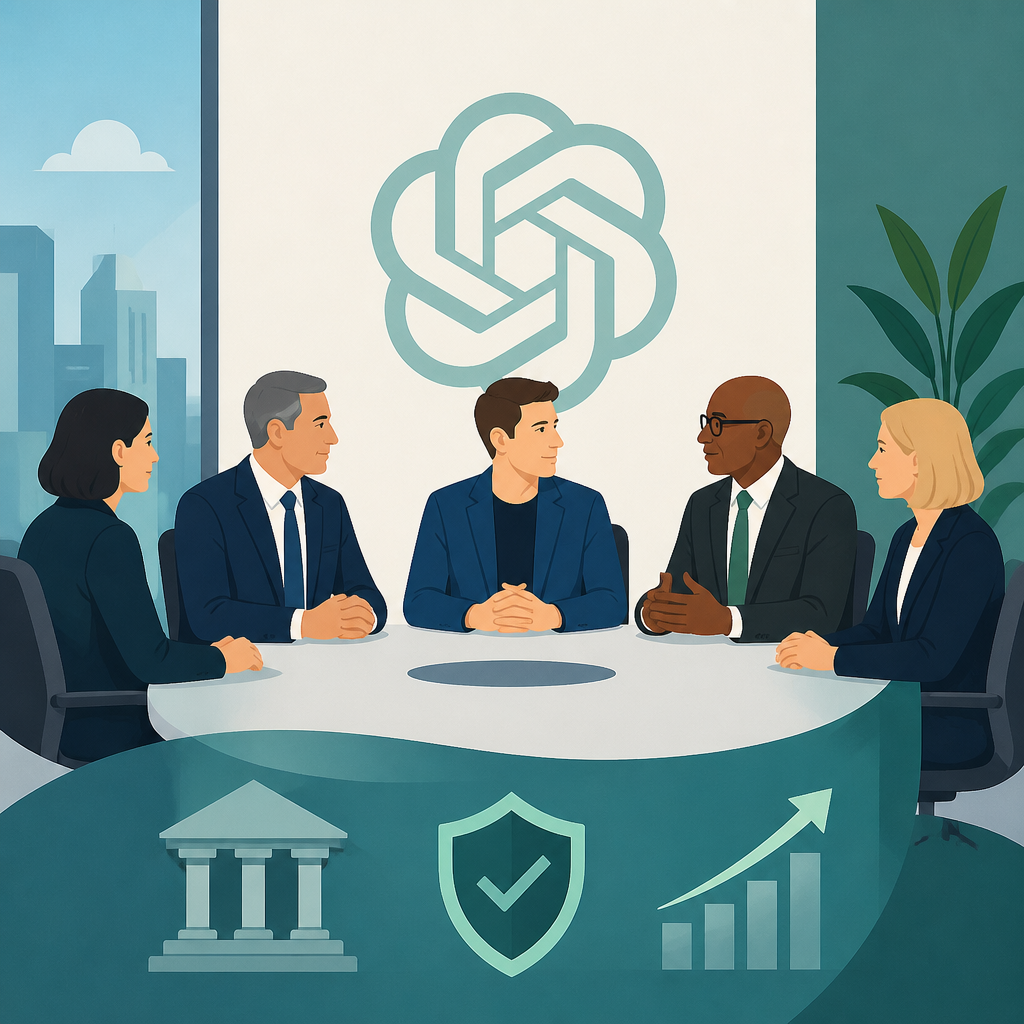
I’ve seen this pattern before. Companies hit a certain size and suddenly “product leaders” on the board stop being enough. You need people who understand how to run a system that is watched by regulators, investors, auditors, and the market every quarter. If you’re OpenAI and you’re heading toward an IPO, bringing in operators who know how money moves is not a side quest. It’s the main plot.
How to apply it: if you’re building a startup that might go public, don’t stock the board with only builders and brand names. Add someone who has lived through capital markets, disclosure pressure, and operational governance. Your future self will thank you when the questions stop being “can we ship this?” and start being “who signs off, who watches, and who owns the risk?”
- Look for board members who have run regulated businesses.
- Prioritize people who understand scale beyond product metrics.
- Ask whether your board can handle investor scrutiny, not just strategy decks.
The nonprofit-for-profit split is the real story here
CNBC notes that OpenAI’s October recapitalization solidified its structure as a nonprofit foundation with a controlling stake in the for-profit business. That matters more than the headline about two new directors. The board appointments are happening inside a structure that is already unusual, and probably intentionally so. OpenAI is not a normal startup with a clean cap table and a simple governance chain. It’s a hybrid.
What this actually means is that the company is trying to preserve a mission wrapper while still building something investors might eventually buy into. That tension is not going away. If anything, it gets sharper as the IPO conversation gets louder. The more money and public-market expectation enter the room, the more everyone will ask who really controls the company and whose interests come first.
I ran into a version of this years ago at a smaller company where the board had two different constituencies and nobody wanted to say it out loud. Every strategic decision turned into a proxy fight in slow motion. OpenAI’s structure is far more sophisticated, but the basic problem is the same: if control is split, every appointment is also a signal.
How to apply it: if your company has dual entities, a foundation wrapper, or any kind of split governance, document the decision path in plain English. Don’t make people infer it from legal filings and board bios. Investors hate ambiguity, and employees hate it more.
These appointments are about trust, not just expertise
Bret Taylor, chair of the OpenAI Foundation and OpenAI Group PBC boards, said Vélez and Vince will bring “complementary perspectives on how technology can reshape industries and drive economic growth.” That’s board-speak, sure, but the subtext is obvious: OpenAI wants directors who make the company look more credible to the outside world.
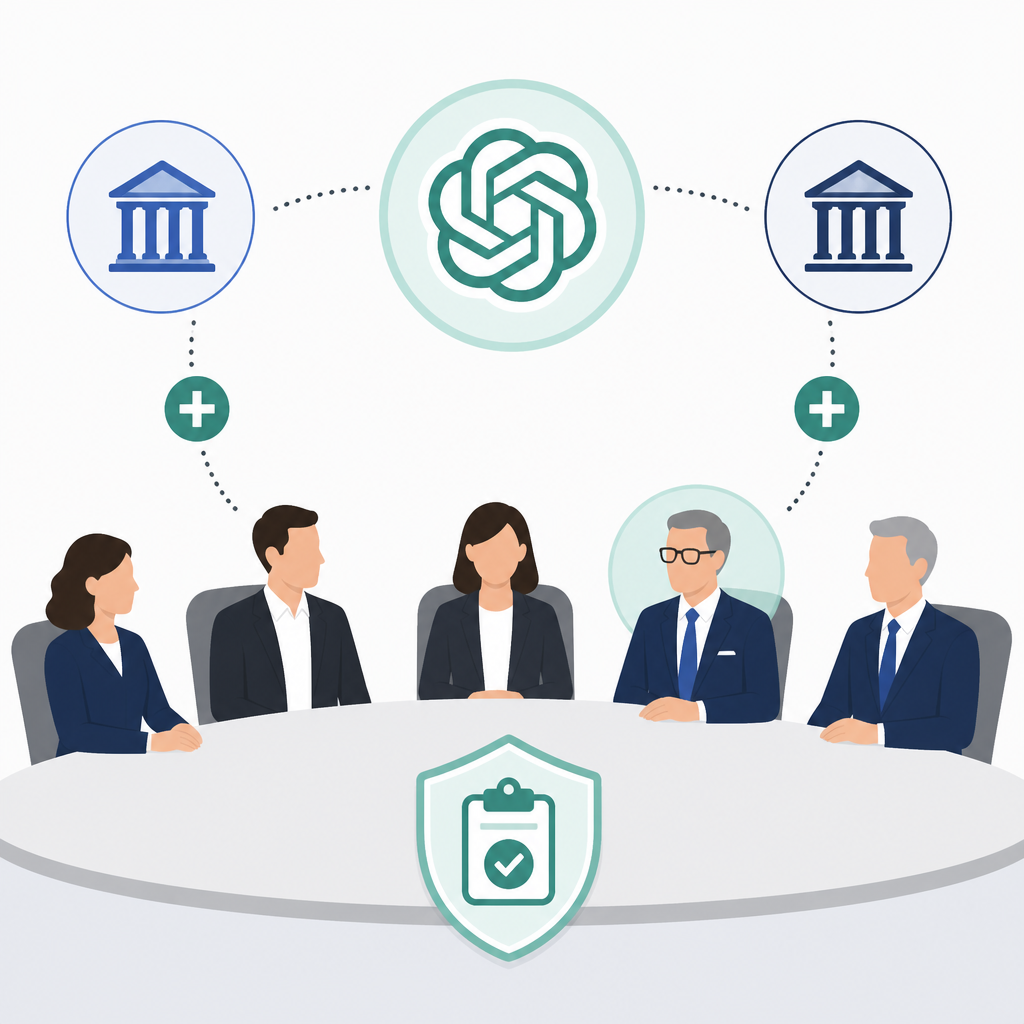
What this actually means is that OpenAI is buying trust with governance. Not fake trust. Real trust, the kind that comes from putting recognizable, serious operators in seats that matter. One runs a digital bank. One runs a major financial services institution. That combination tells investors, regulators, and partners that OpenAI is trying to behave like a company that understands the weight of public scrutiny.
I’m not saying this is cosmetic. It isn’t. But I am saying board composition is one of the few levers a company can pull that changes perception fast without shipping a single product feature. If you’re trying to calm a market, reassure a regulator, or signal maturity, the board is a loud instrument.
How to apply it: when you recruit board members, ask what signal each seat sends. If the answer is “nice bio,” keep looking. You want a board that covers risk, operations, capital, and public credibility.
- Use board seats to fill real capability gaps.
- Match each director to a problem you actually have.
- Assume outside observers will read the board as a message.
OpenAI is acting like a company that already lives under public-market rules
CNBC says OpenAI confidentially filed its prospectus with the SEC in June, though it has not disclosed a timeline for an IPO. That’s the key detail. You don’t appoint this kind of board and then pretend the public-market angle is incidental. Confidential filing or not, the company is clearly preparing for the kind of questions public investors ask the second they smell a listing.
What this actually means is that OpenAI is already doing pre-IPO homework in public view. Governance cleanups, board additions, recapitalization, and the right mix of directors all fit the same playbook. When a company heads toward IPO, the board has to become less “founder orbit” and more “institutional oversight.”
I’ve watched teams underestimate how much this changes the culture. Once the public-market machinery starts turning, everything gets slower and more documented. That’s annoying if you’re a product person, but it’s non-negotiable if you want the valuation and access that come with being public.
How to apply it: if you’re even thinking about an eventual IPO, start acting like one now. Clean up board minutes. Define committee ownership. Track conflicts. Make sure your directors can actually advise on the problems you’ll face after listing, not just the ones you had when you were smaller.
Altman’s history makes governance even more sensitive
CNBC reminds readers that Sam Altman was briefly ousted in 2023 after previous board members said he was “not consistently candid in his communications.” He came back after a chaotic few days and was reinstated on the board in March 2024. That history matters because it changes how every board move gets interpreted.
What this actually means is that OpenAI’s board is never just a board. It’s a trust mechanism, and the company has already shown that trust can fracture fast. So when OpenAI adds two new directors now, I don’t read it as routine expansion. I read it as a repair-and-prep move. The company needs people who can steady the structure while it grows into something far bigger and more exposed.
I’ve been in organizations where one ugly governance episode poisoned every later decision. Even sensible changes got read through the lens of “who has power now?” OpenAI is in that zone. It can’t afford board additions that look like factional maneuvering. They have to look like adult supervision.
How to apply it: if your company has had a governance blowup, assume your next board move will be scrutinized harder than the last one. Be explicit about why someone is joining, what they’re responsible for, and how decisions will be made.
The names matter because the companies behind them matter
Vélez brings Nubank, which is a massive digital banking story in Latin America. Vince brings BNY, a financial services institution with deep infrastructure know-how. Those are very different companies, but that’s the point. OpenAI is not just adding “finance experience.” It’s adding people who know how to scale through complexity.
What this actually means is that OpenAI wants board members who have already handled growth under pressure. Nubank is a consumer-scale technology and finance story. BNY is institutional, operational, and deeply tied to trust. Put those together and you get a board better suited to a company that wants to move from fast-growing AI lab to durable public enterprise.
I like this move more than I like vague “independent director” announcements, because it actually tells me something. It tells me what kind of problems OpenAI expects to have. That’s useful. The board is not there to decorate the org chart. It’s there to absorb the next set of failures before they become headlines.
How to apply it: when you read board news, don’t stop at the title. Ask what the director’s actual operating environment was. Did they run consumer scale, regulated scale, or institutional scale? That answer is usually the real signal.
The template you can copy
# Board appointment memo for a pre-IPO company

## What changed
We appointed [Name 1] and [Name 2] to the board to strengthen oversight in [capital markets / regulated operations / global scale / enterprise risk].

## Why these directors
- [Name 1] brings experience in [regulated finance / public-company governance / large-scale operations].
- [Name 2] brings experience in [capital allocation / institutional trust / international expansion].
- Together, they fill the gap between product execution and public-company readiness.

## What this means for the company
- We now have stronger guidance on [risk management / audit readiness / disclosure / capital strategy].
- The board is better aligned with our next phase of growth.
- Our governance structure remains clear: [foundation / parent / subsidiary / voting control explanation].

## How we will use this expertise
- Monthly review of [risk, compliance, capital plan, public-market readiness].
- Quarterly review of [committee structure, disclosure process, governance gaps].
- Direct input on [IPO preparation, institutional partnerships, international expansion].

## Plain-English version
We are adding people who have already run big, regulated, high-trust businesses so we can make better decisions as we scale.

## Copy-ready announcement language
[Company] announced today that [Name 1] and [Name 2] have joined its board of directors. Their experience in [industry] and [industry] will help guide the company as it expands, strengthens governance, and prepares for its next phase of growth.

## Internal checklist
- Update board roster and committee assignments
- Refresh governance docs and minutes templates
- Review conflicts, independence, and observer rights
- Align investor messaging with actual control structure
- Brief leadership on what these appointments signal externally
If I were writing this for my own company, I’d keep the language this plain. No fluff. No fake mystique. Just say what changed, why these people matter, and what problem they’re supposed to help solve. That’s the part most companies avoid, which is exactly why their governance communications read like fog.
Source attribution: This breakdown is based on Ashley Capoot’s CNBC report at https://www.cnbc.com/2026/07/21/openai-appoints-two-new-members-to-board-of-directors.html. I’ve added my own interpretation of what the board move means for companies heading toward an IPO; the template above is original and adapted from that reporting.
// Related Articles
- [IND]
Anthropic's split from OpenAI, decoded
- [IND]
Open models beat safer ones when cyberattacks turn autonomous
- [IND]
Anthropic’s $1.5B settlement is a warning, not a clean win
- [IND]
Project Glasswing turns AI into a security layer
- [IND]
Anthropic's IPO rumor turns into a market watch
- [IND]
Anthropic should not become dependent on Meta for compute