Jensen Huang’s Japan Trip Recasts Nvidia’s AI Play
5 Japan partnerships show how Nvidia is tying robotics, chips, and manufacturing into its physical AI push.

Huang used Japan meetings to link Nvidia’s AI plans with robotics, factories, and chip supply.
| Item | Role in the story | Notable detail |
|---|---|---|
| Sega | Historical partner | 1996 investment helped Nvidia survive |
| Toyota | Autonomy and simulation partner | Works on L2++ vehicles with DRIVE AGX |
| Fanuc | Robotics partner | Joins Nvidia’s Cosmos alliance |
| Noetra | National physical AI partner | Plans a super factory with 27,500 Rubin GPUs |
| Japanese supply chain firms | Materials and hardware network | Kioxia, Shin-Etsu, Tokyo Electron, and others |
1. Sega
Get the latest AI news in your inbox
Weekly picks of model releases, tools, and deep dives — no spam, unsubscribe anytime.
No spam. Unsubscribe at any time.
Nvidia’s Tokyo visit began with a reminder that the company once needed Japan to survive. Jensen Huang met former Sega president Shoichiro Irimajiri at the old Sega Game Center site in Akihabara, revisiting a 30-year relationship that began when Sega invested about $5 million in the cash-strapped startup.
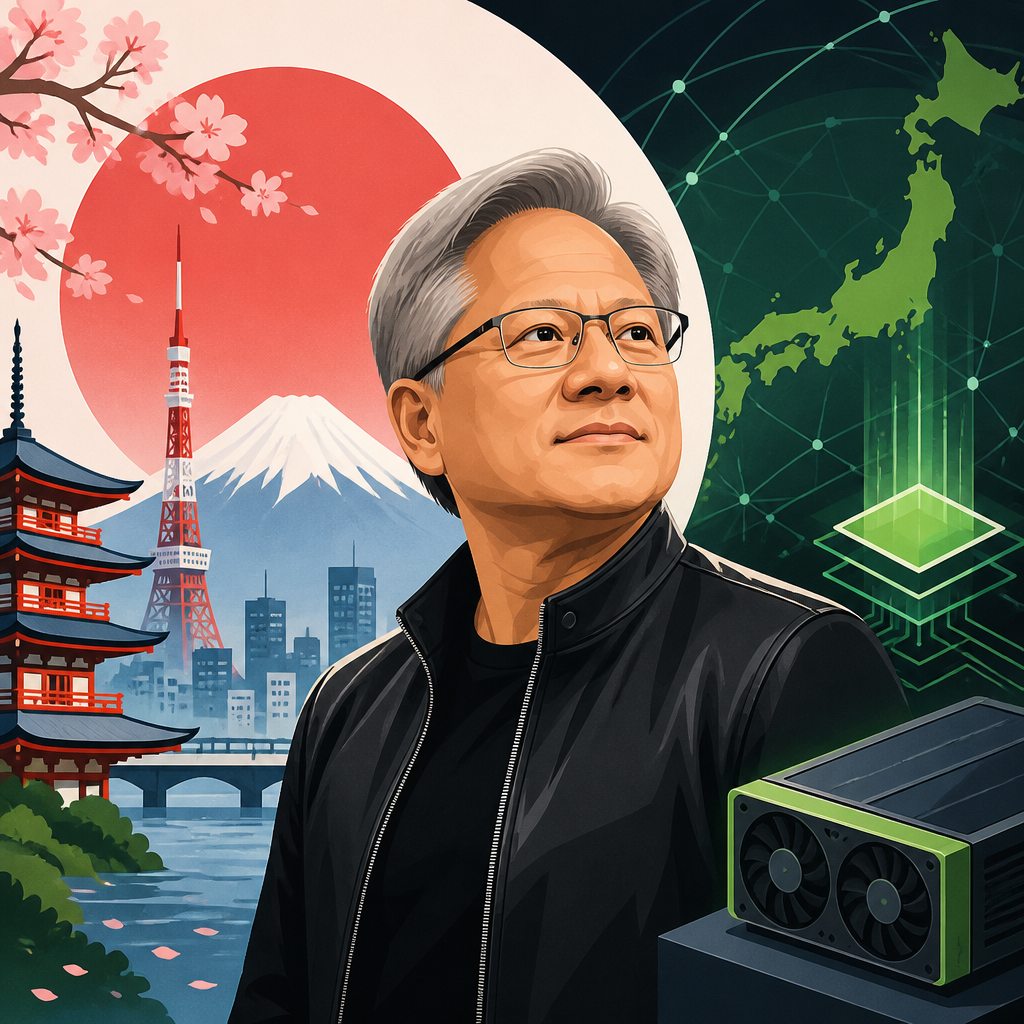
That money came after Nvidia’s failed graphics chip project for Sega’s next-generation console. Huang said the company would not have survived without Sega’s help, and the partnership is still active today through support for future Sega titles on Nvidia’s RTX Spark platform.
- 1996 Sega investment: about $5 million
- Nvidia later launched the RIVA 128 in 1997
- The original failure forced a major reset in Nvidia’s roadmap
2. Toyota
Toyota is one of the clearest signs that Nvidia wants to move beyond chips into real-world systems. The companies expanded their work across autonomous driving, smart cities, and factory simulation, with Toyota developing next-generation L2++ vehicles on Nvidia’s DRIVE AGX platform.
This is a practical fit for physical AI, where software must interact with roads, sensors, and production lines. Huang framed robots and autonomous systems as adaptable and accessible, which makes Toyota a strong test case for turning AI models into deployed machines.
- Focus areas: autonomous driving, smart cities, factory simulation
- Platform: Nvidia DRIVE AGX
- Vehicle target: next-generation L2++ systems
3. Fanuc
Fanuc brings industrial robotics into the center of Nvidia’s Japan plan. Nvidia said it is expanding robotics collaboration with Fanuc, along with Fujitsu, Yaskawa Electric, and Kawasaki Heavy Industries, and all four will join the Nvidia-led Cosmos alliance.
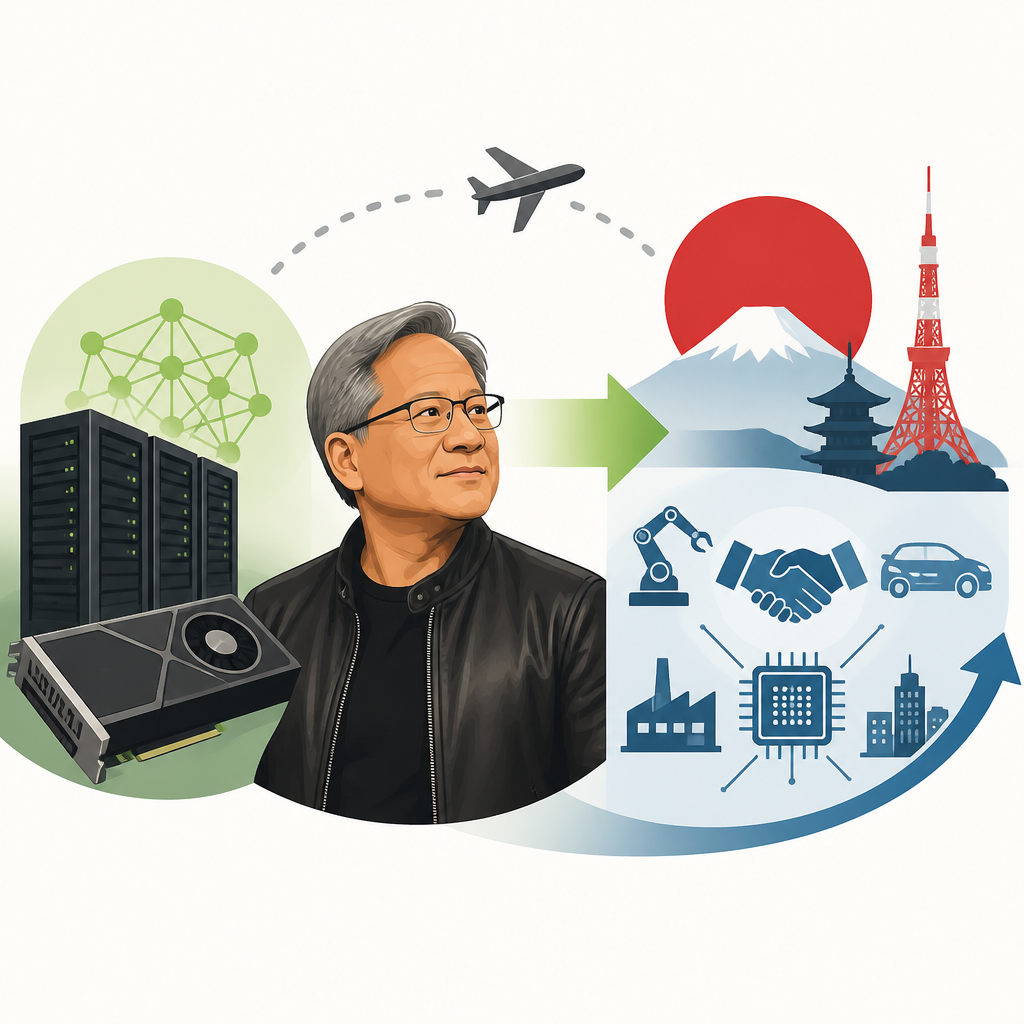
That matters because Fanuc is tied to factory automation, where AI has to be dependable, fast, and easy to integrate with existing equipment. Nvidia’s pitch is that physical AI will not stay in demos; it has to run robotic arms, production cells, and industrial workflows at scale.
- Joined alliance: Nvidia’s Cosmos
- Peers in the expansion: Fujitsu, Yaskawa Electric, Kawasaki Heavy Industries
- Use case: industrial robotics and automation
4. Noetra
Noetra is Nvidia’s most ambitious Japan partnership in this story. Japanese reports said Nvidia and the Noetra alliance, which includes Sony and Honda, announced a strategic partnership to build a national-level AI super factory powered by 27,500 Rubin GPUs.
This move connects sovereign AI planning with industrial robotics. Instead of treating AI as a cloud-only product, Nvidia is helping build a domestic model-training base for Japan’s next-generation intelligent robots, which could make Noetra a template for other countries that want local AI infrastructure.
Planned buildout:
- 27,500 Rubin GPUs
- National-level AI super factory
- Core world model for intelligent robots
5. Japan’s hardware supply chain
Huang’s dinner with Japanese executives showed that Nvidia’s Japan strategy reaches far beyond headline partners. At an izakaya meeting in Tokyo’s Kanda district, he sat with leaders from Kioxia, Shin-Etsu Chemical, Tokyo Electron, Ajinomoto, Sumitomo Electric, Taiyo Yuden, and Panasonic.
Those companies map onto the materials, chemicals, equipment, and components that AI hardware depends on. Huang also argued that Japan is especially strong in basic materials, chemical technology, and core sciences, which makes the country a natural base for the infrastructure behind physical AI.
- Examples: Kioxia, Shin-Etsu Chemical, Tokyo Electron
- Other attendees: Ajinomoto, Sumitomo Electric, Taiyo Yuden, Panasonic
- Focus: materials, equipment, and hardware supply
How to decide
If you want the historical anchor, Sega is the key relationship because it explains how Nvidia got here. If you want the industrial angle, Toyota and Fanuc show how AI is moving into cars and factories. If you want the biggest strategic bet, Noetra is the one to watch because it connects Nvidia to Japan’s national AI buildout.
For readers trying to understand the broader pattern, the supply-chain dinner may matter most. It shows that Nvidia is not only signing partners, but also lining up the materials and equipment base needed to support physical AI for years.
// Related Articles
- [IND]
Anthropic's split from OpenAI, decoded
- [IND]
Open models beat safer ones when cyberattacks turn autonomous
- [IND]
OpenAI’s board adds bank CEOs for IPO prep
- [IND]
Anthropic’s $1.5B settlement is a warning, not a clean win
- [IND]
Project Glasswing turns AI into a security layer
- [IND]
Anthropic's IPO rumor turns into a market watch