OpenPencil gives teams a scriptable Figma escape hatch
OpenPencil turns design files into local, scriptable assets with 100+ tools, native .fig support, and no server dependency.

What can you use instead of Figma when CDP automation breaks and your files stay locked in a proprietary format?
OpenPencil is an open-source design editor that reads .fig files locally and makes every step scriptable.
1. Native .fig editing
Get the latest AI news in your inbox
Weekly picks of model releases, tools, and deep dives — no spam, unsubscribe anytime.
No spam. Unsubscribe at any time.
OpenPencil is built to open and write native Figma files, not just import exports. That matters if your workflow depends on preserving editable layers, node structure, and file history instead of flattening designs into images or hand-built recreations.

It also supports .pen documents and copy-paste between apps, so teams can move work across tools without treating the editor as a dead end.
- Reads and writes .fig files locally
- Opens .pen documents from the app or file browser
- Supports copy and paste of nodes between apps
- Runs on macOS, Windows, Linux, and in the browser as a PWA
2. Scriptable design operations
The strongest case for OpenPencil is automation. The desktop app exposes more than 100 tools, and the CLI lets you inspect, search, export, lint, and modify documents without opening the canvas.
That makes it useful for design ops, batch cleanup, and agent-driven workflows where a human should not have to click through every file.
openpencil tree design.fig
openpencil find design.pen --type TEXT
openpencil lint design.fig --preset strict
openpencil export design.fig -f jsx --style tailwind
3. AI inside the editor
OpenPencil includes built-in chat so you can describe a layout change and let tools create or update nodes. It connects to OpenRouter, Anthropic, OpenAI, Google AI, Z.ai, MiniMax, and compatible endpoints, so teams are not locked to one model vendor.
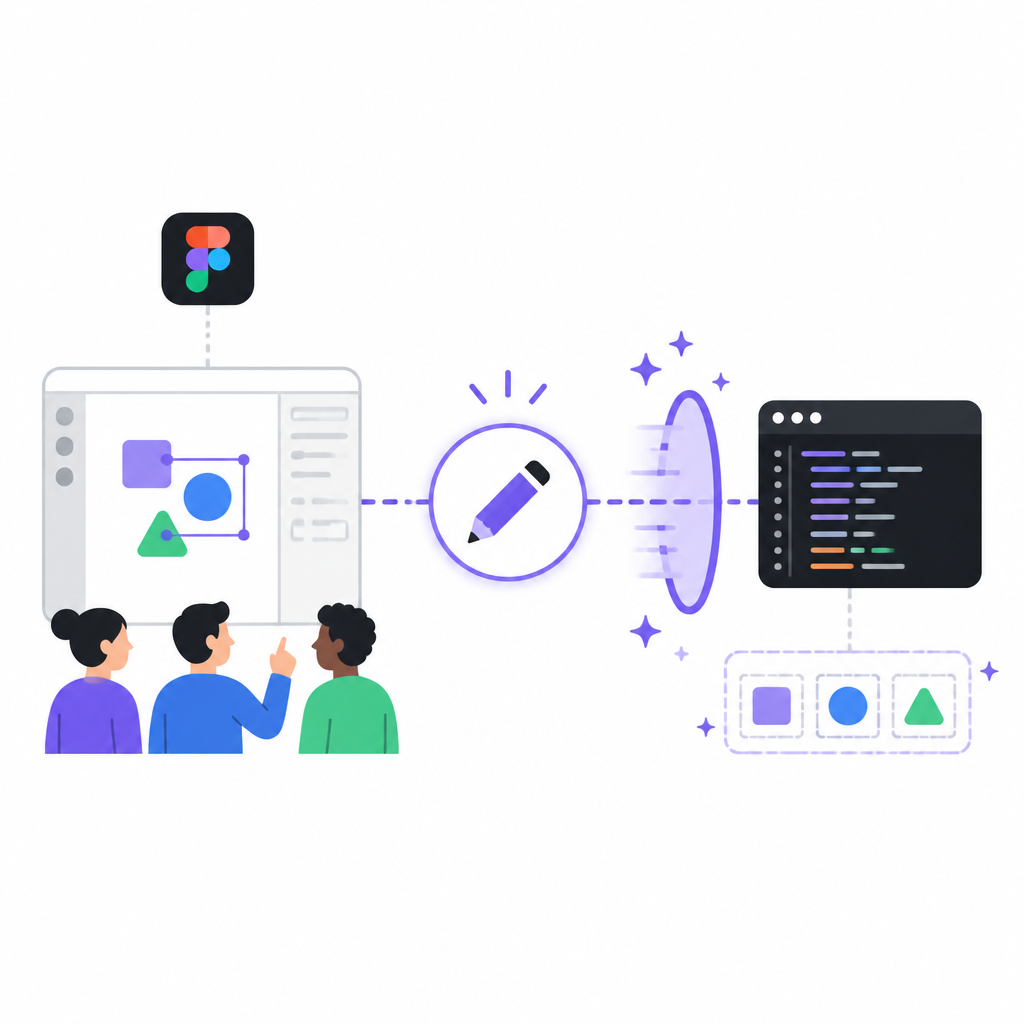
The AI layer is not just for prompting mockups. It can create shapes, manage auto layout, analyze tokens, and export assets, which makes it closer to an assistant for file operations than a text-to-mockup toy.
- Built-in chat with 100+ editor tools
- Works with your own API key
- Can create, modify, and inspect nodes
- Supports export and token analysis from chat
4. Local collaboration without a server
For teams that want live editing without handing files to a hosted backend, OpenPencil uses peer-to-peer collaboration over WebRTC. There is no account requirement and no central server in the collaboration path.
The result is a simpler trust model for small teams, internal tools, and sensitive work. You share a link, others join, and cursors, presence, follow mode, and edits update in real time.
- P2P collaboration via WebRTC
- No server and no account for co-editing
- Shows cursors, presence, and follow mode
- Share links from the desktop app
5. A toolkit for custom editors
OpenPencil is not only an app. It also ships as a programmable toolkit with a headless Vue SDK, so developers can embed editing surfaces inside other products or build workflow-specific editors around the same core.
That opens a path for teams that want design editing inside their own app, or need a narrow editor for a single job such as token review, asset prep, or component assembly.
- Headless Vue SDK for custom editors
- Composable building blocks for embedded workflows
- Figma Plugin API access via eval
- CLI and MCP support for agents and scripts
How to decide
Pick OpenPencil if your priority is file control, local automation, and an editor that does not depend on a vendor’s runtime decisions. It fits best when design work needs to be scriptable, inspectable, and safe to run on a local machine or inside CI.
If you only need a polished visual editor with minimal setup, a hosted design tool may still be easier. If you need native .fig access, agent-friendly tooling, and a path to custom editors, OpenPencil is the stronger fit.
// Related Articles
- [IND]
Claude Code MCP setup that connects real tools
- [IND]
OpenViking turns agent context into one database
- [IND]
OpenAI's GPT-5.6 update reshapes ChatGPT
- [IND]
Cloudflare’s OpenAI pilot is a smart bet on fresher search
- [IND]
Cloudflare’s 487-partner ecosystem on Partnerbase
- [IND]
Anthropic’s access cut shows speech limits in AI