Project Glasswing turns AI into a security layer
FIS and Anthropic’s Project Glasswing adds Mythos 5 as a security layer for financial software teams.

Project Glasswing adds Mythos 5 as a security layer for financial software teams.
I’ve been watching a lot of “trusted AI” pitches lately, and most of them feel like someone bolted a model onto a workflow and called it governance. That’s not what I want when I’m dealing with financial software. I want something that catches bad assumptions before they become incidents, and I want it to do that without turning every review into a committee meeting.
That’s why the FIS and Anthropic partnership caught my eye. FIS says it’s extending the partnership around Project Glasswing, where it puts Mythos 5 into its security program as an additional layer. That’s a much more concrete framing than the usual AI-in-the-enterprise fluff. It’s not “AI for everything.” It’s “AI as another control point.”
Stop treating AI like a feature and start treating it like a gate
Get the latest AI news in your inbox
Weekly picks of model releases, tools, and deep dives — no spam, unsubscribe anytime.
No spam. Unsubscribe at any time.
Through Project Glasswing, FIS is putting Mythos 5, Anthropic’s most advanced frontier model, to work as an additional layer within its security program.
What this actually means is simple: the model is not the product. It’s part of the review path. That matters because most teams I’ve seen fail with AI security do the same dumb thing twice. First, they overtrust the model. Then, when it misses something, they act surprised that a probabilistic system behaved probabilistically.
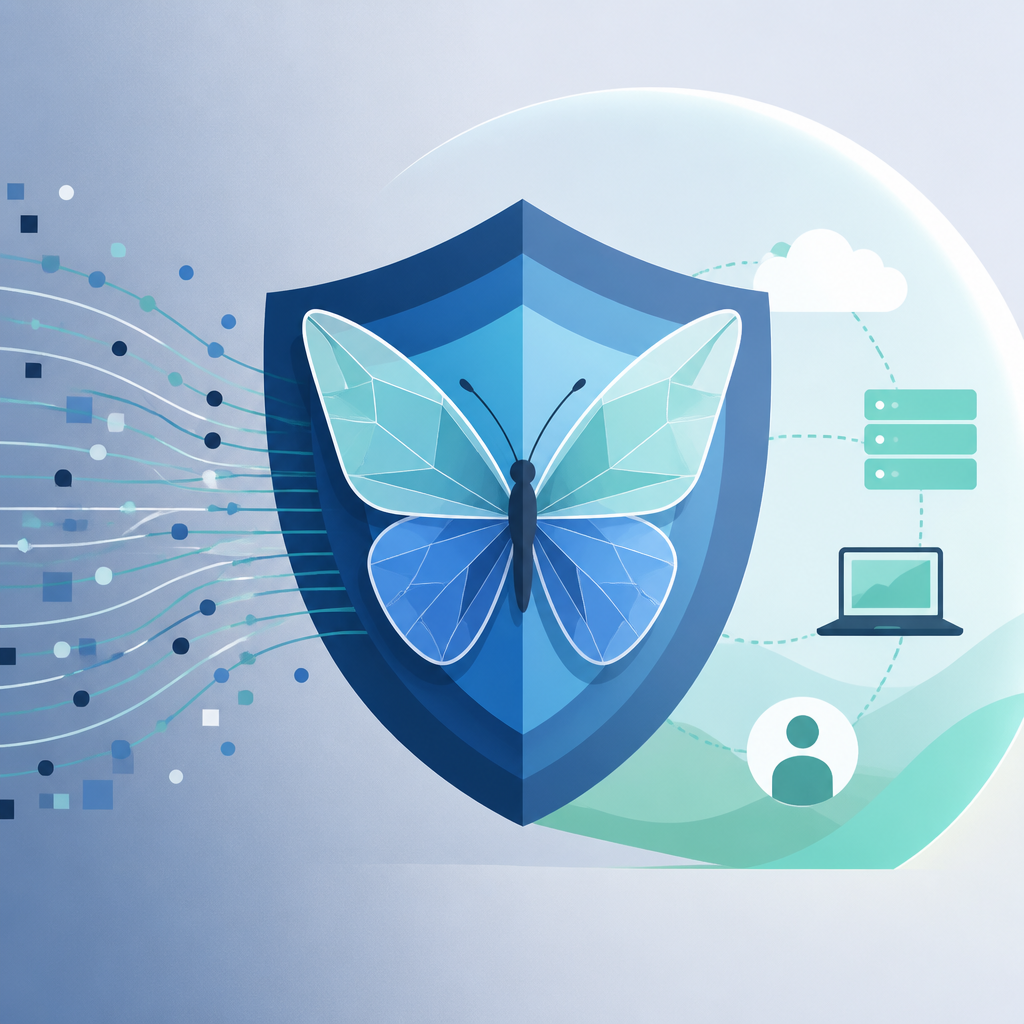
I’ve run into this in internal tooling reviews. If you ask a model to classify risk, summarize code, or flag suspicious behavior, it can be useful. But if you let it be the only thing standing between a risky change and production, you’re asking for a postmortem. FIS is framing Mythos 5 as an additional layer, which is the right mental model. Layer, not oracle.
How to apply it: put AI in front of human review, not in place of it. Use it to triage, score, summarize, and highlight weirdness. Then make the human decision explicit. If your process can’t show where the model influenced the outcome, your process is too fuzzy for regulated work.
- Use the model to surface anomalies, not to approve changes.
- Keep a human sign-off step for anything tied to customer data, permissions, or money movement.
- Log model output alongside the final reviewer decision so you can audit drift later.
“Trusted AI” only works if you define the trust boundary
FIS and Anthropic are using the language of trusted AI, but I care less about the slogan and more about the boundary. Trusted by whom? For what task? Under what constraints? If you don’t answer those questions, “trusted” becomes decorative.
Project Glasswing is interesting because it brings together organizations that build or maintain foundational software. That tells me the trust boundary is not just about end-user applications. It’s about the infrastructure layer itself. In financial services, that’s where the ugly stuff lives: permissions, audit trails, policy enforcement, release controls, and the systems that quietly keep everything from blowing up.
I’ve seen teams try to retrofit AI into those layers and get burned because they never wrote down what the model is allowed to touch. Once the model starts influencing security workflows, you need hard lines. What data can it see? Can it recommend or only flag? Can it be used on production logs? Can it inspect secrets? If you can’t answer those in one breath, you don’t have a trust boundary yet.
How to apply it: write a one-page model policy before you wire the model into anything sensitive. Keep it boring. State the allowed inputs, allowed outputs, escalation rules, retention rules, and the exact human owner for each step.
- Define the narrowest useful scope for the model.
- Separate “assist” actions from “authorize” actions.
- Make the policy visible to engineers, security, and compliance, not just leadership.
Project Glasswing is really about shared infrastructure pain
One line from the source matters more than all the branding: Project Glasswing brings together organizations that build or maintain foundational software. That’s the part I’d underline if I were presenting this internally. It means the partnership is aimed at the people who live in the plumbing, not the people writing slideware about it.
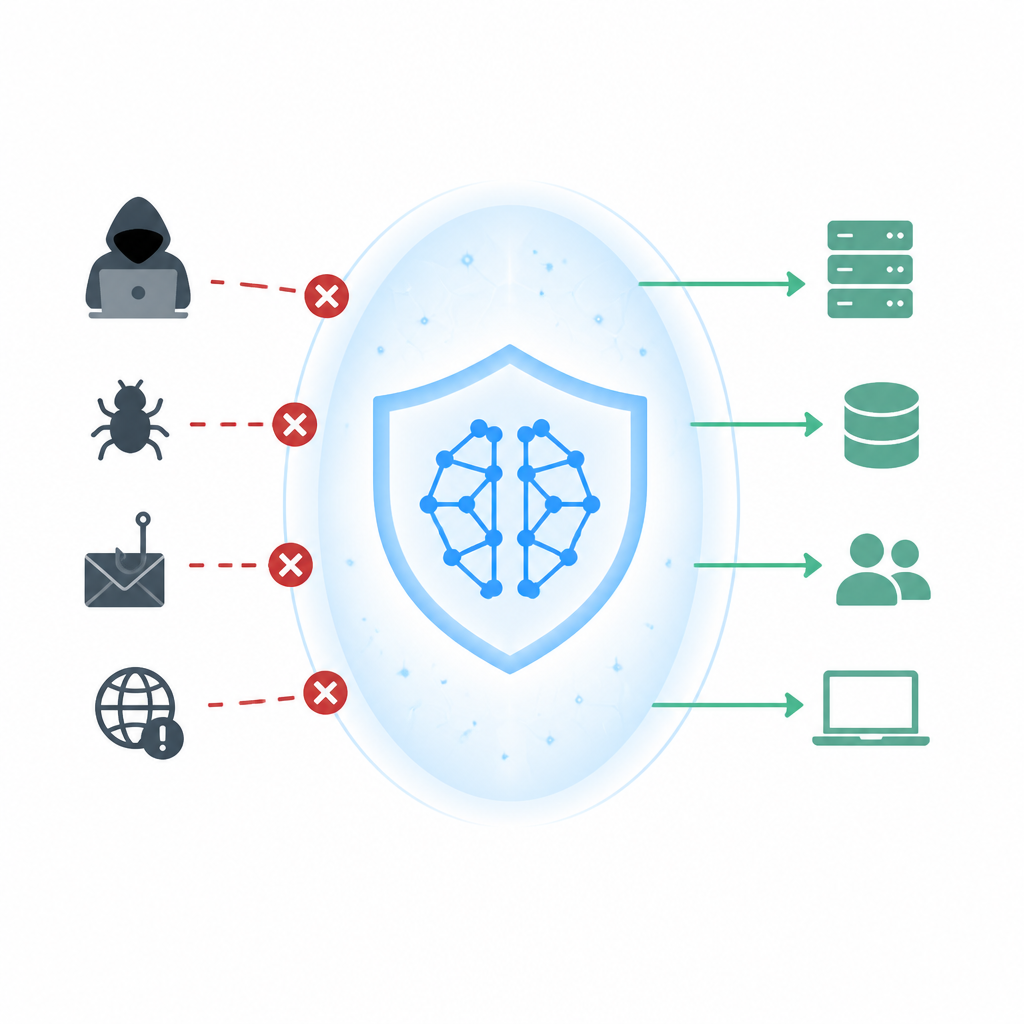
That’s also why this resonates with me. I’ve worked on teams where the security review was always downstream of the actual engineering pain. By the time security got involved, the system had already been designed around shortcuts. If you want AI to help, you have to put it closer to the place where architecture, policy, and implementation meet.
When you do that, the model can help with repetitive review work: spotting policy mismatches, summarizing diffs, highlighting suspicious dependency changes, or flagging unexpected access patterns. It’s not glamorous, but that’s the point. Security work is mostly repetitive until it suddenly isn’t.
How to apply it: aim the model at the boring parts first. Use it on dependency review, config drift, access-control changes, and alert summarization. Those are the spots where a second set of eyes saves real time without handing the model the keys.
Security programs need faster triage, not more confidence theater
There’s a habit in enterprise AI messaging where every new model gets described like it’s a smarter employee. I hate that framing. Employees have judgment, accountability, and context. Models have pattern matching and failure modes. Mixing those up is how teams end up with confidence theater.
What FIS appears to be doing with Project Glasswing is more practical: use Mythos 5 as an additional layer in the security program. That suggests triage, filtering, and review assistance. Good. That’s where models are actually useful today. They reduce the time between “something looks weird” and “someone competent is looking at it.”
I’ve found that this is the real KPI for AI in security: not “accuracy” in some abstract sense, but time-to-human-attention. If a model can shave 30 minutes off every incident review, that’s real value. If it just produces nicer prose for the same bad decision, it’s wallpaper.
How to apply it: measure the workflow, not the model. Track how long it takes to route a suspicious event, how often the model’s flag is accepted, and how often humans override it. If the model adds steps without reducing review time, it’s not helping.
Why financial services keeps pulling AI into control systems
Financial services doesn’t get to be casual. Every shortcut eventually becomes a compliance issue, a fraud issue, or a customer trust issue. That’s why I pay attention when a company like FIS talks about AI in security instead of AI in marketing or support. The bar is different.
The partnership with Anthropic also matters because it signals a preference for controlled deployment over open-ended experimentation. I’m not saying that makes the system safe by default. It doesn’t. But it does mean the starting point is more disciplined than “let’s see what happens if we expose the model to everything.”
That discipline is what teams usually miss. They buy a model, wire it into a workflow, and then act shocked when nobody knows how to audit the output. In finance, that’s not a minor oversight. It’s the whole problem.
How to apply it: if you work in a regulated environment, treat every AI integration like a new control surface. Ask who owns it, who audits it, who can disable it, and what happens when it hallucinated the wrong thing. If those answers are vague, stop there.
The part I’d copy is the operating model, not the branding
Project Glasswing is a good name. Fine. But the useful part is the operating model underneath it: AI as a security layer, tied to foundational software, with a narrow and defensible role. That’s the piece teams can steal without buying into the whole vendor story.
If I were rebuilding this for my own team, I’d ignore the grand claims and copy the structure. Put the model in a review lane. Limit its authority. Make the outputs auditable. Keep humans responsible. That’s not sexy, but it’s how you keep AI from becoming yet another opaque system that nobody wants to own when it breaks.
The source doesn’t give a pile of performance numbers, and honestly, I’m glad. Numbers without context are where bad enterprise narratives go to breed. What matters here is the shape of the deployment: an extra layer, not a replacement; a security program, not a demo.
The template you can copy
# AI Security Layer Operating Model

## Purpose
Use an AI model as an additional review layer inside a security program.
The model assists with triage, summarization, and anomaly spotting.
It does not approve releases, grant access, or replace human review.

## Allowed inputs
- Security alerts
- Config diffs
- Dependency metadata
- Access logs with approved redaction
- Policy text and control mappings

## Disallowed inputs
- Secrets, private keys, or raw credentials
- Unredacted customer data
- Production data outside the approved review scope
- Any data not covered by the current retention policy

## Allowed outputs
- Risk summaries
- Triage labels
- Anomaly flags
- Suggested next-review actions
- Human-readable explanations for reviewers

## Human control points
1. Model generates a review packet.
2. Human reviewer inspects the packet.
3. Reviewer accepts, rejects, or escalates.
4. Final action is recorded with reviewer identity.
5. Model output is stored for audit comparison.

## Policy rules
- The model may recommend, but never authorize.
- Any high-risk change requires human sign-off.
- Any uncertain output is treated as a flag, not a decision.
- Model access is reviewed on a fixed schedule.
- Output quality is checked against incident outcomes.

## Audit fields
- Request ID
- Input category
- Model version
- Reviewer ID
- Model recommendation
- Final human decision
- Override reason
- Timestamp

## Rollout checklist
- [ ] Define scope
- [ ] Approve data boundaries
- [ ] Assign human owner
- [ ] Add logging
- [ ] Add override path
- [ ] Test with low-risk cases first
- [ ] Review false positives and false negatives
- [ ] Document disable procedure

## Example usage
"Review these changes for policy drift, suspicious access patterns, and dependency risk.
Return a short summary, flags, and the exact reason each item was flagged.
Do not approve or reject the change."
Use this as the skeleton, then swap in your own controls, logging fields, and approval steps. If your team works in finance, insurance, or payments, keep the model in a review lane until you’ve proven it can be audited cleanly.
Original source: Business Wire announcement. I’ve interpreted the operating model and turned the source language into a copy-ready template; the wording and checklist above are mine.
// Related Articles
- [IND]
Anthropic's IPO rumor turns into a market watch
- [IND]
Anthropic should not become dependent on Meta for compute
- [IND]
Mistral's robotics model cuts indoor navigation costs
- [IND]
Mistral missile: France’s short-range air defense workhorse
- [IND]
Apple Reclaims No. 1 by Market Cap as AI Costs Spike
- [IND]
Kimi K3 could pressure the middle tier of AI models