SEC’s draft plan puts crypto rules first
I break down the SEC’s draft plan and give you a copy-ready framework for crypto policy, compliance, and tokenized product work.

I break down the SEC draft and give you a copy-ready crypto policy framework.
I've been watching SEC crypto policy for a while now, and the annoying part has never been the lack of opinions. It's been the lack of order. One week you get a speech, the next week an enforcement action, then a vague staff note, then everybody in the room pretends that counts as a framework. If you build anything in tokenized assets, custody, trading, or even just internal compliance, that kind of drift is exhausting. You spend more time guessing what the agency means than actually designing the product.
That’s why this draft strategic plan caught my eye. Not because I think the SEC suddenly became fluent in crypto. It didn’t. But because it put digital asset regulation at the front of the queue instead of leaving it buried in the usual pile of regulatory mush. That ordering matters. It tells me where the agency wants to spend its attention, what it thinks is broken, and where firms should stop winging it. I’m treating this as a useful signal, not a victory lap.
The source that kicked this off is Kevin Helms’ report at Bitcoin.com News, which summarizes the SEC’s draft strategic plan published June 2, 2026. The plan puts digital asset regulation first under Goal 1, which covers innovation, capital formation, market efficiency, and investor protection. I’m also cross-checking the agency’s own framing on the SEC site because, frankly, I don’t trust any one summary to carry the whole load.
The SEC stopped pretending crypto is a side quest
Get the latest AI news in your inbox
Weekly picks of model releases, tools, and deep dives — no spam, unsubscribe anytime.
No spam. Unsubscribe at any time.
“Blockchain and crypto asset technologies have the potential to revolutionize America’s financial infrastructure and deliver new optionality, efficiencies, cost reductions, transparency, and risk mitigation for the benefit of all Americans.”
What this actually means is the SEC is no longer treating crypto as a niche enforcement problem. It’s putting digital assets inside the agency’s core policy story. That’s a big shift from the old pattern where crypto was mostly discussed through fraud cases, registration fights, and a lot of hand-waving about investor harm.
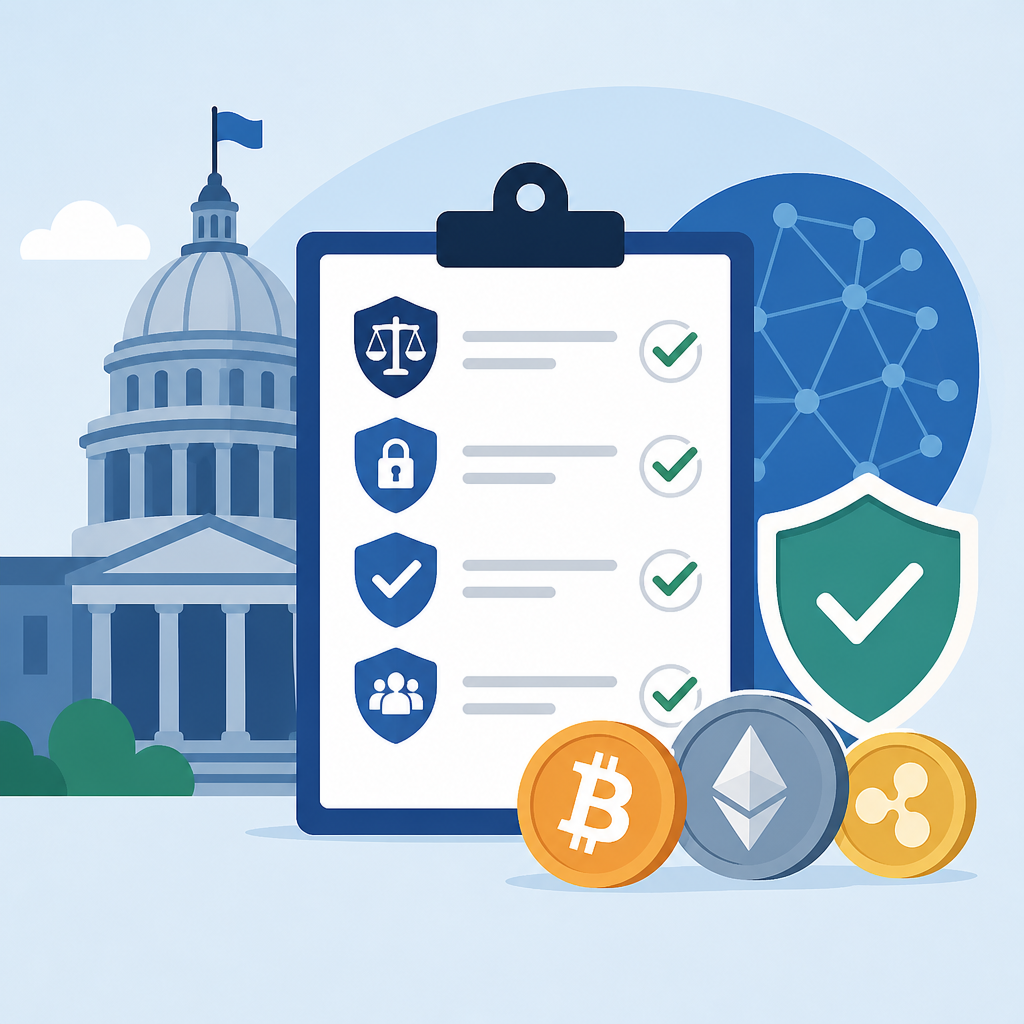
I’ve seen teams make a mistake here: they read this kind of language as marketing. It’s not. Agencies don’t usually write like this unless they want to justify future work. If the SEC says blockchain belongs in the same sentence as capital formation and market efficiency, then it’s signaling that crypto policy will be built into the agency’s operating plan, not bolted on later.
How to apply it: stop treating crypto compliance as a separate spreadsheet. Put it into your core product review, legal review, and risk review. If your company touches token issuance, custody, exchange routing, tokenized funds, or onchain settlement, this draft says you need a standing policy process, not an ad hoc fire drill.
There’s also a practical angle here for product people. When regulators start using words like “efficiencies” and “cost reductions,” they’re not handing you a free pass. They’re telling you what kinds of arguments may matter later. If you’re building a tokenized product, you need to explain how it improves market function without pretending the compliance burden doesn’t exist.
That’s the part people miss. The SEC isn’t saying “crypto good.” It’s saying “if crypto is going to sit inside regulated markets, we need a coherent way to talk about it.” That is a very different posture, and it changes how I’d write internal memos, board updates, and risk disclosures.
“Firm regulatory foundation” is code for fewer excuses
“Its first objective calls for a firm regulatory foundation for digital assets and distributed ledger technologies.”
That line is the real center of gravity. “Firm regulatory foundation” sounds dry, but it’s doing a lot of work. It means the SEC thinks current rules are too fuzzy for the market it’s looking at. It also means firms can’t keep hiding behind the idea that the law is unclear forever. The agency wants a base layer it can point to.
I ran into this exact problem when helping teams scope token products: everyone wanted to know whether the asset was a security, whether the exchange activity was permitted, whether custody was clean, and whether the disclosure model matched the product. The answer was usually some version of “maybe, depending on facts, and good luck.” That’s not a strategy. That’s a stall tactic with nicer clothes.
How to apply it: build your product documentation as if a regulator will ask for the logic chain. Don’t just say what the token does. Say why it exists, who controls it, what rights it carries, how it settles, where custody sits, and what happens if the smart contract fails. If you can’t answer those cleanly, you’re not ready for a more formal regulatory regime.
The SEC’s wording also points to distributed ledger technology, not only crypto tokens. That matters because a lot of firms try to separate “blockchain infrastructure” from “crypto assets” as if the first category gets a free hall pass. It doesn’t. If the infrastructure changes how assets are issued, traded, recorded, or settled, the agency is already looking at it as part of the same compliance problem.
- Map every token or ledger workflow to a legal owner, a technical owner, and a compliance owner.
- Write down which parts of the product depend on discretion, and which parts are deterministic.
- Keep a decision log for classification, custody, and transfer restrictions.
That last one sounds boring because it is boring. But boring is what saves you when the questions start. The SEC doesn’t need your vibe. It needs a record.
“Rational, coherent, and principled” is the part firms should quote back
“The securities watchdog says that framework should be rational, coherent, and principled.”
That phrase tells me the SEC knows the current environment has been messy. If the agency wants rules that are rational and coherent, it is implicitly admitting that a lot of crypto policy has felt fragmented, reactive, and too dependent on enforcement posture. I’m not saying that erases the past. It doesn’t. But it does suggest the agency wants a cleaner theory of the case.

What this actually means is firms may get a better shot at planning around standards instead of guessing at mood. But I’d be careful not to overread that. “Principled” does not mean permissive. It means the SEC wants to be able to explain itself without sounding like it made everything up on a Tuesday.
I like this language because it gives compliance teams something concrete to push for internally. If your legal team is reviewing a product, ask whether the structure is rational, coherent, and principled from the regulator’s point of view. That’s a better question than “can we get away with it?” because it forces the team to think in systems, not loopholes.
How to apply it: build a one-page policy statement for each crypto-facing product. Include the asset type, market role, custody model, transfer rules, disclosures, and investor protections. Then ask whether each piece fits the others. If the answers contradict each other, you’ve got a coherence problem before the regulator finds one for you.
This is also where internal governance matters. If product, legal, compliance, and engineering are all making different assumptions, you will ship something that looks fine in a demo and falls apart in review. I’ve watched that happen. It’s ugly. The fix is a shared policy artifact, not another meeting.
For teams needing a reference point, the SEC’s own site is the place to watch for the eventual final plan and any related rulemaking: sec.gov. For background on digital asset policy and market structure, I’d also keep tabs on the U.S. Congress legislative track, because the draft itself says the framework should be anchored in statute.
Harmonization is where the real compliance work starts
“This harmonization seeks to ensure that the crypto markets have clear and principled rules of the road, anchored in statute, that promotes innovation while maintaining the highest degree of investor protection.”
Harmonization is one of those words people use when they want to sound calm while describing a very annoying job. In plain English, it means the SEC wants its crypto rules to line up with existing securities law instead of floating around as a separate universe. That sounds tidy. In practice, it means a lot of teams will have to rework assumptions they’ve been carrying for years.
This matters because crypto firms love fragmentation when it helps them and hate it when it doesn’t. A harmonized approach can reduce some ambiguity, but it also reduces the ability to shop for interpretive gaps. If the rules are anchored in statute, the game becomes less about creative positioning and more about disciplined design.
I’ve seen this bite teams in token launches. The issuer thinks the token is a utility. The exchange thinks it’s a listing risk. The custody vendor thinks it’s a support nightmare. The lawyers think it’s probably a security. Everyone is technically “aligned” until someone asks for a single answer. Harmonization forces that answer out into the open.
How to apply it: create a cross-functional matrix with four columns: product function, securities-law implication, operational risk, and investor-protection impact. Fill it out before launch, not after. If a tokenized product doesn’t have a clean story in all four columns, you need to slow down.
- Use one shared classification memo across product, legal, and compliance.
- Document why the product is not misleading investors.
- Write custody and transfer assumptions into the launch checklist.
Also, don’t ignore the investor-protection language. That’s not decorative. It’s the SEC reminding everyone that innovation is not a magic word. If a product is more efficient but less understandable, less auditable, or easier to abuse, the agency is going to care about that tradeoff.
For teams building market infrastructure, this is where a lot of the real work sits. If you’re touching tokenized funds, onchain settlement, or broker-dealer workflows, start mapping your current controls against existing securities obligations now. Waiting for a final rule before you clean up the house is how you end up doing emergency remediation at the worst possible time.
This is bigger than crypto-native firms
The draft plan does not read like something aimed only at exchanges and token issuers. It reaches into asset managers, public companies, fintech firms, and anyone trying to connect blockchain-based systems to regulated finance. That’s the part I think people will underestimate. Once the SEC frames digital assets as part of capital formation and market efficiency, the blast radius gets wider fast.
What this actually means is tokenization is no longer a side experiment for a few crypto shops. If the SEC moves this agenda forward, then traditional financial firms will need answers too. How do you issue a tokenized security? How do you report ownership? How do you manage custody? How do you route orders? How do you show the investor what they actually own?
I’ve had conversations with finance teams who assumed they could wait until the market matured. That’s a bad bet. Once policy starts moving toward a firmer foundation, the laggards don’t get to stay neutral. They get to inherit everyone else’s mess without the benefit of early planning.
How to apply it: if you’re not a crypto-native company, do a product inventory and mark every feature that touches tokenization, wallet flows, settlement, or digital asset custody. Then assign a regulatory owner to each feature. Not a committee. A person. Committees are where ownership goes to die.
If you want a practical external reference for the market side, keep an eye on FINRA and the CFTC. The SEC is not the only agency that matters here, and firms that ignore overlapping jurisdiction usually end up paying for the lesson later.
The comment period is the one place firms still have influence
The draft plan is not final, and that matters. The article notes that the proposal remains subject to public comment before the SEC finalizes the strategic plan. That means market participants still have a shot at shaping how the agency thinks about digital assets over the next several years. If you build in this space, this is not the time to stay quiet and then complain later.
What this actually means is the SEC is asking for feedback before it locks in the long-term roadmap. That’s your opening to explain where the current framework breaks, where it’s too vague, and where it accidentally blocks legitimate products. If you have real data, use it. If you only have slogans, save everybody the trouble.
I’m always skeptical when firms say they “engage with regulators” but never submit anything concrete. That’s theater. Real engagement is a written comment, a technical explanation, or a documented policy concern that can be reviewed and cited. Anything less is just brunch-level complaining.
How to apply it: prepare a short comment package with three parts. First, describe the product or workflow. Second, identify the exact rule gap or ambiguity. Third, propose a fix that preserves investor protection. That structure is simple, and that’s why it works.
For teams looking to track the original policy source, the SEC’s draft strategic plan should be your primary reference point, with the Bitcoin.com News summary as the reporting layer that surfaced it. I’m using both, but I’m not pretending they’re the same thing.
The template you can copy
# Crypto Policy Readiness Memo

## 1) Product or workflow
- Name:
- Owner:
- Business purpose:
- Customer type:

## 2) Asset and ledger description
- Asset type:
- Token standard or protocol:
- Ledger / chain:
- Who controls upgrades:
- Who controls minting / burning:

## 3) Regulatory classification
- Why this may be a security, commodity, payment instrument, or other:
- Key facts supporting the classification:
- Open questions:
- External counsel / internal legal owner:

## 4) Market function
- Issuance:
- Trading / routing:
- Custody:
- Settlement:
- Reporting:

## 5) Investor protection controls
- Disclosures:
- Risk warnings:
- Suitability / access controls:
- Conflicts management:
- Complaint handling:

## 6) Operational controls
- Key dependencies:
- Failure modes:
- Incident response owner:
- Audit trail location:
- Record retention period:

## 7) Policy alignment check
Rate each item 1-5:
- Rational:
- Coherent:
- Principled:
- Statute-aligned:
- Investor-protection aligned:

## 8) Decision
- Ship / pause / redesign:
- Why:
- Next review date:
- Required approvals:

## 9) Comment-letter draft
- What rule or gap needs fixing:
- Why the current approach is unclear:
- Proposed change:
- Expected benefit to market integrity:
- Expected benefit to innovation:
If I were using this internally, I’d keep the memo short, factual, and annoying in the right way. The point is not to win a debate in one document. The point is to force the team to answer the questions that regulators will ask anyway.
Source attribution: this breakdown is based on Kevin Helms’ article at Bitcoin.com News and the SEC’s draft strategic plan on sec.gov. My template and interpretation are original, but the policy signals and quoted language come from those sources.
// Related Articles
- [IND]
Anthropic's IPO rumor turns into a market watch
- [IND]
Anthropic should not become dependent on Meta for compute
- [IND]
Mistral's robotics model cuts indoor navigation costs
- [IND]
Mistral missile: France’s short-range air defense workhorse
- [IND]
Apple Reclaims No. 1 by Market Cap as AI Costs Spike
- [IND]
Kimi K3 could pressure the middle tier of AI models