Why Cloudflare’s VoidZero deal is a win for Vite
Cloudflare should back VoidZero because Vite needs capital, not captivity.

Cloudflare is backing VoidZero to strengthen Vite without taking it captive.
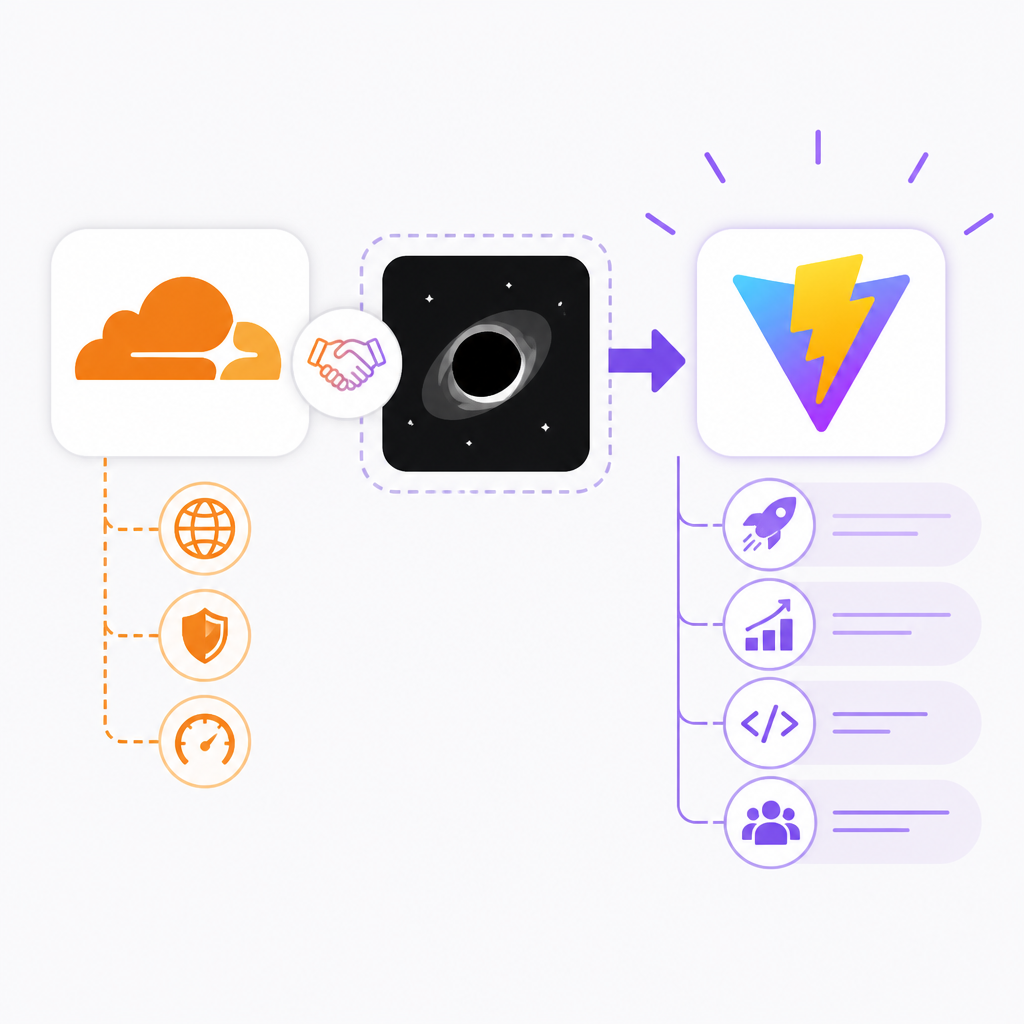
Cloudflare’s decision to bring VoidZero in-house is the right move because Vite has become infrastructure, and infrastructure needs durable funding, not wishful thinking. The company says Vite, Vitest, Rolldown, Oxc, and Vite+ will stay open source, vendor-agnostic, and community-driven, while Cloudflare also commits $1 million to a Vite ecosystem fund. That combination matters: it gives the projects more runway without forcing the ecosystem into a single deployment path.
Vite is too important to starve
Get the latest AI news in your inbox
Weekly picks of model releases, tools, and deep dives — no spam, unsubscribe anytime.
No spam. Unsubscribe at any time.
Vite is no longer just another frontend tool. Cloudflare says it now sits underneath Vue, SvelteKit, Nuxt, Astro, Solid, Qwik, Angular, React Router, TanStack Start, and even a Vite-based Next.js implementation. That is the definition of a shared foundation. When a tool becomes the default substrate for this many frameworks, treating maintainership as a hobby is reckless.

The download numbers make the same point in a blunt way. Cloudflare cites roughly 129 million weekly downloads for Vite and almost 14 million weekly downloads for its own Vite plugin. That scale means every improvement to Vite affects a huge slice of the JavaScript world. If a tool that central is under-resourced, the whole ecosystem pays the tax in slower fixes, weaker docs, and burned-out maintainers.
Cloudflare is buying alignment, not control
The strongest part of this deal is the structure. Cloudflare is not asking Vite to become Cloudflare-specific, and it says changes to Vite itself will still go through the same open contribution process. That is the right line to draw. Open source projects fail when a sponsor tries to turn a common layer into a sales funnel. They get healthier when the sponsor accepts that the project’s legitimacy comes from neutrality.
Cloudflare’s own technical behavior supports that claim. The company points to the Vite Environment API and the Cloudflare Vite plugin, where server code can run in workerd during development, matching production more closely without forcing anyone into a Cloudflare-only server. That is a clean example of vendor-specific implementation on top of a generic interface. It is the model the rest of the ecosystem should want: shared primitives, optional providers, no hostage-taking.
AI makes this investment more urgent, not less
Cloudflare is also right to connect this move to AI-assisted development. The article argues that agents now use dev servers, test runners, linters, formatters, and CLIs constantly, not just humans. That changes the economics of developer tooling. A toolchain that is fast for a person is useful; a toolchain that is fast, structured, and repeatable for an agent becomes strategic.
VoidZero’s stack fits that world unusually well. Vitest, Rolldown, Oxc, Oxlint, and Oxfmt are all designed for speed and repeatability, and Vite+ ties them together with one CLI and one configuration model. That matters because agents do not tolerate sloppy workflows. They need clear errors, consistent commands, and fewer moving parts. In that sense, Cloudflare is not betting on a fashion trend. It is backing the toolchain best shaped for the next wave of software production.
The counter-argument
The obvious objection is that any acquisition by a major platform company risks capture, even when the press release says otherwise. Developers have seen this movie before: a neutral project gets folded into a commercial roadmap, the sponsor gains influence over priorities, and the broader community starts to wonder whether the project still serves everyone equally. Skepticism here is healthy.
There is also a practical concern about fragmentation. If Cloudflare starts building a Vite-centered CLI and full-stack workflow, some developers will assume the center of gravity is shifting toward Cloudflare even if the code remains open. That fear is not irrational. Ecosystems can become de facto platform-dependent long before they become officially closed.
But that counter-argument stops short of proving this deal is bad. The deciding factor is not who owns the company behind the contributors; it is whether the project’s governance, licensing, and contribution path remain open. Cloudflare has explicitly said Vite stays MIT-licensed, vendor-agnostic, and community-driven, and it has backed that statement with a separate ecosystem fund. That is not proof of virtue forever, but it is a concrete structure that reduces the risk of capture instead of increasing it.
What to do with this
If you are an engineer, treat this as a signal to double down on portable Vite workflows and to watch the open governance, not the branding. If you are a PM or founder, use this moment to standardize on tools that keep your app deployable anywhere, while benefiting from better local dev, faster iteration, and a healthier upstream. The right response is not loyalty to Cloudflare or suspicion of it. The right response is to demand that foundational tooling stay open, well funded, and useful outside any single vendor’s walls.
// Related Articles
- [IND]
Anthropic's IPO rumor turns into a market watch
- [IND]
Anthropic should not become dependent on Meta for compute
- [IND]
Mistral's robotics model cuts indoor navigation costs
- [IND]
Mistral missile: France’s short-range air defense workhorse
- [IND]
Apple Reclaims No. 1 by Market Cap as AI Costs Spike
- [IND]
Kimi K3 could pressure the middle tier of AI models