Why Kane Pixels Should Direct the Backrooms Movie Himself
Kane Pixels should direct the Backrooms movie himself because the project lives or dies on his visual language.
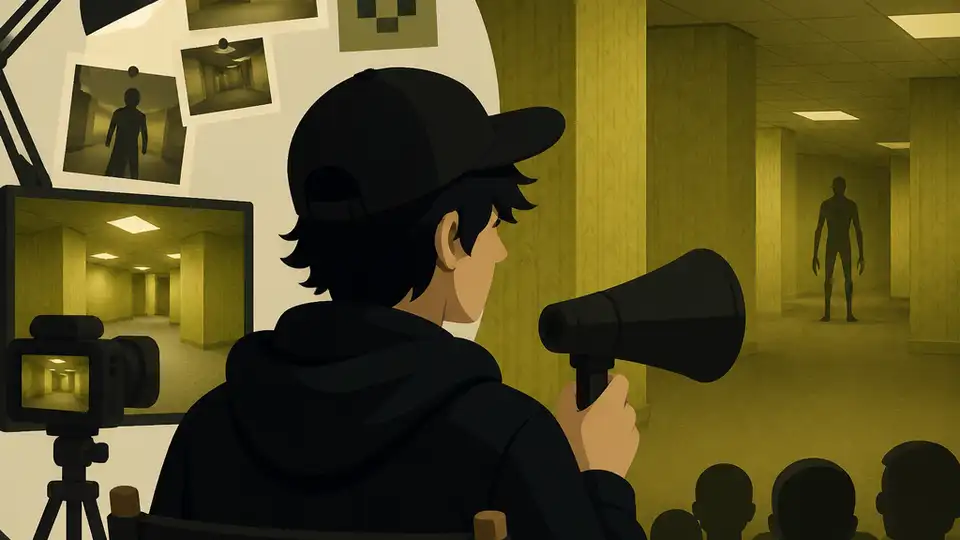
Kane Pixels directing the Backrooms movie is the right call because the project depends on his visual language.
Kane Pixels should direct the Backrooms movie himself, because the Backrooms brand is not a generic horror premise anymore; it is a specific audiovisual identity built on uncanny scale, liminal spaces, and a homemade style that millions of viewers now recognize instantly. Deadline reported on February 6, 2023, that the film would be directed by Kane himself from a screenplay by Roberto Patino. That detail matters. If the adaptation strips the project away from the creator who defined its look and rhythm, it risks becoming just another studio horror title wearing a famous name.
First, the Backrooms is already a directorial signature, not just a story
Get the latest AI news in your inbox
Weekly picks of model releases, tools, and deep dives — no spam, unsubscribe anytime.
No spam. Unsubscribe at any time.
The first reason is simple: the Backrooms succeeded online because the direction was the product. Kane Pixels did not merely invent a premise and hand it off. He created the pacing, camera movement, lighting logic, and sense of spatial dread that made the videos feel distinct from other analog-horror projects. That means the film is not adapting a clean narrative property; it is adapting a style of seeing. When a franchise is this visual, the person who built the visual grammar should stay in charge.
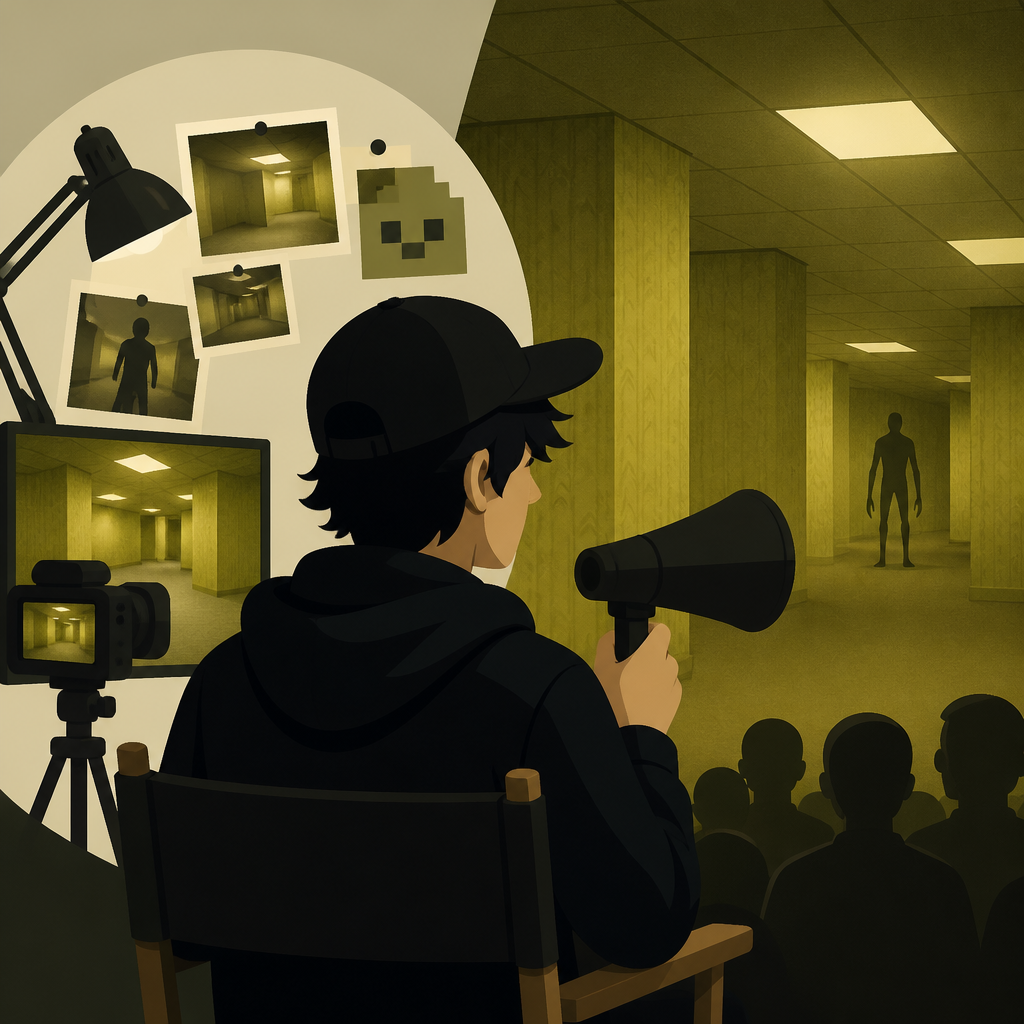
Look at the way audiences responded to the original shorts. The appeal was never only “monster in maze.” It was the feeling that the camera was trapped in a world that obeyed its own rules, with sterile yellow walls and endless corridors producing anxiety through repetition rather than exposition. That effect is fragile. A conventional horror director can reproduce the premise, but not necessarily the exact texture that made the premise viral. Kane’s involvement protects the one asset that cannot be licensed by concept alone: authorship.
Second, creator-led direction reduces the risk of over-explaining the mystery
The Backrooms works because it withholds. The internet version of the idea thrives on uncertainty, and the strongest entries in the series understand that the less you pin down the entity, origin, or cosmology, the more oppressive the world becomes. A studio adaptation often does the opposite. It tries to convert atmosphere into plot, and mystery into lore. Having Kane direct makes it more likely the film preserves restraint instead of turning every shadow into a backstory.
There is a practical example from horror history: once a concept becomes a feature film, executives often push for clearer rules, cleaner arcs, and a more legible finale. That can help mainstream audiences, but it can also flatten the dread. The Backrooms does not need a textbook explanation of the phenomenon. It needs disciplined ambiguity. A creator-director is more likely to defend that ambiguity against the standard pressure to over-define the monster, the dimension, or the mechanism. Patino’s screenplay can provide structure, but Kane’s direction is what keeps the structure from becoming a cage.
The counter-argument
The strongest argument against this position is that first-time feature directors often struggle with scale. A short-form creator can control a few minutes of tension, but a studio film demands performance direction, scene transitions, production management, and the ability to sustain momentum for 90 minutes or more. On that view, handing the film to an experienced horror director would reduce risk and improve the odds of a polished theatrical release.
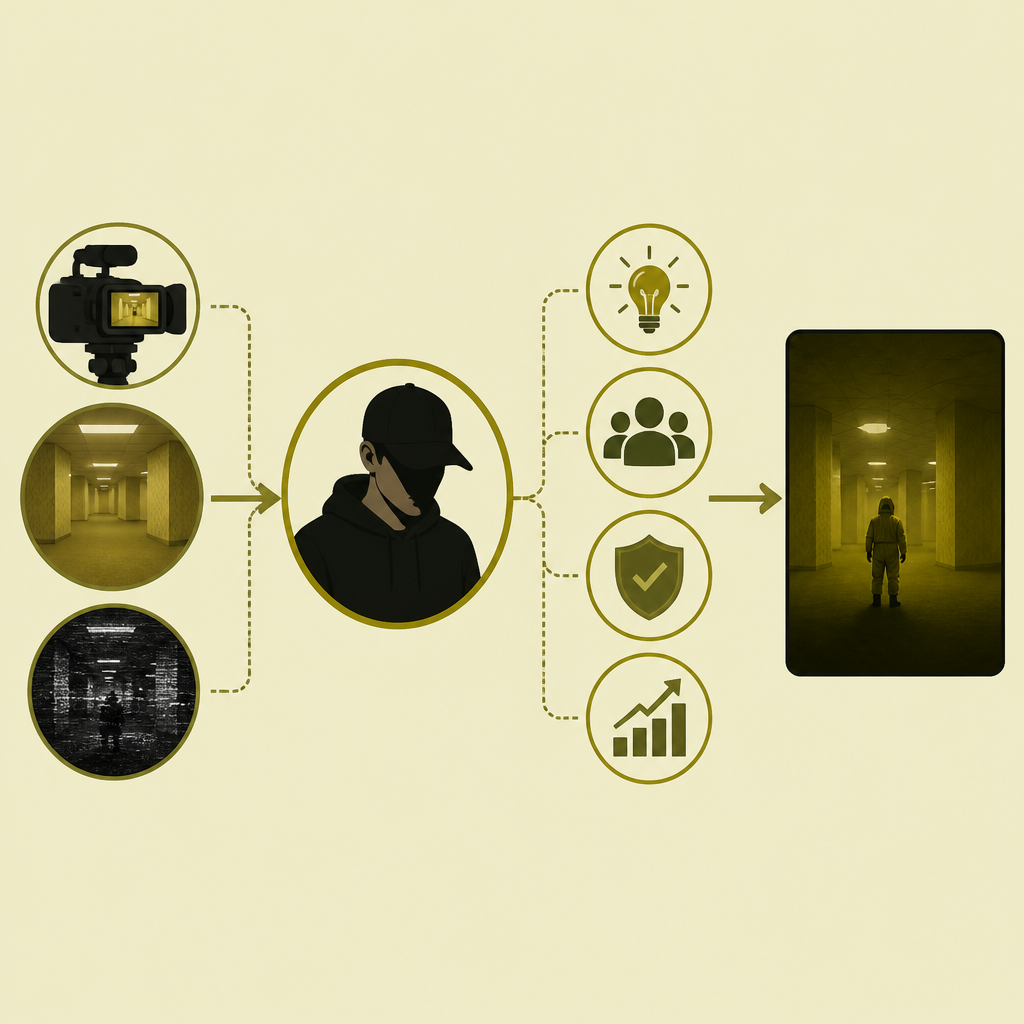
That concern is real, and it should not be dismissed. Feature filmmaking is a different discipline from YouTube horror, and some creators lose their edge when they move into a larger system. But the Backrooms is not a property that benefits from generic competence. The whole point is singularity. If the film becomes smoother at the cost of becoming ordinary, the trade is a failure. The better solution is not to remove Kane from the chair, but to surround him with experienced collaborators who can handle production complexity while he protects the film’s identity.
What to do with this
If you are a founder or creator adapting your own audience-built IP, do not surrender the core creative role just because the budget gets bigger. Keep control of the element that made people care in the first place, then hire for the gaps around you: experienced producers, a strong screenplay partner, and department heads who can translate your vision into a feature-length production. If you are a PM or studio executive, your job is not to replace the originator with a safer name. Your job is to make the originator scalable without sanding off the weirdness that made the project worth buying.
// Related Articles
- [IND]
Anthropic's IPO rumor turns into a market watch
- [IND]
Anthropic should not become dependent on Meta for compute
- [IND]
Mistral's robotics model cuts indoor navigation costs
- [IND]
Mistral missile: France’s short-range air defense workhorse
- [IND]
Apple Reclaims No. 1 by Market Cap as AI Costs Spike
- [IND]
Kimi K3 could pressure the middle tier of AI models