Why Midjourney v8 Changes the AI Image Game
Midjourney v8 is a real leap because it fixes realism, consistency, text, and editing.

Midjourney v8 is a real leap because it fixes realism, consistency, text, and editing.
Midjourney v8 is the first version that makes AI image generation feel production-ready instead of impressively unstable. The important shift is not a prettier default look; it is that the model now holds a face across scenes, renders short text that people can actually read, and produces images with enough photographic fidelity to survive client review. That combination changes the tool from a concept machine into something teams can build workflows around.
First argument: v8 finally solves the realism problem
Get the latest AI news in your inbox
Weekly picks of model releases, tools, and deep dives — no spam, unsubscribe anytime.
No spam. Unsubscribe at any time.
The biggest reason v8 matters is that it crosses the line from “AI-looking” to visually credible. Earlier Midjourney versions often produced skin with a waxy finish, fabrics without weight, and light that felt generic rather than physically grounded. v8 corrects those tells. Pores, fine hair, fabric weave, stone grain, and natural shadow falloff now appear with enough accuracy that the average viewer stops noticing the model and starts seeing the image.

This matters because realism is not a cosmetic feature in commercial work, it is the difference between usable and unusable. If a designer is building a product mockup, a photographer is testing a campaign look, or a marketer is assembling a pitch deck, a slightly artificial face or texture breaks trust immediately. The article’s own comparison is telling: v8 moves skin texture from “very good” to “excellent,” and that is the kind of jump that saves hours of cleanup and rerendering.
Second argument: consistency is the feature that unlocks real workflows
Character consistency is the most important practical upgrade in v8 because it removes the old Midjourney habit of reinventing the same person every time. The new --cref system keeps core facial geometry stable across different scenes, which means one character can appear in a boardroom, on a beach, and in a portrait setup without turning into a different person. That is not a novelty feature. It is the difference between making one image and making a sequence.
The same logic applies to --sref, which locks style across a series. A brand team can hold onto the same palette, lighting, and visual tone across dozens of assets instead of manually wrestling each prompt into the same aesthetic. The article is right to call this out for editorial series, campaign work, and social content. For any team that cares about continuity, v8 turns Midjourney from a randomizer into a system.
The counter-argument
The strongest case against v8 is simple: it still is not a full design tool, and it still is not perfect. Text rendering works well for short labels and headlines, but body copy remains unreliable. Character drift can still appear under extreme lighting or unusual angles. High-volume pipelines also do not get a speed boost, so teams pushing large batches will not suddenly move faster just because the output looks better.
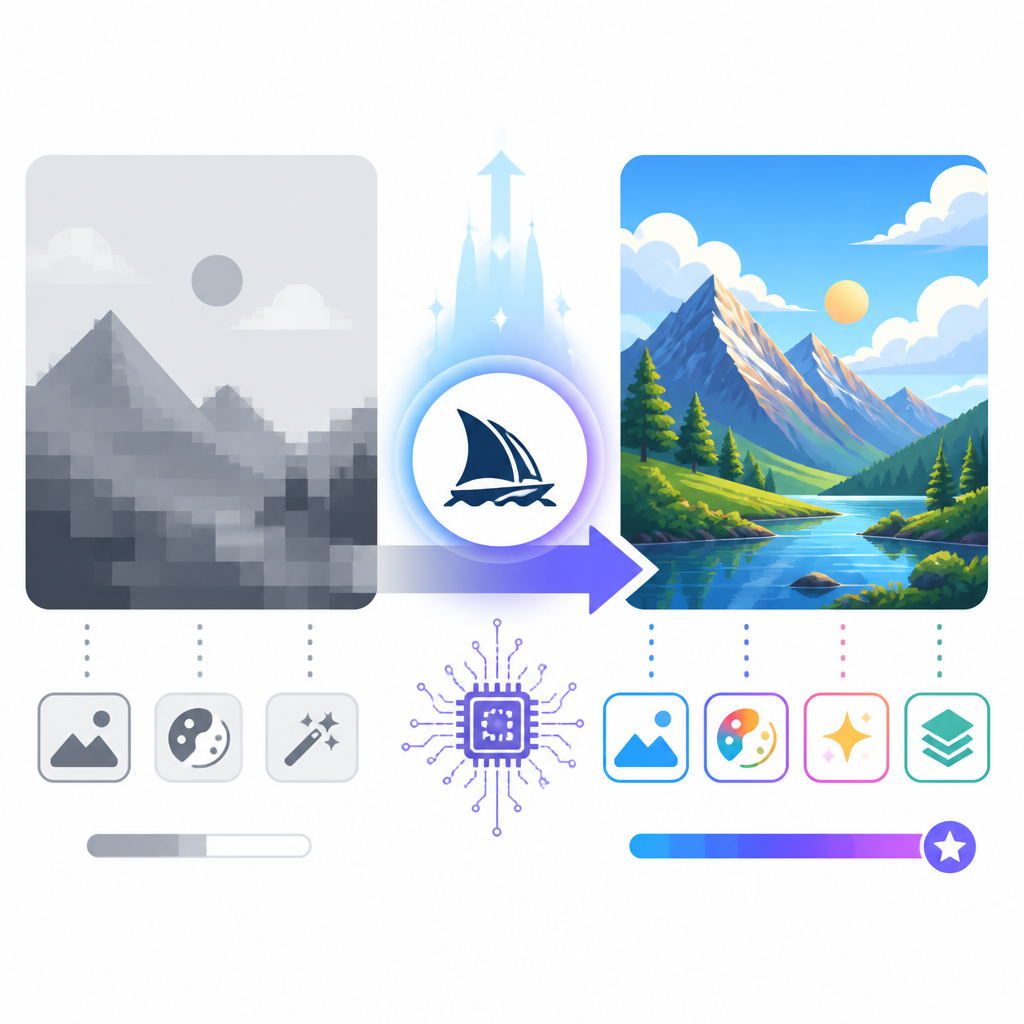
That criticism is fair, but it does not weaken the core argument. v8 is not trying to replace Photoshop, Figma, or a layout system, and it should not be judged as if it were. Its job is to generate stronger source images with fewer failures, and on that metric it succeeds decisively. The limits are real, but they are narrow enough that most professional users can work around them with normal design tools.
What to do with this
If you are an engineer, PM, or founder building on AI imagery, stop treating generation quality as a single score. Test for realism, identity consistency, prompt adherence, text rendering, and editability separately, because v8 improves each one in a different way. Re-run your best v7 prompts, measure how often the model lands on the first try, and build workflows that use v8 for concepting and compositing while keeping final typography and layout in dedicated design tools. That is the right way to use it.
// Related Articles
- [TOOLS]
OpenAI’s screenless speaker turns ChatGPT into a companion
- [TOOLS]
SCALE turns CUDA code into portable GPU builds
- [TOOLS]
2027 AI/ML internship jobs are being tracked daily
- [TOOLS]
MiMo Code Is Worth Using Only If You Treat It Like Infrastructure
- [TOOLS]
Ollama raises $65M with 14 people and 8.9M users
- [TOOLS]
Databricks lets you query foundation models