Anthropic’s code review tool turns AI code into reviewable work
Anthropic’s new review tool helps teams catch bugs and security issues in AI-written code before it ships.
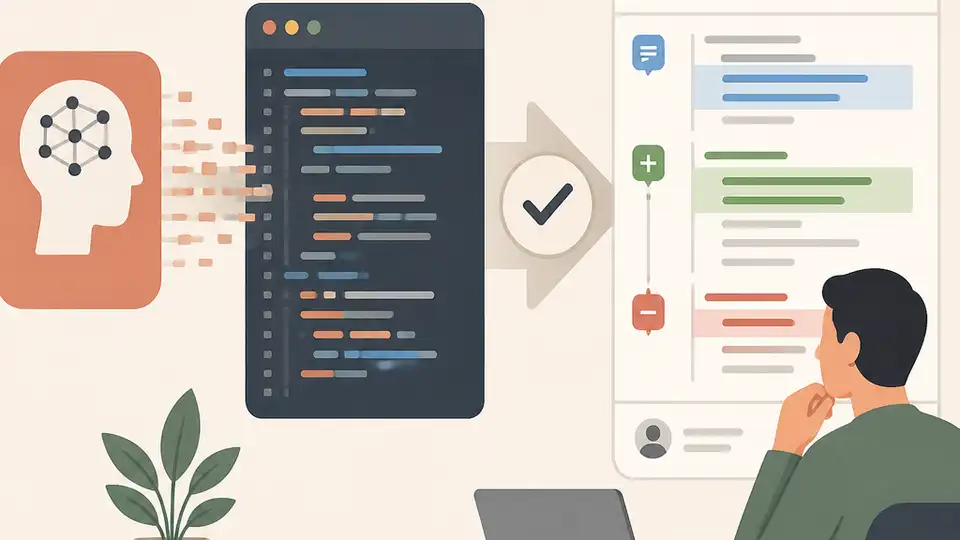
Anthropic’s review tool helps teams catch bugs and security issues in AI-written code before it ships.
I've been using AI coding tools long enough to recognize the lie they tell you. They make you feel faster, and for the first hour, you are. Then the pile starts. Files get generated in seconds, tests get half-written, and the diff looks clean enough that nobody wants to be the person who slows the team down. I’ve seen this movie with Claude Code, Cursor, and the usual stack of “ship it now, review it later” habits. The problem isn’t that the code is obviously bad. The problem is that it’s plausible. It compiles. It passes a few tests. It hides the weird edge case until production gets a say.
That’s why Anthropic shipping a code review tool actually matters to me more than another flashy coding demo. It’s not trying to make AI write code faster. It’s trying to deal with the mess after the code gets written. And honestly, that’s where the real pain is. If AI can produce ten pull requests before lunch, your review process becomes the bottleneck whether you like it or not. I’ve watched teams pretend that human review will “keep up” because the generated code looks tidy. It won’t. The backlog grows, the confidence gets fake, and the security team starts asking annoying questions for very good reasons.
The source that kicked this off for me was Jitendra Vaswani’s piece on SaaS Ultra, “Anthropic Launched a Code Review Tool to Check the Flood of AI-Generated Code — The Problem It Solves Is Real”. He frames it around the same pressure I’m seeing everywhere: more AI-generated code, less human time to inspect it, and a real risk that teams ship unreviewed junk at scale. The post doesn’t give hard usage numbers for the tool, so I’m not going to invent any. What it does give is the shape of the problem, and that shape is familiar to anyone who has watched AI coding move from novelty to default.
AI made code generation cheap. Review did not.
Get the latest AI news in your inbox
Weekly picks of model releases, tools, and deep dives — no spam, unsubscribe anytime.
No spam. Unsubscribe at any time.
“The paradox the tool addresses is elegant: the faster developers use AI to write code, the more code that exists in production that nobody has fully reviewed.”
What this actually means is simple: code creation got compressed, but code trust did not. I can ask a model to draft a feature in 30 seconds, but I still need to understand the auth flow, the error handling, the data exposure, and the side effects before I let it near prod. That gap is the whole story. People keep talking like the bottleneck is writing code. It isn’t anymore. The bottleneck is deciding whether the code deserves to exist.
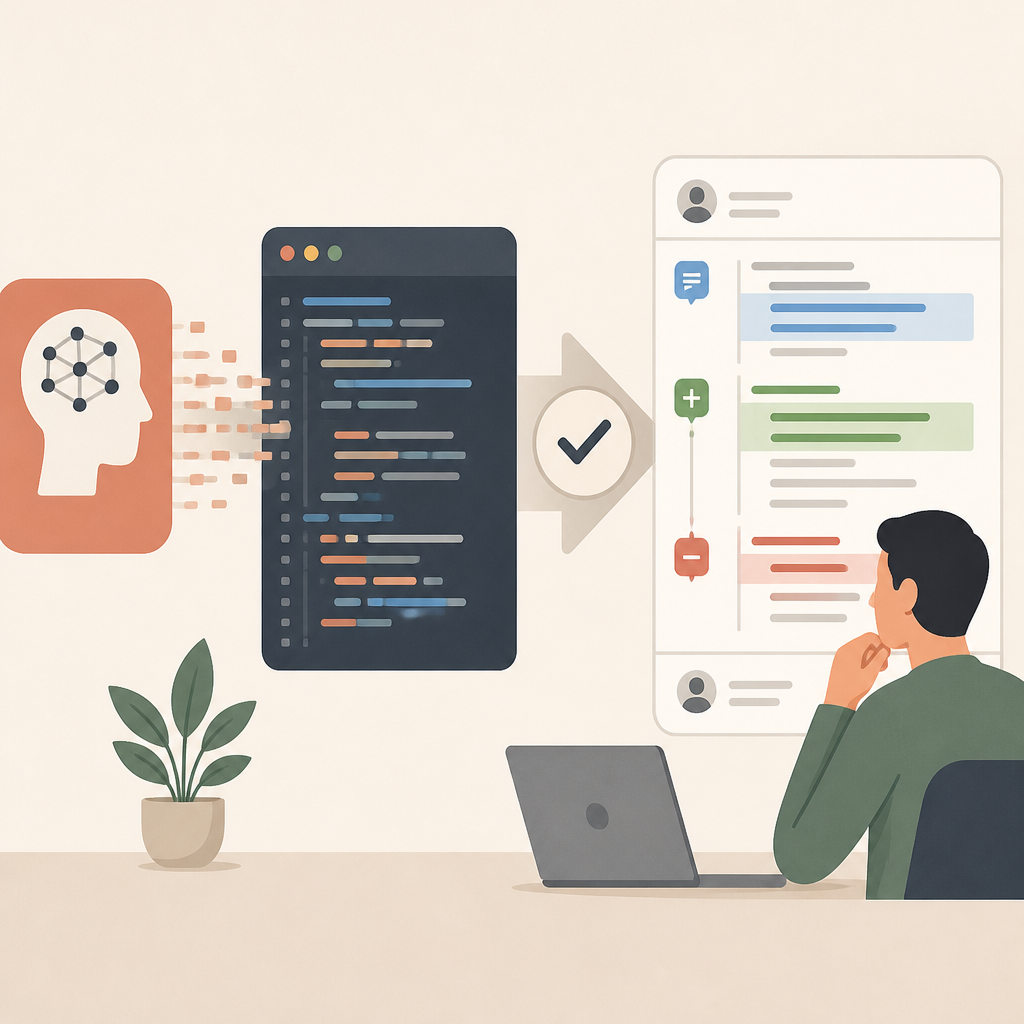
I ran into this when a teammate used an AI assistant to scaffold a permissions layer. The code looked elegant, and that was the problem. It was so clean that the review skimmed past the actual bug: a branch that allowed access if one condition failed open. Nobody noticed until we walked the logic line by line. That’s the kind of mistake AI is good at hiding. It doesn’t scream. It packages the mistake in a neat little function and hands it to you with confidence.
Anthropic’s move is basically an admission that “just review it faster” is nonsense. Humans don’t scale linearly with code volume. If your team is generating more code than it can meaningfully inspect, you don’t have a productivity win. You have a quality debt problem.
How to apply it: stop measuring AI coding success by lines shipped or PRs opened. Measure how much of that code is actually reviewable, and how much review time each AI-generated change consumes. If your model is producing more than your team can inspect, you need guardrails before you need more prompts.
- Track AI-authored diffs separately from human-authored diffs.
- Require deeper review for security-sensitive paths, not just a rubber stamp.
- Put review time in the same dashboard as delivery time.
This is not a linter wearing a fake mustache
Anthropic’s description, as summarized in the SaaS Ultra article, is that the tool uses Claude’s understanding of code semantics, security patterns, and vulnerability classes to evaluate AI-generated code. That matters because a linter is not enough. A linter catches style, syntax, and some obvious mistakes. It does not understand intent. It does not know that a credential should never be stored in a certain path, or that a retry loop turns into a denial-of-service risk when it sits behind a hot endpoint.
What this actually means is that the tool is trying to reason about behavior, not just shape. That’s a much harder job, and it’s the right one. The failures I care about in AI-generated code usually aren’t “missing semicolon” failures. They’re “this works until a weird input arrives” failures. They’re “this code is technically correct but operationally dumb” failures. They’re “this looks safe if you read it quickly” failures.
I’ve used enough static analysis tools to know their limits. They’re useful, but they’re narrow. The minute you need to ask, “Does this function actually do what the developer intended?” you’ve left the linting lane. That’s where a review tool earns its keep. It needs to catch mismatched assumptions, hidden security regressions, and logic that only breaks under real-world pressure.
How to apply it: if you’re building or buying a code review assistant, don’t ask whether it can annotate style issues. Ask whether it can explain intent mismatch. Ask whether it can identify risk in credential handling, auth flows, data validation, and error propagation. If it can’t talk about those things, it’s decoration.
- Use it on auth, billing, and data access code first.
- Make it flag “looks correct but changes behavior” cases.
- Pair it with tests, not instead of tests.
The real target is the review backlog, not the code itself
The article’s strongest point is that the review backlog is now a production risk. That’s the part I wish more teams would say out loud. We love talking about AI as a coding accelerator, but once the code leaves the model, somebody has to own it. If that somebody is a human reviewer, then the human becomes the constraint. If that reviewer is already juggling feature work, incident response, and architecture decisions, the backlog gets ugly fast.
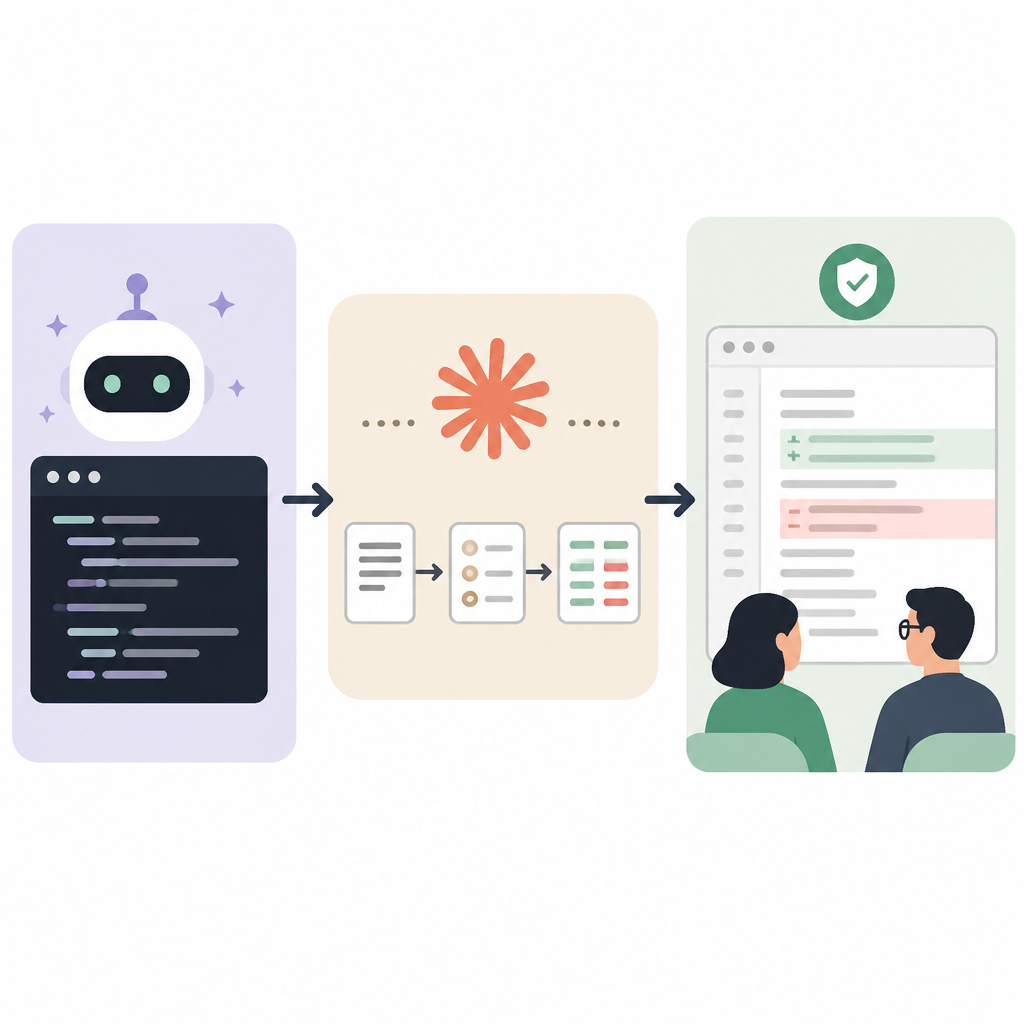
What this actually means is that code review is becoming an infrastructure layer. Not a ritual. Not a polite gate. Infrastructure. If you’re serious about using AI to generate a lot of code, then review needs throughput, consistency, and specialization. The old “just get a senior engineer to eyeball it” approach is going to crumble under volume.
I’ve seen this especially in teams that love agentic workflows. They spin up multiple code-producing agents, then act surprised when pull requests stack up like unpaid invoices. The code review step becomes the place where velocity goes to die. And because it’s invisible in demo videos, nobody budgets for it. Anthropic’s launch is useful because it puts a price tag on the part everyone keeps ignoring: inspection at scale.
How to apply it: design review like a pipeline, not a ceremony. Route low-risk changes one way, high-risk changes another. Give reviewers context, not just diffs. If you’re using AI heavily, add a second automated pass that checks for security and logic risk before a human ever opens the PR.
- Classify diffs by risk: low, medium, high.
- Require stronger checks for auth, payments, and secrets.
- Keep a queue metric for review latency.
Security teams are about to get dragged into every AI PR
The SaaS Ultra article points to a WordPress 7.0 AI API key vulnerability as a concrete example of why this matters. That kind of issue is exactly what AI-generated code can make easier to miss. If a model writes credential-handling code that looks tidy but hides a storage or exposure flaw, the bug can make it through review and land in production with an impressive amount of confidence behind it.
What this actually means is that AI code review is becoming part of security posture, not just developer convenience. I don’t care how fast a model is if it normalizes sloppy secret handling. I don’t care how pretty the diff looks if the code quietly expands the blast radius of a mistake. Security people have been warning for years that automation without inspection is how small issues become expensive incidents. AI just accelerates the pace.
I ran into a version of this when a generated integration snippet pulled an API key from an environment variable in one place, then copied it into a logging path in another. The author didn’t notice. The reviewer didn’t notice. The log line was the problem, and it was buried in code that looked harmless. That’s exactly the sort of thing a semantics-aware review tool should catch.
How to apply it: make security review a first-class output of AI-assisted coding. Don’t wait for a separate security audit after the PR merges. If the tool can surface risky credential handling, unsafe serialization, or weak input validation early, you reduce the chance that “fast” becomes “expensive.”
Useful references if you want to compare approaches: Claude, Cursor, GitHub Copilot, and Sonar all sit somewhere in the broader AI-assisted development stack, but none of them magically removes the need for review discipline.
Anthropic is also defining a product category here
This is the part SaaS builders should pay attention to. The article argues that the code review market is already large, but AI-generated code review is a newer sub-segment with different requirements. I agree. Existing tools were built around human-written code and traditional static analysis assumptions. AI-generated code creates a different failure profile: more volume, more plausible mistakes, more hidden intent drift.
What this actually means is that a lot of adjacent products are about to get pressure tested. AI testing tools, AI documentation tools, AI security auditors, and agent orchestration platforms all now have to answer a harder question: how do you prove the output is trustworthy when the input was machine-generated and the reviewer is already overloaded?
That’s why Anthropic’s move feels less like a feature launch and more like category naming. Once a company with this much model credibility says, “Yes, review is its own problem,” the market gets permission to budget for it. And once budget exists, vendors appear. That’s how these things usually go, minus the hype people throw on top.
I’ve watched enough developer tooling cycles to know the pattern. First comes generation. Then comes cleanup. Then comes governance. The companies that survive are usually the ones that realize cleanup and governance are not afterthoughts. They’re the product.
How to apply it: if you’re building in this space, stop positioning your tool as “AI for developers” and start being honest about the specific pain you solve. Review. Testing. Security. Documentation. Pick one. Then make it work under real load, with real code, for teams that are already tired.
The template you can copy
# AI-generated code review policy

## Purpose
Any code generated or heavily assisted by AI must be reviewed for correctness, security, and intent before merge.

## When this applies
- New code written with Claude, Cursor, Copilot, or other AI tools
- Large refactors assisted by AI
- Security-sensitive changes
- Changes that touch auth, billing, permissions, secrets, or data access

## Review rules
1. Review the diff for behavior, not just style.
2. Check for intent mismatch: does the code actually do what the author wanted?
3. Verify input validation, error handling, and edge cases.
4. Inspect secret handling, logging, and data exposure.
5. Require tests for any AI-generated logic that affects production behavior.
6. Block merge if the reviewer cannot explain the code in plain language.

## Risk tiers
### Low risk
- Copy edits
- Small UI changes
- Non-production scripts

### Medium risk
- Business logic
- API integrations
- Background jobs

### High risk
- Authentication
- Authorization
- Payments
- Secrets
- Data pipelines
- Security-sensitive code

## Required checks by tier
### Low risk
- Human review
- Basic tests if applicable

### Medium risk
- Human review
- Unit/integration tests
- AI-assisted review pass

### High risk
- Human review
- AI-assisted review pass
- Security review
- Tests covering failure modes
- Explicit approval from code owner

## Reviewer prompt for AI-assisted review
Use this prompt on the diff before human approval:

"Review this code for logical correctness, security risks, edge cases, and intent mismatch. Identify anything that could fail in production, expose data, weaken auth, or behave differently than the author likely intended. Summarize findings by severity and explain the risk in plain language."

## Merge checklist
- [ ] I understand what the code does
- [ ] I understand how it fails
- [ ] I checked for security issues
- [ ] I checked for edge cases
- [ ] Tests exist for the risky paths
- [ ] The code owner approved if needed
- [ ] The PR is explainable to another engineer

## Escalation rule
If the diff is AI-generated and the reviewer cannot explain the behavior clearly, the PR does not merge.
That’s the version I’d actually put in a team handbook. It’s boring on purpose. Boring is good when the thing you’re trying to prevent is a production incident dressed up as productivity.
If you want to make this operational, stick the policy next to your PR template, not in some forgotten wiki page. Add a label for AI-assisted changes. Route high-risk diffs to the right reviewers. And make the default assumption that generated code is not trusted until someone proves it is.
Source attribution: I broke this down from Jitendra Vaswani’s SaaS Ultra article at https://www.saasultra.com/anthropic-launched-a-code-review-tool/. The template above is mine, derived from the problem described in that post and adapted into a practical team policy.
// Related Articles
- [TOOLS]
Docker Desktop on Windows in one clean install flow
- [TOOLS]
Grok 4.5 hits Cursor with $2/$6 pricing
- [TOOLS]
AGT turns agent calls into governed actions
- [TOOLS]
OpenClaw v2026.7.1 turns control UI into a workspace
- [TOOLS]
OpenAI’s screenless speaker turns ChatGPT into a companion
- [TOOLS]
SCALE turns CUDA code into portable GPU builds