Claude Opus 4.8: $5/$25 API pricing, 1M context
OpenRouter lists Anthropic’s Claude Opus 4.8 at $5 per million input tokens and $25 per million output tokens with a 1M-token context window.

OpenRouter lists Claude Opus 4.8 with $5 input and $25 output pricing plus a 1M-token context window.
OpenRouter has published pricing and benchmark details for Anthropic’s Claude Opus 4.8, the company’s most capable generally available Opus model. The listing puts the model at $5 per million input tokens and $25 per million output tokens, with a 1,000,000-token context window and a 128,000-token maximum output.
| 項目 | 數值 |
|---|---|
| Input price | $5 per 1M tokens |
| Output price | $25 per 1M tokens |
| Context window | 1,000,000 tokens |
| Maximum output | 128,000 tokens |
| Release date | May 27, 2026 |
What changed
Get the latest AI news in your inbox
Weekly picks of model releases, tools, and deep dives — no spam, unsubscribe anytime.
No spam. Unsubscribe at any time.
OpenRouter says the model supports text, image, and file inputs, with text output and reasoning support. The positioning is aimed at long-horizon agents, memory-heavy workflows, and extended sessions where consistency matters.

OpenRouter also frames Claude Opus 4.8 as a fit for multi-step reasoning, complex coding, and project orchestration across large codebases. That includes multi-stage debugging, asynchronous agent pipelines, drafting documents, building presentations, and data analysis.
- Model: Claude Opus 4.8
- Pricing: $5 input, $25 output per million tokens
- Context: 1M tokens
- Max output: 128,000 tokens
- Release date: May 27, 2026
Why it matters
For developers, the 1M-token context window is the headline feature. It makes the model more practical for long conversations, large repositories, and agent workflows that need to carry state across many turns without constant summarization.
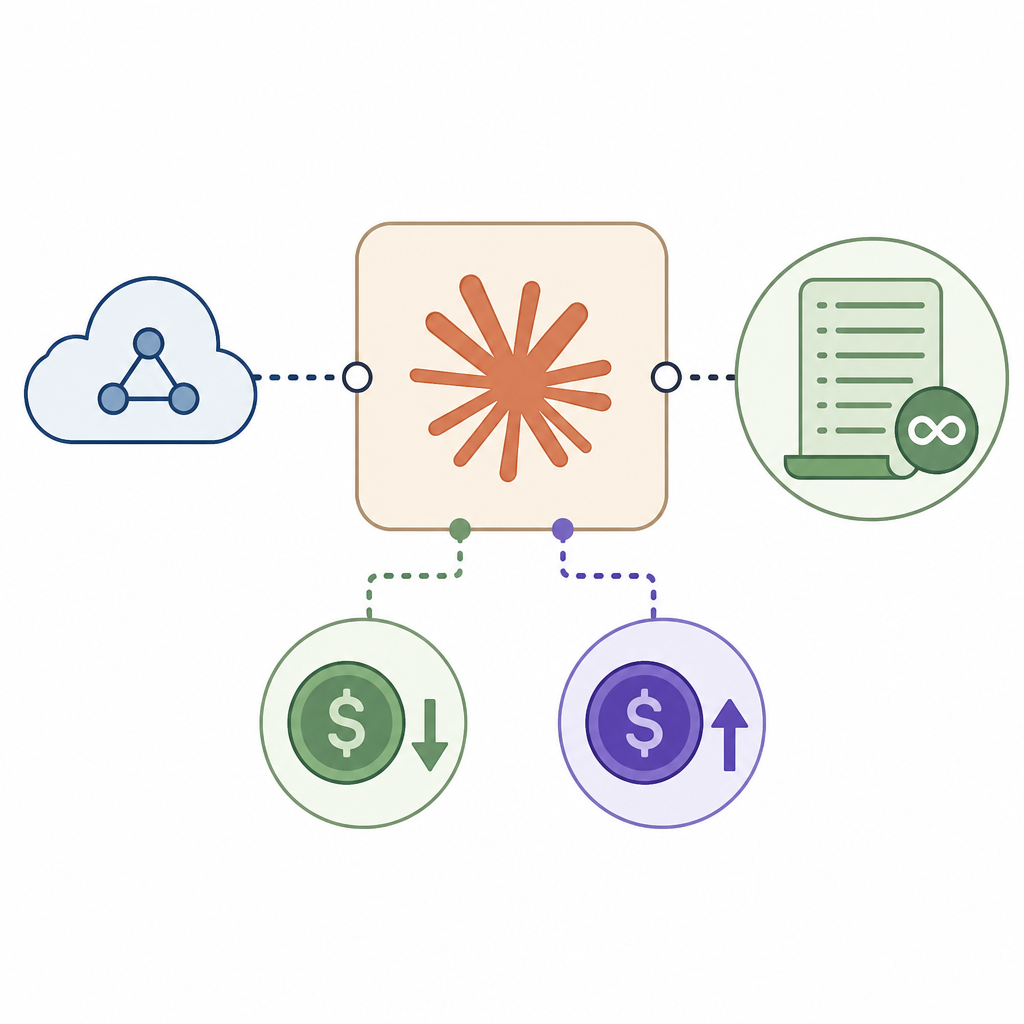
The pricing also gives teams a clearer cost model for high-volume usage. OpenRouter notes that prompt caching can cut effective prices by 60% to 80% on repeated context, which matters for apps that reuse prompts or long system instructions.
OpenRouter’s setup may also reduce provider risk. Its routing can switch between hosts based on price, speed, or a fixed-provider mode, so teams can keep the same model slug while the platform handles provider selection and retries.
The real question is not whether Claude Opus 4.8 can handle bigger jobs. It is whether teams will pay premium rates for longer context, or design around caching and routing to keep those jobs affordable.
// Related Articles
- [MODEL]
August 2026 model rankings: Claude leads text, Kimi coding
- [MODEL]
Qwen3.8-Max pushes Alibaba into the top tier
- [MODEL]
Qwen3.8-Max proves that agentic work is the real frontier
- [MODEL]
Google Earth Should Not Ship AI Image Generation
- [MODEL]
Try Claude Opus 4.7 and read its benchmarks
- [MODEL]
Opus 5 lets you cut cost without losing quality