Midjourney’s web app changes how people use AI art
Midjourney added a web app in August 2024, bundling editing tools and syncing with Discord as it pushed past chat-only use.
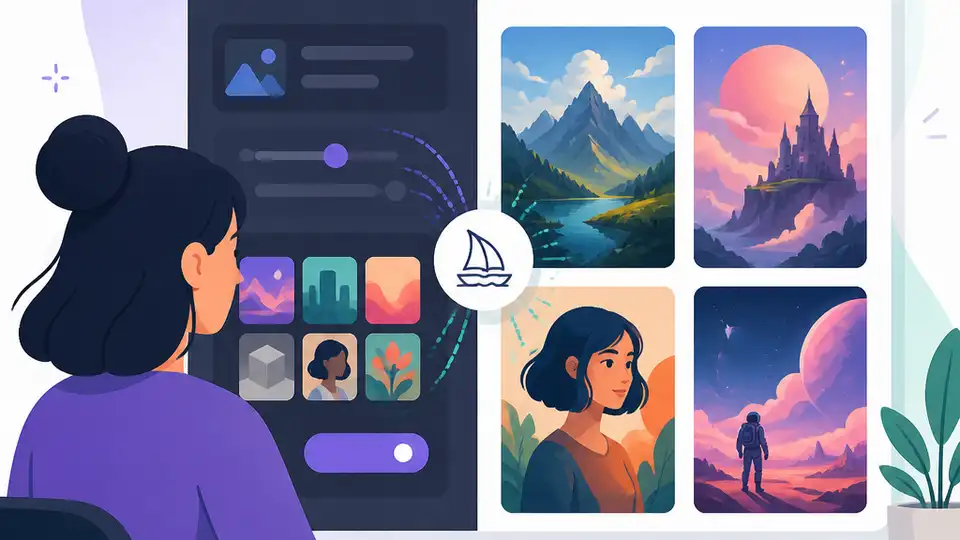
Midjourney launched a web app in August 2024 that brought its image tools out of Discord.
Midjourney has been around since July 12, 2022, but the company’s biggest product shift came much later: a web interface launched in August 2024 alongside Midjourney V6.1. That mattered because it moved the tool from a Discord-first workflow into something closer to a normal creative app.
The timing was no accident. By 2024, competitors such as Adobe Firefly and Google Imagen were already living in the browser, while Midjourney was still asking many users to type prompts into chat rooms.
| Milestone | Date | Why it matters |
|---|---|---|
| Open beta launch | July 12, 2022 | Midjourney opened to the public as a text-to-image service |
| Web interface launch | August 2024 | Moved core tools into a browser-based editor |
| V6.1 release | July 31, 2024 | Added more literal prompt handling and better text rendering |
| V5.2 release | June 22, 2023 | Added an aesthetics system and zoom-out features |
| V4 alpha | November 5, 2022 | Marked the move to TPUs for training |
From Discord bot to browser editor
Get the latest AI news in your inbox
Weekly picks of model releases, tools, and deep dives — no spam, unsubscribe anytime.
No spam. Unsubscribe at any time.
Midjourney began as a Discord-native product, which was clever in the early days and awkward for everyone else. If you wanted to use it, you needed to learn bot commands, work inside public channels or direct messages, and accept that the interface looked more like a chat experiment than a design tool.
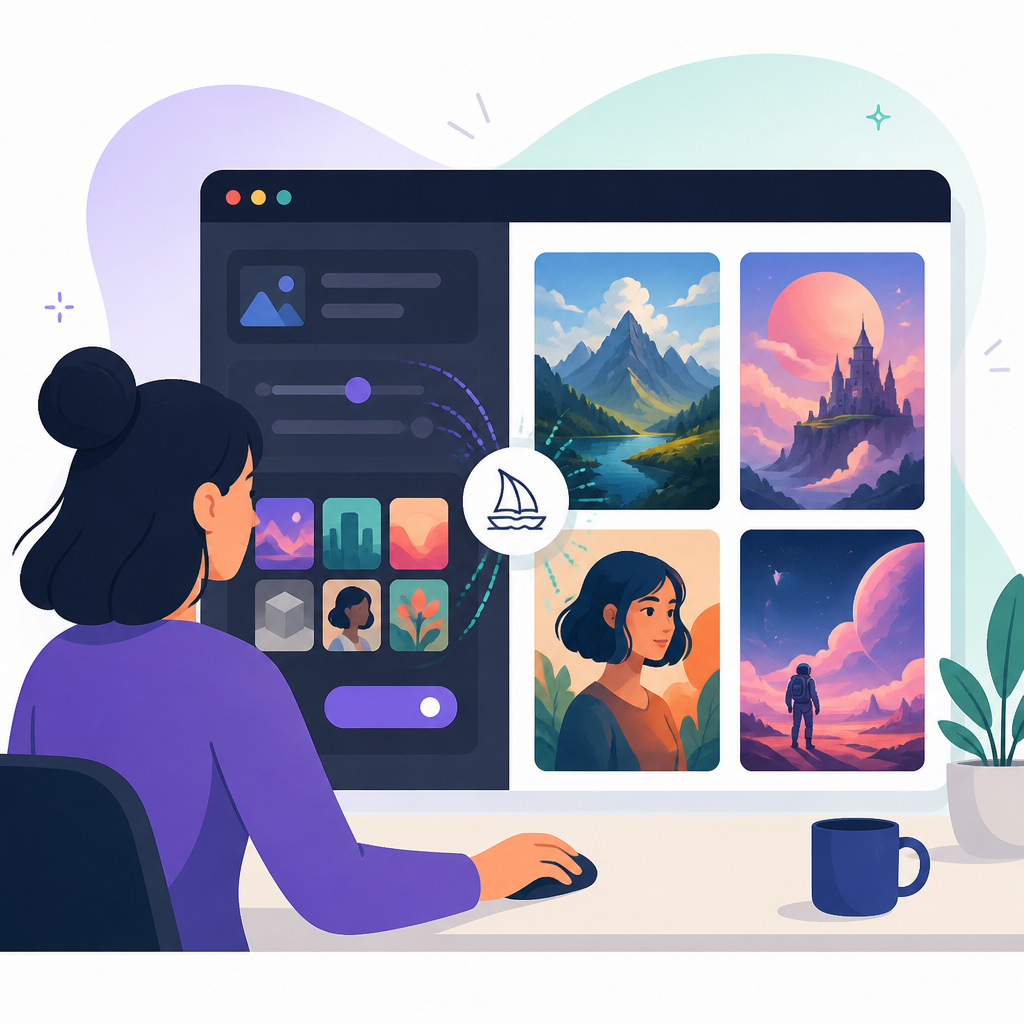
The company later added the official website, and by August 2024 the browser experience had become much more useful. The web editor folded image editing, panning, zooming, region variation, and inpainting into one place. That reduced the friction for people who wanted to iterate quickly without bouncing between chat and image panels.
This matters because interface design changes who keeps using a tool. Discord appeals to power users and early adopters, but browser apps fit into everyday creative work better. Midjourney’s move was a practical answer to a simple problem: if image generation is part of a workflow, the workflow should not depend on a chat server.
- Users can still generate images with Discord bot commands.
- The web app syncs conversations between Discord channels and web rooms.
- Early web access once required 1,000 bot-generated images, then that limit disappeared.
What V6.1 added, and why it mattered
Midjourney V6 arrived on December 21, 2023 after a nine-month training run from scratch, and V6.1 followed on July 31, 2024. The update focused on better text rendering and a more literal reading of prompts, which is the kind of improvement users notice immediately when they are trying to make product shots, posters, or mockups with readable copy.
That release also lined up with the web rollout, which made the product feel less like a novelty and more like software with a serious release cadence. Midjourney has repeatedly shipped new model versions over the years, including V2 in April 2022, V3 on July 25, 2022, V4 on November 5, 2022, V5 on March 15, 2023, and V5.2 on June 22, 2023.
“We’re already profitable,” David Holz told The Register in August 2022.
That quote still matters because it explains why Midjourney could move at its own pace. The company did not need to chase every interface trend on day one. It could keep refining image quality, then decide when the web experience was worth the engineering effort.
Midjourney’s model history also shows a pattern: the company ships focused upgrades instead of huge feature dumps. V5.1 became more opinionated, V5.2 added zoom-out, and V6 pushed text fidelity and prompt literalism. The August 2024 web app was the product layer that tied those improvements together.
How Midjourney compares with the rest of the field
Midjourney’s web move looks less like a cosmetic redesign and more like a response to the market around it. OpenAI’s DALL·E and Adobe’s Firefly were already built for browser use, while Midjourney still had a strong identity as a Discord-native image engine. That identity helped it grow fast, but it also made the product harder to explain to new users.
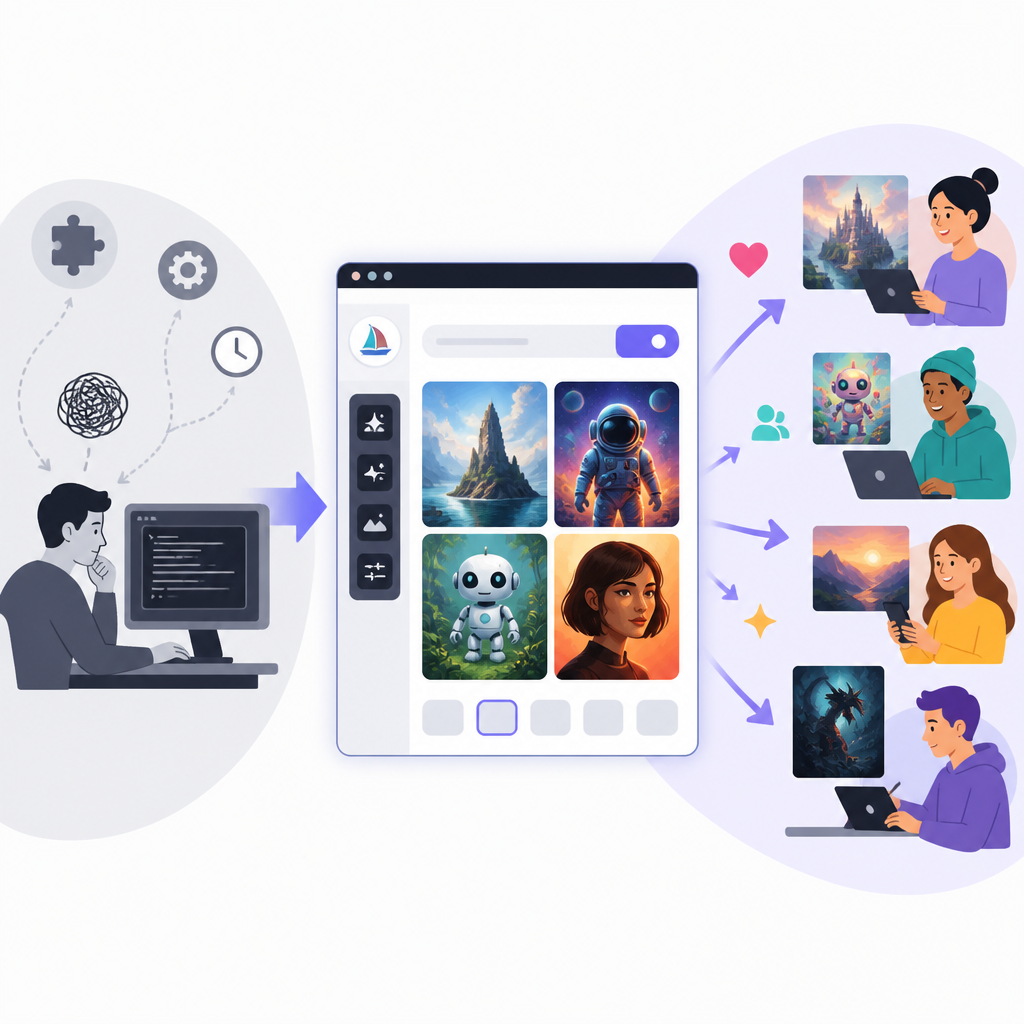
The comparison gets sharper when you look at features. Midjourney’s web editor combines editing, panning, zooming, region variation, and inpainting. The company also added Image Weight, Style Reference, and Character Reference, which give users more control over how much an input image shapes the output.
- Midjourney: Discord first, web app later, strong control over style and references.
- Adobe Firefly: browser-first and tied into Adobe workflows.
- Google Imagen: browser-based and positioned for broad access.
- OpenAI DALL·E: prompt-driven image generation with a mainstream web experience.
The other big difference is social behavior. Midjourney grew inside public Discord channels, where people could watch prompts and outputs in real time. That made it feel communal, but it also made the experience noisy. The web app gives the company a cleaner product story for designers, marketers, and casual users who just want to make images without learning server etiquette.
There is also a business angle here. Once a creative tool lives in the browser, it becomes easier to compete on speed, discoverability, and workflow integration. Midjourney’s web app does not erase its Discord roots, but it reduces the advantage competitors had simply by being easier to open and use.
What this means for Midjourney’s next phase
Midjourney is still one of the most recognizable names in AI image generation, but the web launch shows that the company is no longer betting only on novelty. It is betting on usability, and that is a different kind of competition. The important question now is whether the browser interface becomes the default home for most users or stays a companion to Discord.
If the web app keeps absorbing more of the editing workflow, Midjourney will look less like a bot and more like a full creative suite. If Discord remains central, the company preserves the community energy that helped it grow in the first place. Either way, the August 2024 launch marked the point where Midjourney stopped being easy to define in one sentence.
For developers and product teams, the lesson is straightforward: interface choices are strategy, not decoration. Midjourney waited until the browser version matched the product’s quality bar, then shipped it with a major model update. That is a sensible move, and it may be the reason the company still feels distinct while the rest of the AI image market converges on similar features.
One thing to watch next is whether Midjourney keeps adding more workflow tools around references, region edits, and collaboration. If it does, the web app could become the main reason people subscribe, while Discord turns into the place where the community still lives.
// Related Articles
- [TOOLS]
Docker Desktop on Windows in one clean install flow
- [TOOLS]
Grok 4.5 hits Cursor with $2/$6 pricing
- [TOOLS]
AGT turns agent calls into governed actions
- [TOOLS]
OpenClaw v2026.7.1 turns control UI into a workspace
- [TOOLS]
OpenAI’s screenless speaker turns ChatGPT into a companion
- [TOOLS]
SCALE turns CUDA code into portable GPU builds