Why next-token models can plan ahead
This paper argues autoregressive language models can exhibit lookahead behavior despite training only on next-token prediction.
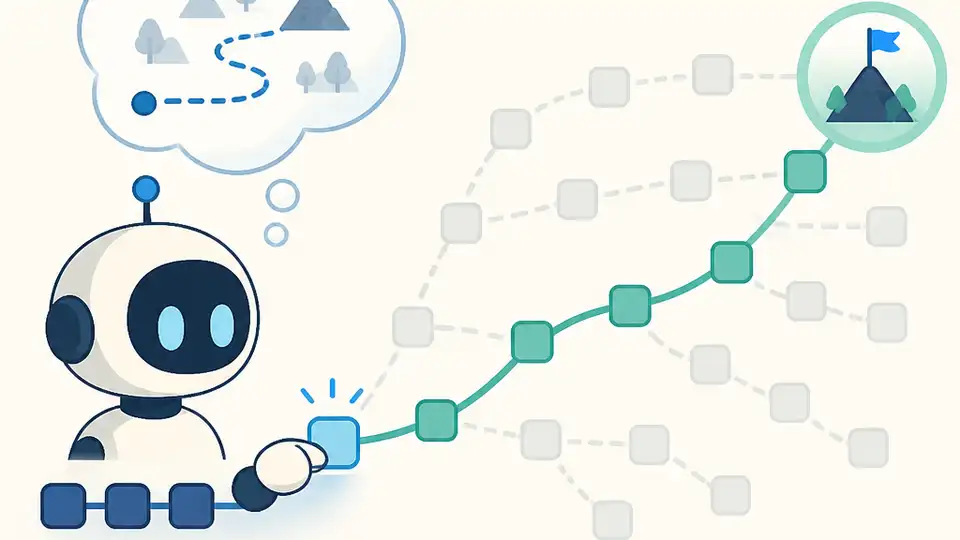
This paper argues autoregressive language models can exhibit lookahead behavior despite training only on next-token prediction.
- Research org: Unspecified in arXiv abstract
- Core data: No benchmark numbers in abstract
- Breakthrough: Reframes autoregressive models as secretly energy-based models
Autoregressive Language Models are Secretly Energy-Based Models: Insights into the Lookahead Capabilities of Next-Token Prediction makes a simple but important claim: next-token prediction may be doing more planning than it looks like on the surface. For engineers building or using language models, that matters because it changes how you think about what the model is optimizing, how it can anticipate future tokens, and where its apparent reasoning power might be coming from.
The abstract is short, so the paper’s exact experimental setup and benchmark results are not spelled out in the source we have here. What it does clearly say is that the authors use their results to provide insights into the ability of autoregressive models to plan ahead. That is a useful lens for anyone trying to understand why a model can sometimes appear to “know” what comes next before it has explicitly generated it.
What problem this paper is trying to fix
Get the latest AI news in your inbox
Weekly picks of model releases, tools, and deep dives — no spam, unsubscribe anytime.
No spam. Unsubscribe at any time.
Autoregressive language models are usually presented as straightforward next-token predictors: given a prefix, they estimate the next token, then repeat the process. That framing is clean, but it can also be misleading if the model’s internal behavior is more global than the training objective suggests. This paper is trying to explain that gap.
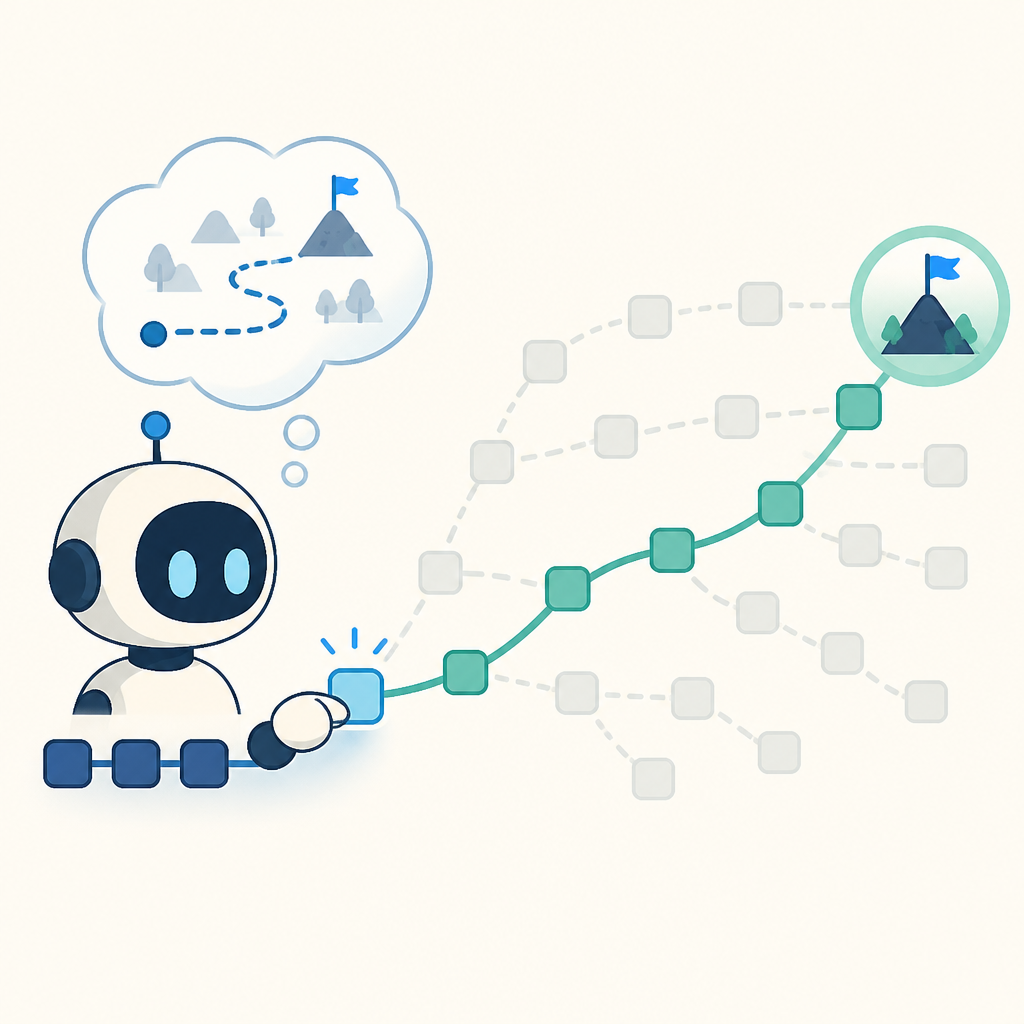
The core tension is familiar to anyone who has worked with large language models. On the one hand, the training objective is local and sequential. On the other hand, model outputs often look surprisingly coherent over long spans, with choices that seem to anticipate later context. The paper’s abstract says the authors are offering insights into that “lookahead” capability. In practical terms, they are asking whether next-token prediction alone can account for planning-like behavior, or whether the model should be understood through a different lens.
That is why the title matters. Calling autoregressive language models “secretly energy-based models” is not just a rhetorical flourish. It signals a reinterpretation of the same machinery: instead of seeing the model only as a token-by-token generator, the authors want readers to think about an underlying scoring or energy perspective that helps explain why future context can influence present predictions.
How the method works in plain English
The abstract does not give a step-by-step method description, equations, or implementation details. So the safest reading is conceptual: the authors analyze autoregressive models through the lens of energy-based modeling and use that perspective to study lookahead behavior.
In plain English, an energy-based view usually means thinking about how well a candidate sequence fits the model, rather than only asking what the next token should be. That can be useful when you want to reason about plans, constraints, or global consistency. If an autoregressive model can be interpreted this way, then its next-token probabilities may be carrying information about broader sequence structure, not just the immediate next step.
For developers, that matters because it changes how you interpret model outputs. A model that seems to “anticipate” later content may not be performing explicit symbolic planning, but it may still encode preferences over future continuations in a way that behaves like planning. The paper appears to be probing exactly that boundary.
Because the source abstract is minimal, we should not overstate the method. We do not have benchmark tables here, and we do not have enough detail to say whether the paper proposes a new architecture, a new training objective, or a new analysis technique. What we can say is that the authors are using an energy-based framing to understand a capability that is usually hidden by the standard next-token story.
What the paper actually shows
The only concrete result stated in the abstract is that the authors’ results provide insights into the ability of autoregressive models to plan ahead, despite being trained with next-token prediction. That is a meaningful claim, but it is not the same as a benchmark win. The abstract does not include accuracy numbers, evaluation datasets, or comparative performance claims.
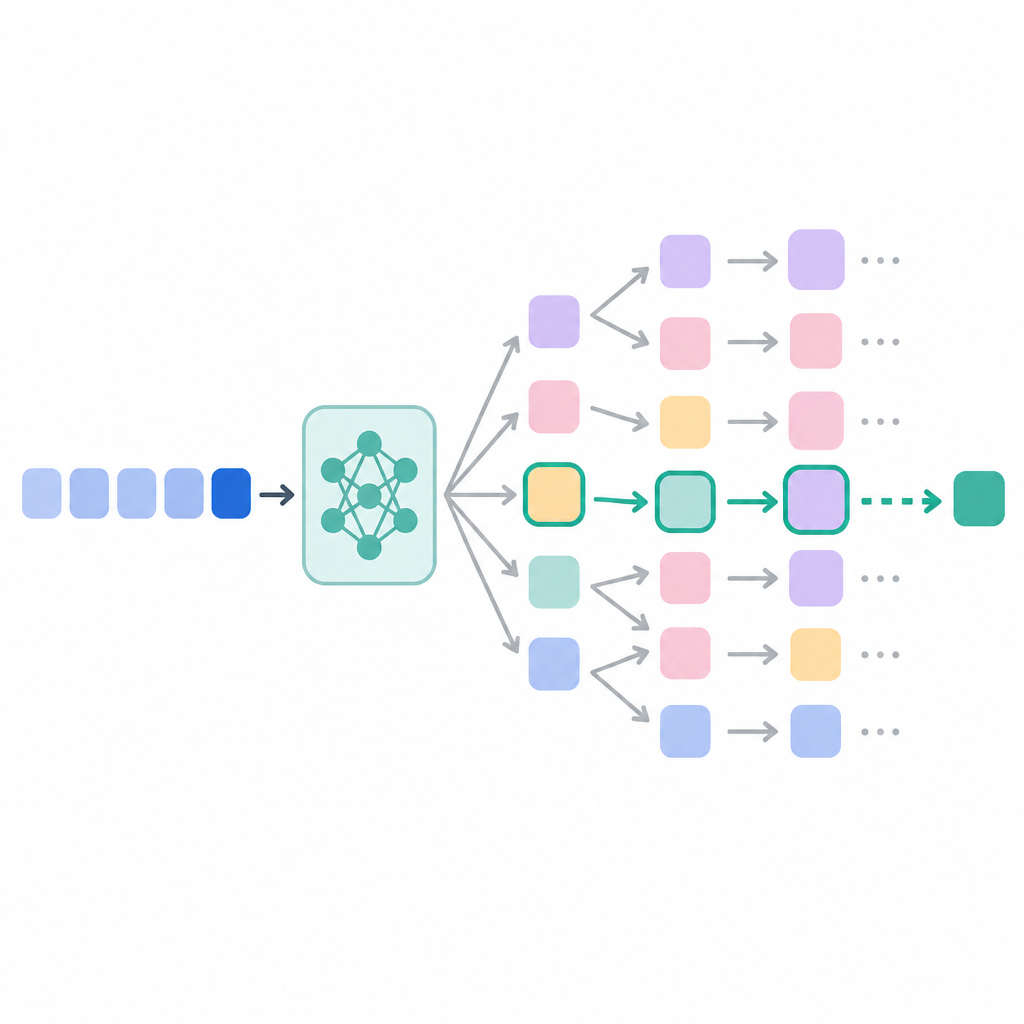
So if you are looking for a leaderboard-style takeaway, this source does not provide one. There are no reported percentages, no perplexity drops, and no task-specific scores in the abstract we have. Instead, the contribution appears to be interpretive and analytical: the paper is trying to explain a behavior that practitioners observe but often struggle to formalize.
That distinction is important. Research like this can still be valuable even without flashy metrics, because it can reshape how teams reason about model behavior. If a model’s apparent planning emerges from the structure of next-token prediction itself, then some “reasoning” effects may be more intrinsic to the training objective than previously assumed.
The abstract also suggests the work is about “insights” rather than a final theory. That means the paper may open more questions than it closes. For example: how general is the energy-based interpretation, and under what conditions does lookahead become strong or weak? The abstract does not answer those questions, so they remain open.
Why developers should care
If you build with language models, this paper is a reminder that training objective and behavior are not always as tightly coupled as they seem. A model trained only to predict the next token can still exhibit sequence-level behavior that looks a lot like planning. That affects how you evaluate prompts, interpret chain-of-thought-style behavior, and think about reliability in long-context generation.
It also has implications for debugging. When a model makes a choice that seems oddly prescient, the right explanation may not be “the model guessed.” It may be that the model’s internal scoring of continuations already encodes future constraints. An energy-based interpretation gives you a vocabulary for that possibility, even if the paper’s abstract does not yet provide a full engineering recipe.
There is also a caution here. The abstract does not claim that autoregressive models are fully explicit planners, and it does not claim that energy-based interpretation solves alignment or controllability. So the practical takeaway is modest but useful: next-token prediction may be richer than its name suggests, and that should influence how you reason about model behavior.
What’s missing from the abstract
We should be clear about the limits of the source. The abstract does not list the authors, the institution, the datasets, the evaluation tasks, or any benchmark numbers. It also does not describe the exact mechanism by which the energy-based interpretation is derived. Because of that, this explainer can only summarize the high-level claim, not the full technical argument.
That does not make the paper unimportant. It just means the abstract is pointing to a conceptual contribution rather than a results-heavy systems paper. If you want to judge the strength of the claim, you will need the full paper, especially the sections that define the energy-based framing and show how the lookahead analysis was performed.
Still, the core idea is worth paying attention to: autoregressive models may be doing more than local prediction, and that hidden structure may help explain why they sometimes appear to plan ahead. For anyone working on model interpretation, decoding, or long-horizon generation, that is the kind of framing shift that can change how you build and debug systems.
- Autoregressive models may encode future-aware behavior even when trained locally.
- The abstract provides no benchmark numbers, so this is a conceptual result, not a leaderboard result.
- An energy-based lens may help engineers reason about planning-like behavior in next-token models.
// Related Articles