Fine-tuning beats RAG when the goal is style, not facts
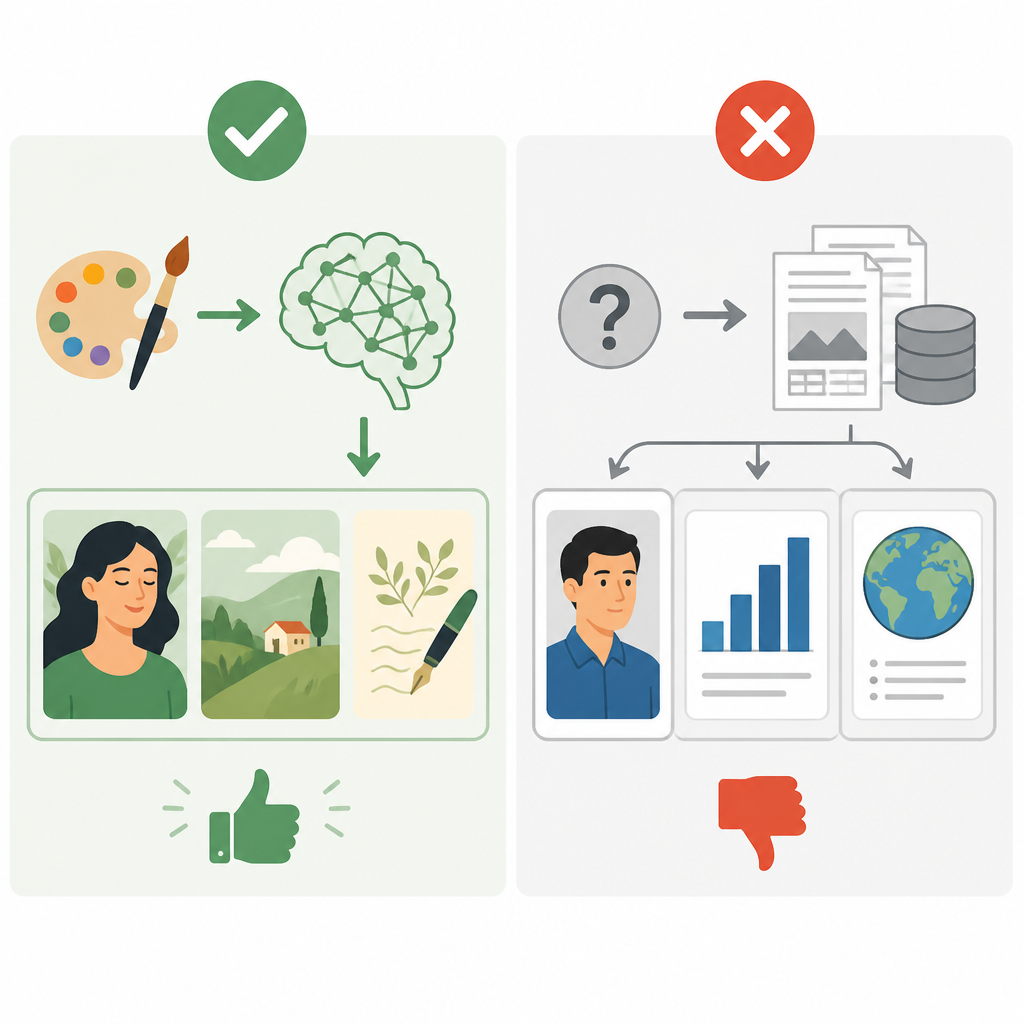
Fine-tuning is the right tool for teaching an LLM a writing style, while RAG is the wrong tool for that job.

Fine-tuning is the right tool for teaching an LLM a writing style, while RAG is the wrong tool for that job.
If you want an LLM to sound like a 1990s technical writer, the answer is not retrieval. It is fine-tuning. Fabrizio Ferri Benedetti’s experiment makes the distinction plain: he fed a model tens of millions of words from old Microsoft manuals, trained adapters locally, and got outputs that adopted period-correct structure, vocabulary, and even chapter-like openings. The system did not just quote old documentation. It learned to write in its rhythm.
Fine-tuning changes behavior; RAG only adds context
Get the latest AI news in your inbox
Weekly picks of model releases, tools, and deep dives — no spam, unsubscribe anytime.
No spam. Unsubscribe at any time.
RAG is built to answer questions by fetching relevant material at runtime. That is useful when the problem is factual accuracy or source grounding. It is not useful when the problem is tone, cadence, and document architecture. Benedetti’s test prompts were deliberately stylistic: document malloc(), invent a ConnectWifi() API, or explain REST in 1990s Microsoft prose. The fine-tuned models responded with man-page headers, synopsis blocks, and era-appropriate phrasing. That is behavior change, not lookup.

The clearest proof is the control case. The unmodified models produced modern Markdown, friendly explanation, or outright nonsense from the base model. The fine-tuned Qwen variants, by contrast, held the register and structure across prompts, even when the subject was an anachronism. That matters because style is not a paragraph you can fetch from a database. Style is a distribution over choices, and fine-tuning is the mechanism that shifts that distribution.
Small adapters are enough to capture a strong voice
Benedetti did not train a giant model from scratch. He used QLoRA, which freezes the base weights and adds a lightweight adapter on top. That kept the experiment cheap enough to run on rented GPUs and portable enough to export back to a laptop for local inference. The whole exercise cost about $50 and took roughly a day. That is not a lab-scale research project. It is a practical workflow for individual builders.
The results also show why adapter-based tuning is powerful. With the right corpus, even a 7B model can imitate a narrow domain convincingly. The Qwen 192k run, trained on a larger slice of the manual corpus, was the strongest performer and produced output that read like a genuine chapter from a Windows-era resource kit. This is the key point: you do not need a frontier model to get a specialized voice. You need the right data, a modest base model, and a tuning method that pushes behavior in one direction.
The right corpus matters more than the cleverest prompt
The experiment succeeded because the training set was huge, coherent, and stylistically consistent. Benedetti pulled from Bitsavers, cleaned OCR artifacts, filtered paragraphs for intelligibility, and turned the corpus into more than 192,000 instruction examples. That kind of dataset gives the model repeated exposure to the same document conventions: headings, return values, syntax blocks, examples, and cross-references. Prompt engineering alone does not create that depth of patterning.
There is also a subtle but important lesson in the failures. The base model ignored the task because base models are built for continuation, not instruction following. The instruct-tuned Llama variant, meanwhile, often drifted into modern marketing prose when asked to explain something anachronistic. That is what happens when the model’s prior training pushes hard toward helpfulness and present-day fluency. Fine-tuning on domain material can counterweight that prior and make the model commit to the target voice instead of politely escaping it.
The counter-argument
RAG defenders have a serious point: if you care about correctness, provenance, and up-to-date information, retrieval is safer than baking knowledge into weights. It is easier to update a document store than to retrain a model. It is also easier to cite sources, audit answers, and avoid stale claims. For enterprise systems that need factual answers, RAG is often the right default.
There is also a cost argument. Fine-tuning requires curated data, compute, evaluation, and operational discipline. RAG can be bolted onto an existing stack with less upfront work. For teams that need a product answer this quarter, not a research program, retrieval looks like the pragmatic choice.
That argument is correct, but it does not apply to style transfer. If the goal is to make an LLM write like a specific era, a specific team, or a specific publication, retrieval is a weak tool because it does not reshape the model’s default behavior. It only supplies more text. Benedetti’s results show that the model must internalize the pattern, not merely see examples beside the prompt. For voice, fine-tuning wins. For facts, RAG wins. The mistake is treating them as substitutes.
What to do with this
If you are an engineer or PM building a doc assistant, separate the problem into two layers: use retrieval for source truth and fine-tuning for tone, structure, and formatting. If you are a founder, do not pitch “RAG for everything.” Pitch a system that knows when to fetch and when to imitate. That is the real product lesson here. Style is trained, facts are retrieved, and the teams that understand the difference will ship better documentation tools.
// Related Articles
- [AGENT]
Kimi K3 Benchmark Evaluation Guide for Coding Agents
- [AGENT]
Meta’s first paid model proves AI coding is now a price war
- [AGENT]
Claude Code turns chat into terminal work
- [AGENT]
Decentralized AI compliance should be built into agent rails, not bol…
- [AGENT]
Open-Source AI Agent Frameworks Compared
- [AGENT]
Codex Micro turns a macropad into an AI control deck