Google DeepMind opens Co-Scientist to researchers
Google DeepMind is opening Co-Scientist, a Gemini-based multi-agent system that generates and ranks hypotheses for researchers.

Google DeepMind is opening Co-Scientist, a Gemini-based multi-agent system for generating research hypotheses.
Google DeepMind says Co-Scientist is moving from internal research into an experimental tool for individual scientists. The system is built to help researchers generate, critique, and refine hypotheses in life sciences and beyond, and the company says it will begin rolling out in the coming weeks.
The timing matters because the announcement lands with a concrete set of claims, a named publication, and a real rollout path. Google DeepMind published the work in Nature, points researchers to labs.google/science for interest registration, and says the tool is already being tested with collaborators on problems from antimicrobial resistance to liver fibrosis.
| Item | Detail |
|---|---|
| Publication | Nature |
| Rollout | Coming weeks |
| Researcher access | Hypothesis Generation experimental tool |
| Named collaborators | Daiichi Sankyo, Bayer Crop Science, US National Laboratories |
| Lab result mentioned | 91% blocked scarring-linked response |
What Co-Scientist is trying to fix
Get the latest AI news in your inbox
Weekly picks of model releases, tools, and deep dives — no spam, unsubscribe anytime.
No spam. Unsubscribe at any time.
Scientific work often gets stuck at the same point: too many papers, too many variables, and not enough time to sort through all the possible explanations. Google DeepMind frames that bottleneck as a hypothesis problem, not a model problem. The company wants Co-Scientist to help researchers move faster from literature review to testable ideas.
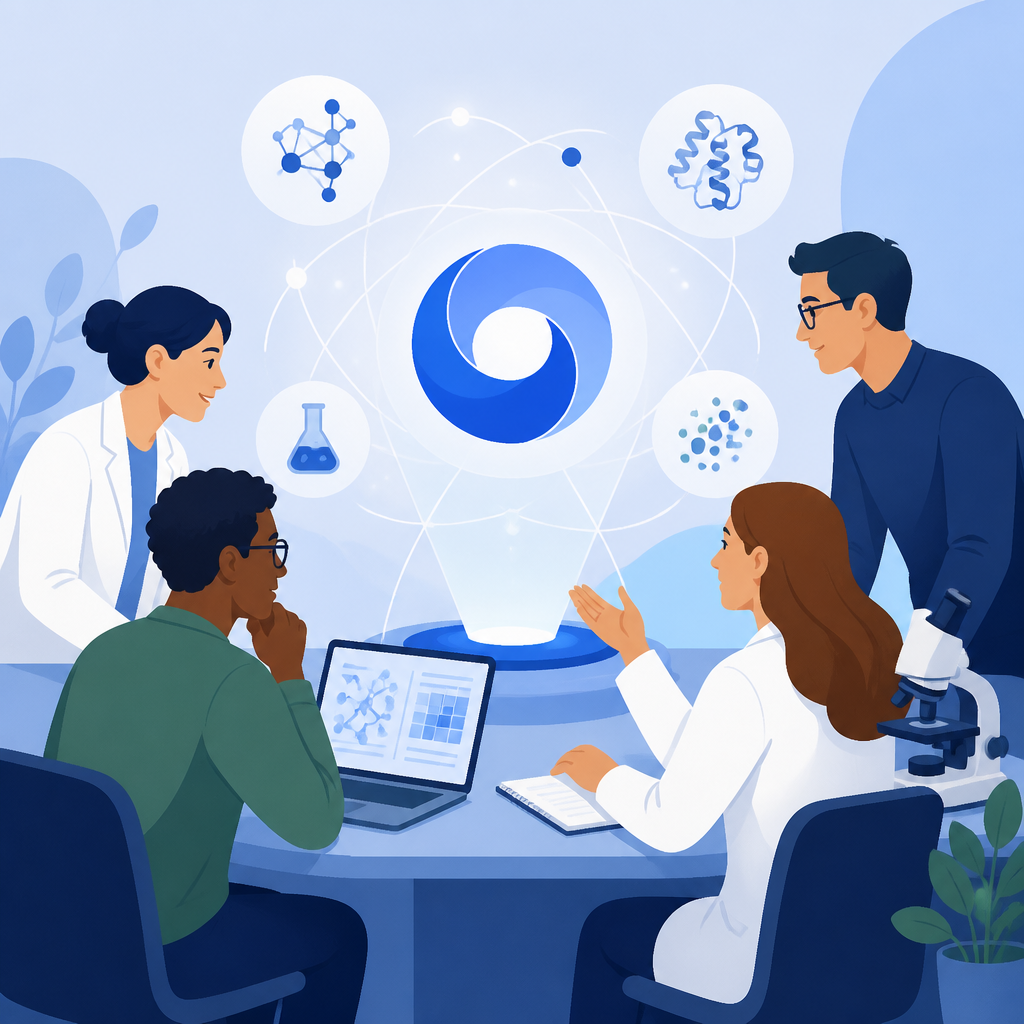
That is a sensible target. A lot of AI in science has focused on prediction, but prediction alone does not help when the real bottleneck is choosing the right question. Co-Scientist is built to sit earlier in the workflow, where researchers decide which ideas deserve lab time, grant money, or both.
The system is built on Gemini and uses multiple specialized agents instead of one monolithic model making a single pass. Google DeepMind says those agents work in three phases: generate ideas, debate ideas, and evolve ideas.
- The generation agent proposes initial hypotheses from literature and data.
- The reflection agent acts like a virtual reviewer.
- The evolution agent rewrites and combines the strongest ideas.
- The supervisor agent coordinates the whole process and breaks goals into steps.
How the multi-agent system actually works
Co-Scientist is closer to a research committee than a chatbot. One agent proposes directions, another clusters them, another critiques them, and another ranks them through pairwise comparisons. Google DeepMind describes this as a tournament of ideas, which is a better mental model than “ask a model a question and hope for the best.”
The company says the system can explore thousands of research directions. That scale matters because scientific novelty is often a search problem disguised as an intuition problem. If the system can surface ideas a human team would miss, then the value is in breadth first, followed by filtering and refinement.
“Co-Scientist feels like a collaborator that’s read everything available about biomedical science, with the reasoning capabilities to find the connections that we’re currently missing.” — Professor Gary Peltz, Stanford University School of Medicine
There is also a practical detail that makes the system more credible: it does not stop at text generation. Google DeepMind says Co-Scientist uses web search, databases such as ChEMBL and UniProt, and in some cases specialized tools like AlphaFold. That mix of language reasoning and domain data is what makes the system more than a fancy literature summary tool.
What the early results say
Google DeepMind highlights several collaborations to show the tool is already doing useful work. In liver fibrosis research, the system surfaced drug-repurposing candidates, including one that blocked 91% of a scarring-linked response in lab tests. In another case, it helped researchers shorten analysis of large screening datasets from months to days.
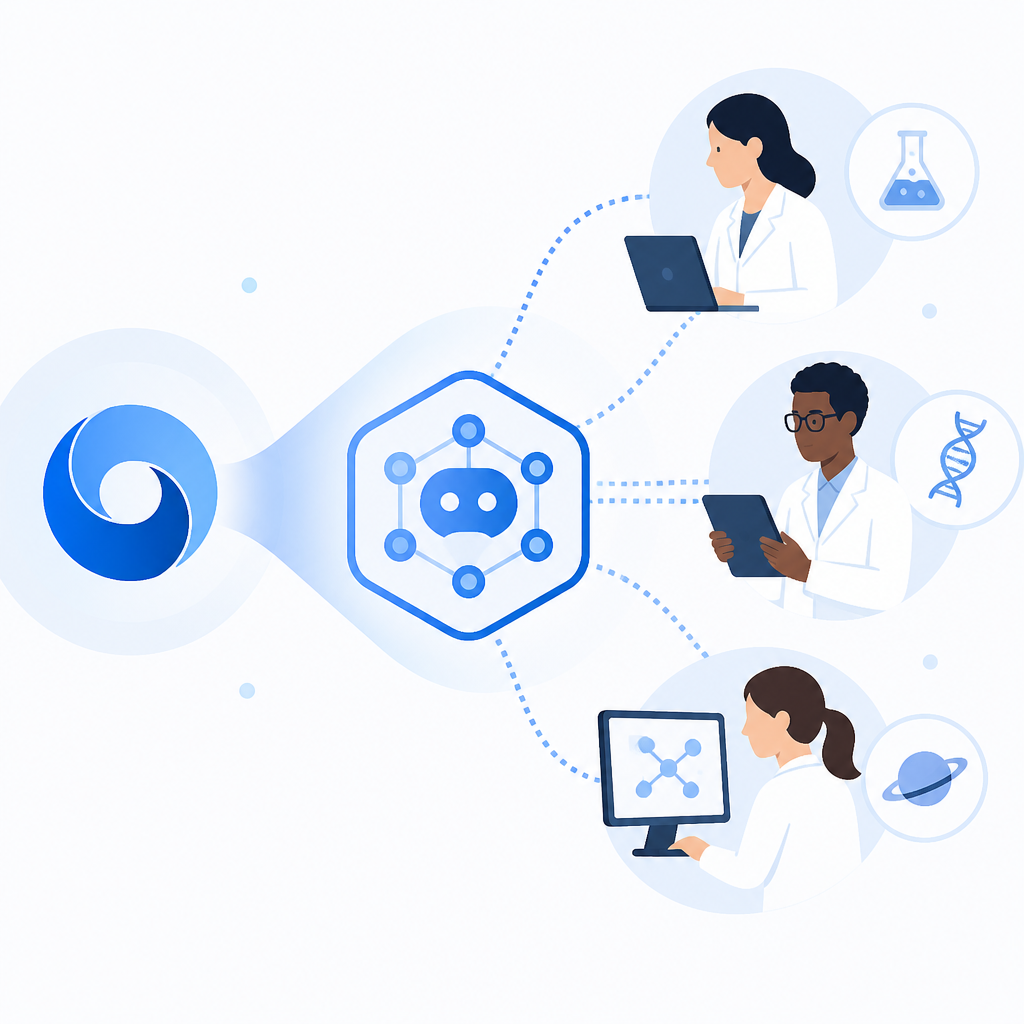
Those numbers are small in count but large in meaning. A 91% block in a lab assay is the sort of result that gets scientists to pay attention, while a months-to-days reduction changes how many experiments a team can realistically run. For research groups that live inside bottlenecks, that difference is the whole story.
- Liver fibrosis work surfaced a candidate that blocked 91% of a scarring-linked response.
- One research team said the system cut screening analysis from months to days.
- Another collaborator described it as the equivalent of 50 people working for a day.
- The system is being previewed with Daiichi Sankyo, Bayer Crop Science, and the US National Laboratories.
The strongest signal here is not that AI has become a scientist. It has not. The stronger signal is that a well-designed agent system can compress the early, messy phase of research enough to make experiments cheaper to plan and faster to prioritize.
Why this matters for researchers
Most AI science tools are still stuck in one of two modes: they either summarize what is already known, or they predict a narrow outcome from a narrow input. Co-Scientist tries to do something more useful for working labs. It helps decide what to test next.
That matters because hypothesis generation is where human expertise, memory, and luck all collide. A tool that can widen the search space, challenge weak ideas, and keep the strongest ones moving has real value even if it never runs an experiment itself. In practice, that means fewer dead ends and better use of expensive lab time.
Google DeepMind’s decision to open the system through a new experimental tool also hints at where this category is heading. If researchers can use agentic systems to filter, rank, and refine ideas before they touch the bench, then the real competition will shift toward who has the best data access, the best review logic, and the best human-in-the-loop workflow.
For now, the key question is simple: which labs will use Co-Scientist to find one result that changes their roadmap? If the answer keeps showing up in biology, chemistry, and materials research, this tool will matter less as a demo and more as infrastructure for how discovery gets done.
// Related Articles