How to understand the Codex and ChatGPT merge
This guide explains how to evaluate the Codex and ChatGPT app merge as one workflow.
This guide explains how to evaluate the Codex and ChatGPT app merge as one workflow.
If you are a product manager, AI engineer, or technical founder, this guide shows how to assess the Codex and ChatGPT app merge from a developer workflow angle. After following the steps, you will understand the likely product direction, the user experience changes, and the engineering tradeoffs behind making ChatGPT the control layer and Codex the execution layer.
You will also leave with a simple framework for judging whether this move reduces friction, expands agent capabilities, or creates new risks around permissions, latency, and trust.
Before you start
Get the latest AI news in your inbox
Weekly picks of model releases, tools, and deep dives — no spam, unsubscribe anytime.
No spam. Unsubscribe at any time.
- An OpenAI account with access to ChatGPT
- Access to the OpenAI product blog and the OpenAI GitHub organization
- A current desktop or mobile device for testing app flows
- Node 20+ if you want to prototype agent workflows locally
- Python 3.11+ if you prefer scripting integrations and evals
- A basic understanding of tool calling, sandboxes, and approval flows
Step 1: Map the merged app to one workflow
Your first goal is to identify what the merge changes at the product level. The core idea is that ChatGPT becomes the interface for intent, review, and approval, while Codex becomes the worker that runs code or other tasks in a controlled environment.
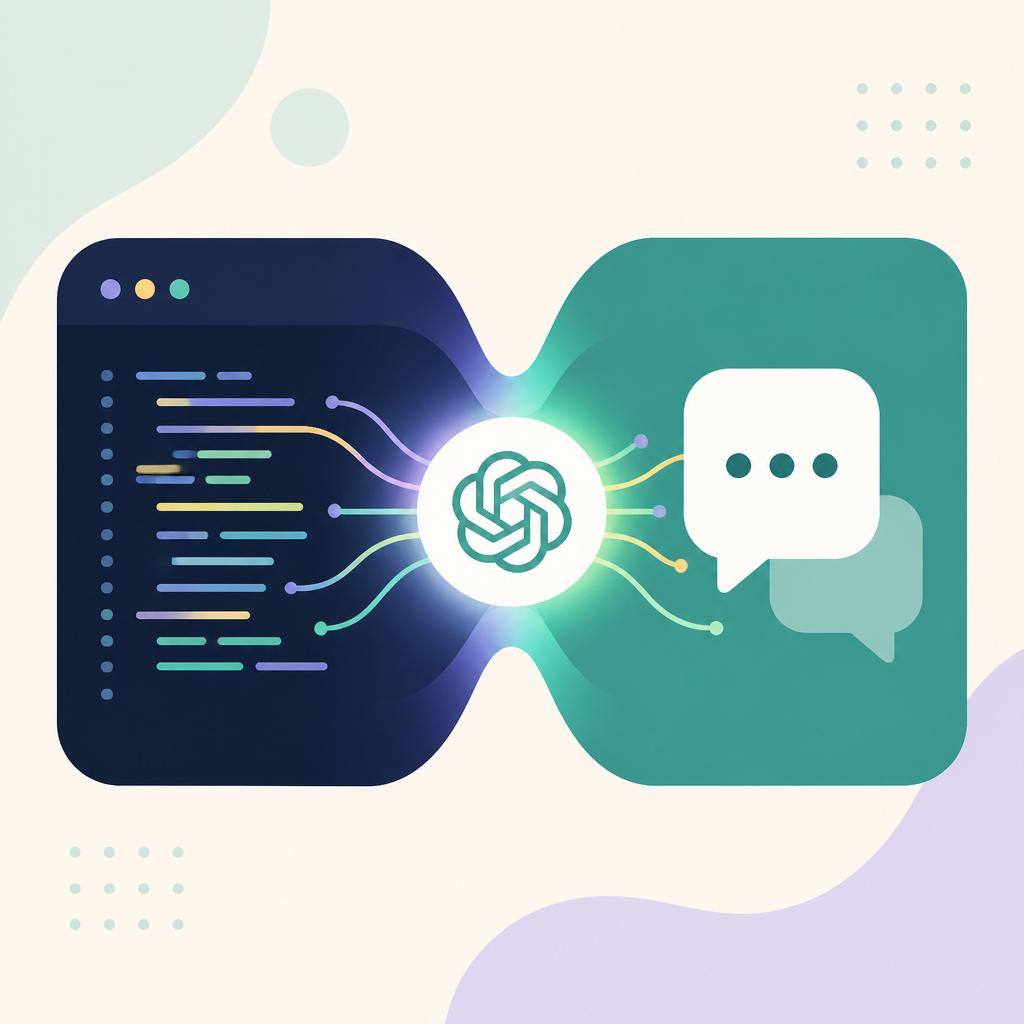
Write the workflow as three stages: ask, execute, and report. In the ask stage, the user gives instructions in ChatGPT. In the execute stage, Codex runs the task in a cloud sandbox or another compute target. In the report stage, ChatGPT summarizes the result and asks for the next approval.
Verification: you should see a clear split between orchestration and execution, not just a renamed chat app.
Step 2: Trace the user journey end to end
Your second goal is to understand how the merge changes the user experience. A combined app can reduce context switching because the user does not need to move between a chat interface and a separate coding or automation interface.
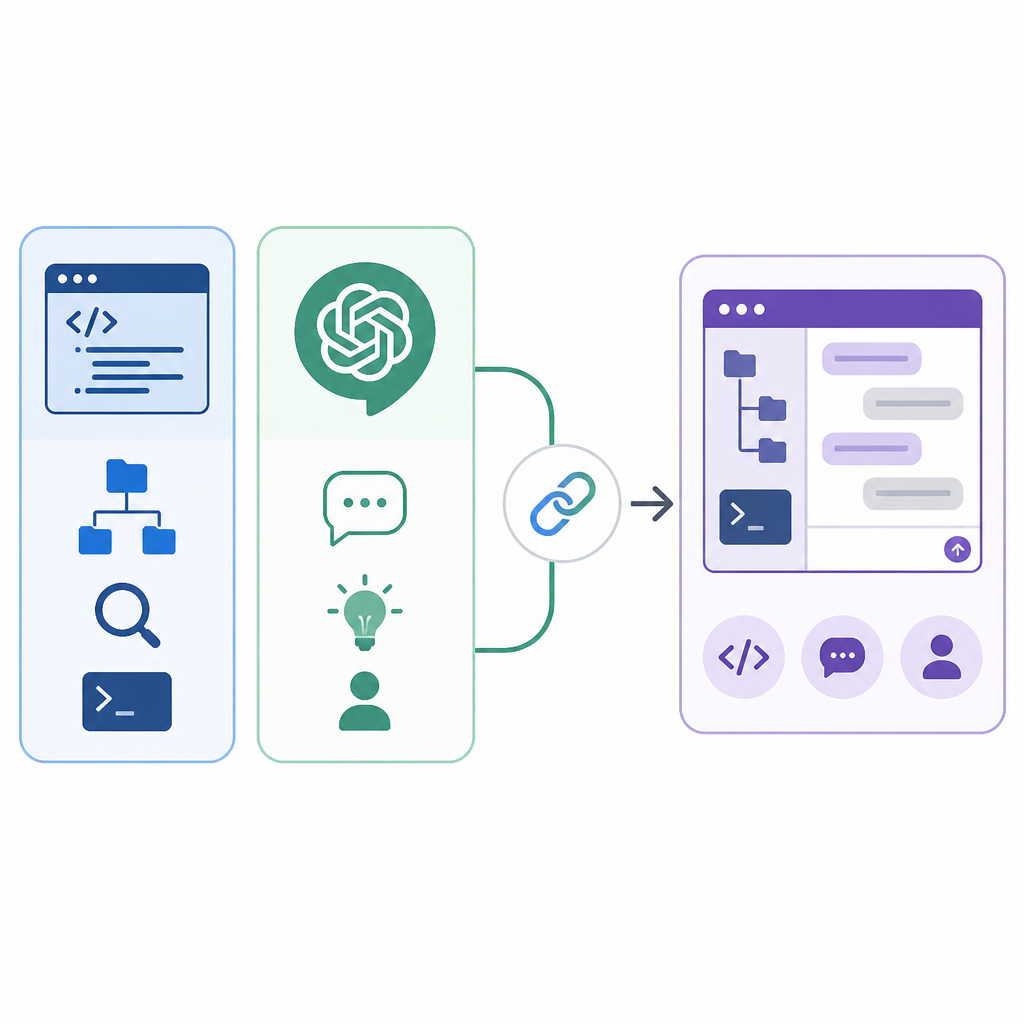
Test the journey on paper or in a prototype: start a task in ChatGPT, confirm the action, wait for Codex to complete it, then inspect the returned output. If the flow feels like remote work delegation, the merger is functioning as intended.
Verification: you should see fewer handoffs and fewer places where the user must manually transfer context.
Step 3: Identify the execution surfaces
Your third goal is to list where Codex can actually do work. The source suggests three likely surfaces: a cloud sandbox, the user’s local computer, and cluster resources. Each surface changes the trust model, speed, and scope of what the agent can do.
Execution surfaces to evaluate:
- Cloud sandbox: safest default for code and isolated tasks
- Local machine: useful for files, apps, and private state
- Cluster resources: best for larger jobs and shared infrastructure
Verification: you should see different permission boundaries for each surface, along with different failure modes and approval requirements.
Step 4: Evaluate the approval and supervision model
Your fourth goal is to judge whether the merged app improves control. If ChatGPT is the command center, then approvals become the main safety boundary. The user should be able to inspect a proposed action, approve it, reject it, or ask for a revision before execution continues.
Look for explicit checkpoints around file edits, code execution, network access, and external side effects. The more sensitive the action, the more important the approval step becomes.
Verification: you should see that the system is designed for supervised autonomy, not fully unattended operation.
Step 5: Assess the strategic impact
Your fifth goal is to decide what the merge means for OpenAI’s platform strategy. The biggest implication is that ChatGPT can evolve from a conversational product into a universal work router for agentic tasks. That makes the app more than a chat UI because it becomes the place where users assign work, monitor progress, and review results.
For developers, this means new integration pressure around tool APIs, background execution, permissions, and result streaming. For product teams, it suggests a future where the value is not only in answers, but in completed actions.
Verification: you should see the merge as a platform consolidation move, not only a packaging change.
Common mistakes
- Assuming the merge is only about branding. Fix: evaluate the task flow, permissions, and execution backend, not just the app icon.
- Ignoring the approval layer. Fix: map every sensitive action to a user confirmation point before execution.
- Treating all compute targets the same. Fix: separate cloud sandbox, local device, and cluster workflows because each has different risk and latency.
| Metric | Before/Baseline | After/Result |
|---|---|---|
| Workflow focus | Chat only | Chat plus execution orchestration |
| User handoffs | Multiple app switches | Fewer context switches in one interface |
| Control model | Manual task handling | Supervised agent approvals |
What's next
If you want to go deeper, compare this merge with other agent platforms, then prototype a small approval-based workflow in your own stack. The most useful follow-up is to test how well your product separates intent capture, execution, and verification.
// Related Articles
- [AGENT]
Kimi K3 Benchmark Evaluation Guide for Coding Agents
- [AGENT]
Meta’s first paid model proves AI coding is now a price war
- [AGENT]
Claude Code turns chat into terminal work
- [AGENT]
Decentralized AI compliance should be built into agent rails, not bol…
- [AGENT]
Open-Source AI Agent Frameworks Compared
- [AGENT]
Codex Micro turns a macropad into an AI control deck