HP adopts OpenAI Frontier across global operations
HP will deploy OpenAI’s Frontier platform across its global operations to bring agentic AI into everyday enterprise work.

HP will deploy OpenAI’s Frontier platform across its global operations for enterprise AI work.
HP Inc. is bringing OpenAI’s enterprise platform, Frontier, into its global operations, according to the companies. The deal puts HP in the growing group of large enterprises testing agentic AI inside day-to-day business systems, where the payoff depends less on demos and more on workflow control, security, and measurable productivity.
The timing matters because enterprise AI buyers are moving past chatbots and into systems that can take actions across software stacks. HP has a huge internal footprint, which makes it a useful test case for whether agentic tools can reduce busywork in support, finance, procurement, and internal operations without creating a mess of permissions or hallucinated actions.
| Item | Detail |
|---|---|
| Company | HP Inc. |
| Platform | OpenAI Frontier |
| Scope | Global operations |
| Source date | Sunday, July 6, 2026 |
What HP is actually buying
Get the latest AI news in your inbox
Weekly picks of model releases, tools, and deep dives — no spam, unsubscribe anytime.
No spam. Unsubscribe at any time.
OpenAI has been pushing harder into enterprise software, and this deal gives it a high-profile customer with real operational complexity. HP is not adopting AI for a side project or a pilot tucked inside one department. It is planning to use Frontier across the company, which means the platform has to work across different teams, different data sets, and different levels of risk tolerance.
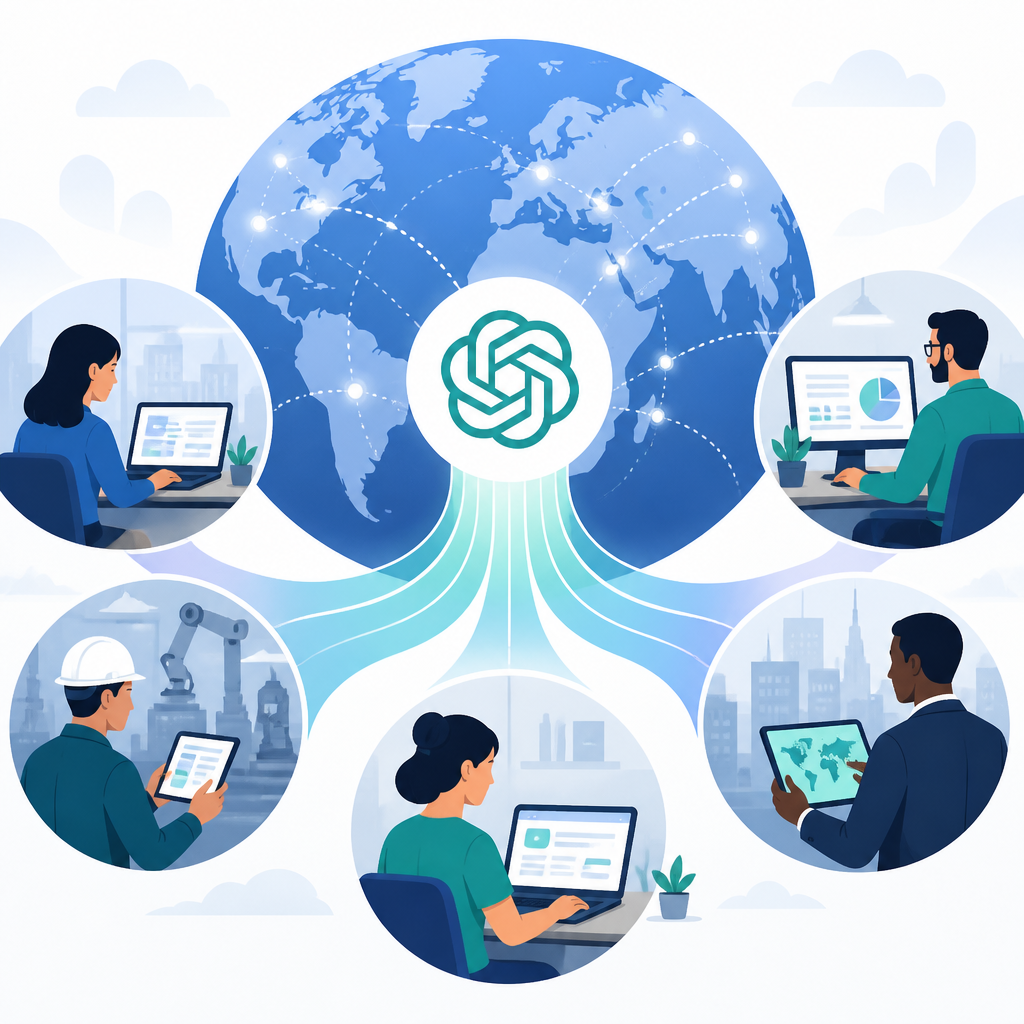
That is a very different ask from a consumer chatbot. Enterprise agentic platforms need identity controls, audit trails, admin policies, and a clear answer to a boring but important question: what is the system allowed to do on behalf of employees?
For HP, the upside is obvious. If the platform can handle routine internal tasks, employees spend less time on repetitive requests and more time on work that needs judgment. If it cannot, the company gets another software layer to manage.
- HP has one of the largest enterprise IT footprints in personal computing and printing.
- OpenAI is extending its software push beyond consumer tools and into enterprise operations.
- Agentic platforms matter most when they can act inside business systems, not just answer questions.
- Global deployment raises the bar on governance, access control, and logging.
Why agentic AI is the real story
The word “agentic” gets thrown around a lot, but the core idea is simple: the software does more than generate text. It can carry out tasks, chain steps together, and interact with business tools under defined rules. That makes it attractive for enterprise work, where the bottleneck is often not ideas but execution.
HP’s move suggests the company sees enough maturity in OpenAI’s platform to put it into production-like use rather than keep it in a lab. That is a meaningful signal, especially because enterprise buyers have become much more cautious after the first wave of AI enthusiasm exposed weak governance and inconsistent returns.
There is also a strategic angle here. HP sells hardware, software, and services into the same enterprise market that is now asking for AI-ready workflows. If HP can prove useful internal deployments, it can speak to customers with more credibility than a vendor that only talks about AI in abstract terms.
“The next generation of AI will do more than answer questions. It will take action on your behalf,” OpenAI CEO Sam Altman said at the company’s DevDay event in November 2023.
Altman’s comment captures the direction of travel, and HP is betting that direction has moved far enough to matter inside a large corporation. The real test will be whether the platform saves time without creating new operational risk.
How HP compares with other enterprise AI bets
HP is not the first large company to fold AI into internal operations, but the shape of this deal is worth watching. Many enterprise AI projects begin with narrow use cases such as drafting emails, summarizing documents, or searching internal knowledge bases. A company-wide rollout is a harder target because it forces the platform to handle more departments, more permissions, and more edge cases.
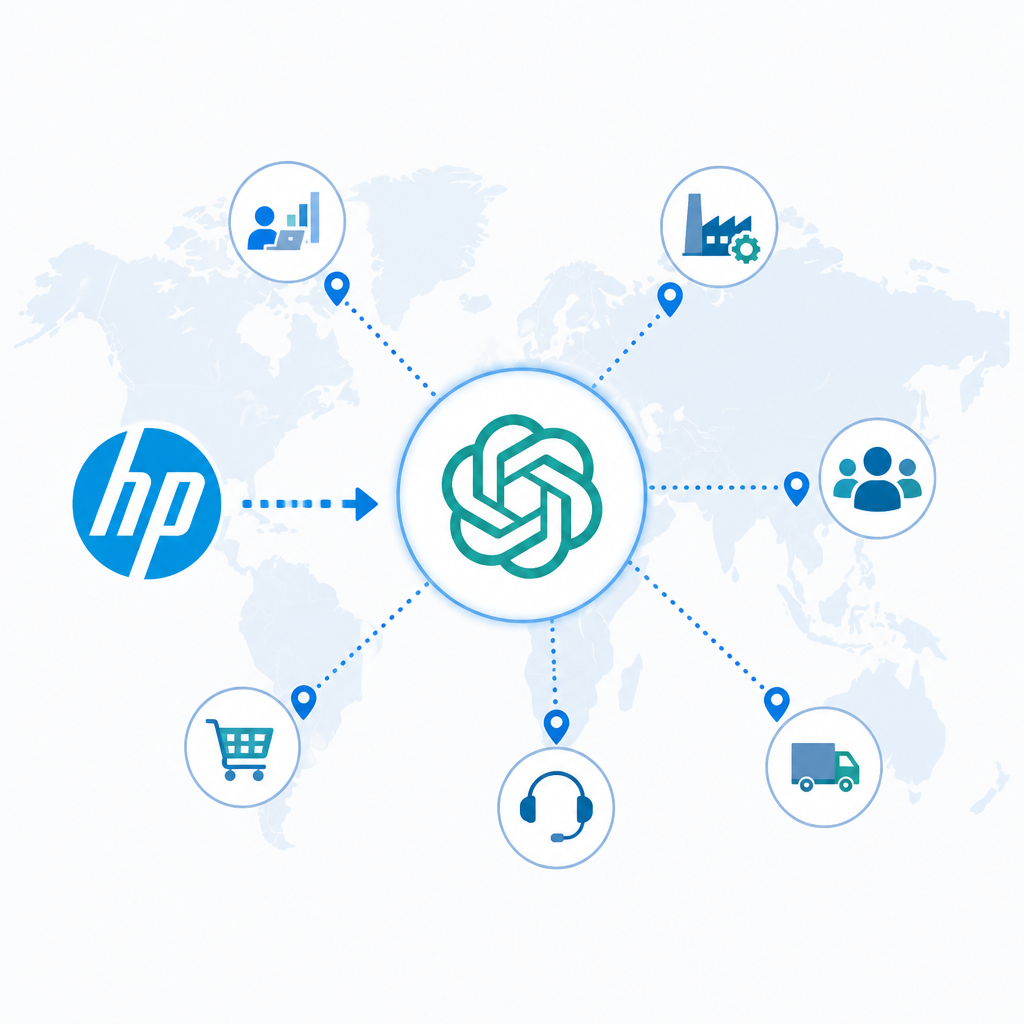
That is where the comparison gets interesting. A narrow pilot can look impressive in a demo. A global deployment has to survive procurement rules, regional compliance demands, and the daily mess of corporate systems. In practice, that means the value has to show up in measurable metrics such as faster ticket resolution, fewer manual handoffs, or lower support load.
HP’s deal also fits a broader market pattern: software vendors want to become the control layer for enterprise work, while buyers want AI that fits into existing systems instead of replacing them. The companies that win will be the ones that make automation useful without making admins nervous.
- ChatGPT brought AI into the mainstream, but enterprise buyers now want controlled action, not just conversation.
- Microsoft Copilot is another major enterprise AI push aimed at office workflows.
- Anthropic has also targeted business customers with AI systems built for controlled use.
- A global enterprise rollout is harder to fake than a small pilot because the operational surface area is much larger.
What to watch next
The big question is whether HP publishes any hard numbers on the rollout: time saved, ticket deflection, automation rates, or employee adoption. Without those, this will read like another enterprise AI announcement. With them, it becomes a useful case study for how agentic platforms earn their keep inside a real company.
For now, the deal says something simple and important. HP believes the software is ready for more than experiments, and OpenAI wants proof that Frontier can live inside a global enterprise without breaking the rules that keep large companies running.
If HP can show that agentic AI reduces routine work at scale, other hardware and services companies will copy the playbook quickly. If the rollout gets bogged down in policy and permissions, it will become another reminder that enterprise AI is easy to demo and much harder to operationalize.
Either way, the next useful signal will be operational data, not more marketing language.
// Related Articles
- [AGENT]
Build a production vector DB for RAG
- [AGENT]
Ornith-1 turns agent coding into a server
- [AGENT]
Crypto AI agents are useful, but only for narrow workflows
- [AGENT]
AI Agents in Crypto: 2026 Protocol Guide
- [AGENT]
Agent Network shows the Pentagon is right to put AI in the kill chain…
- [AGENT]
DOW's Agent Network is the right move for military AI