Microsoft’s first reasoning model tracker in plain English
I break down ZDNET’s model tracker into a copyable way to judge new AI releases without swallowing the PR whole.

I turn ZDNET’s model tracker into a copyable way to judge new AI releases.
I've been watching AI model launches long enough to know the routine. A lab drops a new model, the blog post sounds like it just solved software, and everyone on my team starts asking whether we should switch now or wait a week. And honestly, half the time the answer is: wait. Not because the model is bad, but because the release write-up is doing way too much work. It mixes benchmarks, product positioning, safety claims, and a little bit of marketing fog, then expects you to infer whether the thing is actually worth touching.
That’s the part that kept bothering me. I don’t need another victory lap. I need a sane way to compare models when the names all blur together and the release cadence keeps getting faster. So when I saw ZDNET’s model release tracker, I immediately recognized the value: not “new model news,” but a structure for reading releases in context. That’s the useful part. Not the hype. The context.
For the source I’m breaking down here, I’m using ZDNET’s AI Model Release Tracker: Microsoft AI’s first reasoning model arrives, written by Radhika Rajkumar. It’s a live tracker, so the point isn’t one model in isolation. It’s the pattern: what changed, what didn’t, and why the release matters relative to the rest of the field. ZDNET doesn’t give a star count or bookmark count in the article, so I’m not inventing one.
Stop reading model launches like product ads
Get the latest AI news in your inbox
Weekly picks of model releases, tools, and deep dives — no spam, unsubscribe anytime.
No spam. Unsubscribe at any time.
“Model strengths really emerge in context: Where are competitor models lacking or excelling? Which models have outstanding specialties, and which are just catching up to industry standards?”
What this actually means is I should stop treating every release note like it’s self-evident. A model can be faster, cheaper, safer, or better at coding and still not be the thing I should use. The only honest question is: compared with what?
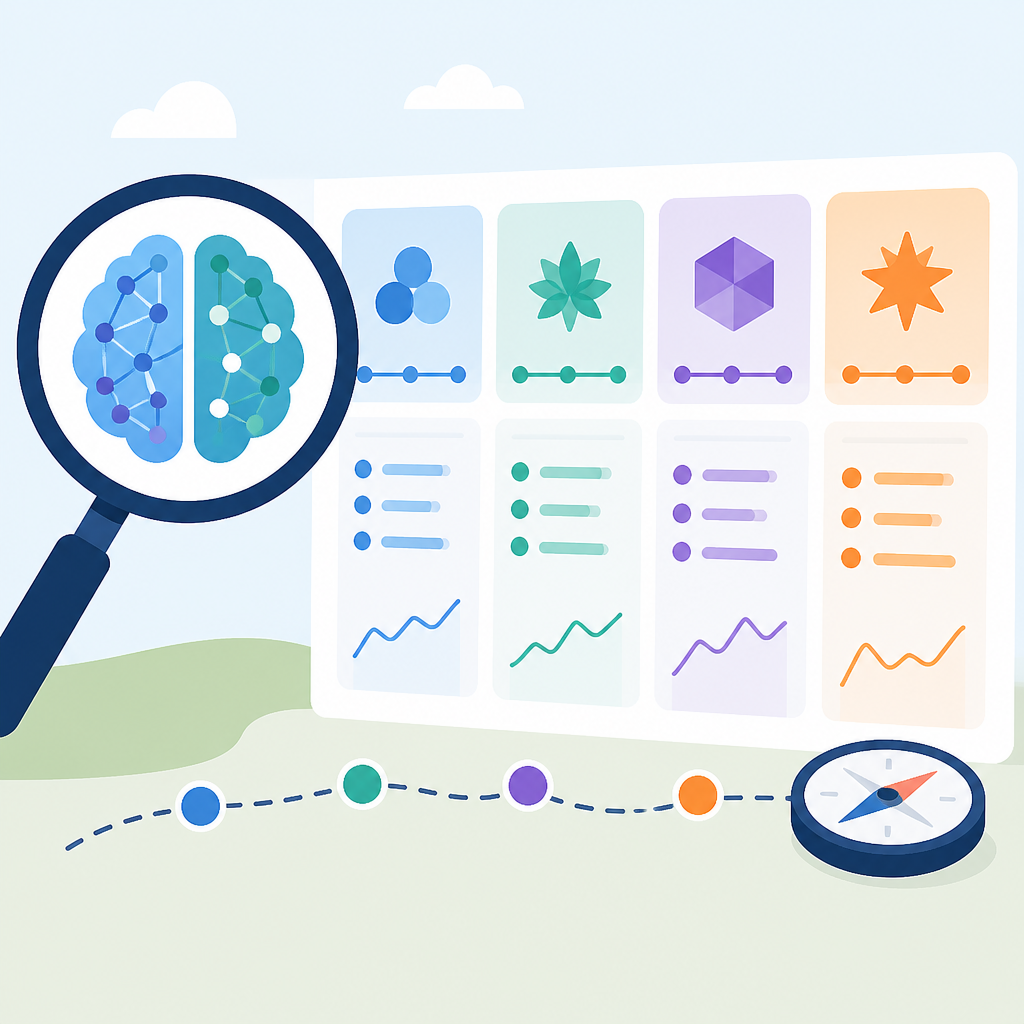
I’ve fallen into this trap myself. A vendor says “better at reasoning,” and my brain wants to translate that into “good enough to ship.” Then I test it against my actual workflow and discover it’s only better on the benchmark that the vendor picked for the announcement. That’s not useless, but it’s not enough.
ZDNET’s framing is refreshingly unromantic. It says the model’s strengths only show up when you line it up next to competitors. That’s the move I want more teams to make internally. Don’t ask whether the model is “good.” Ask what it is better at, what it is worse at, and whether those tradeoffs matter for your use case.
How to apply it: whenever a new model lands, write three columns before you do anything else: speed, reliability, and fit for task. Then add a fourth column for “what the vendor is trying to distract me from.” If the release headline screams coding but your workload is document extraction, don’t get hypnotized. Compare the thing that matters to you.
- Use the release note as input, not truth.
- Compare against the last model you actually shipped with.
- Ignore claims that don’t map to your workload.
Microsoft’s first reasoning model is a milestone, not a verdict
“This is the first reasoning model from Microsoft AI, a notable milestone for any AI lab, but especially so this late in this race.”
What this actually means is Microsoft finally has a reasoning model story it can tell under its own AI branding, and that matters politically as much as technically. It’s late, yes. But late doesn’t automatically mean irrelevant. It means I should be careful not to confuse arrival with dominance.
The model ZDNET highlights is MAI-Thinking-1, a 35-billion-parameter model announced at Microsoft Build. ZDNET says it’s designed for multi-step agentic tasks and scored similarly on SWE Bench Pro to Anthropic Opus 4.6. That combination tells me Microsoft is aiming squarely at enterprise workflows where tool use, code generation, and chain-of-thought style task completion matter more than flashy chat demos.
I’ve run into this exact pattern when a company ships its first “serious” internal model. The announcement is always bigger than the practical impact on day one. The real question is whether the team can keep iterating without turning the model into a science project. Microsoft has distribution, enterprise relationships, and product surface area most labs would kill for. The model itself is only part of the story.
How to apply it: when a vendor says “first model of its kind from us,” treat that as a capability signal, not a buying decision. Ask three things: does it fit the tasks you care about, can you integrate it without rewriting your stack, and is the vendor likely to keep improving it at a pace that matters?
Also, don’t skip the boring part. Read the system card, the benchmark notes, and the pricing if it exists. A first model can be strategically important and still be the wrong model for your team.
Benchmark scores are useful, but only if you know what they hide
“It scored similarly on the SWE Bench Pro benchmark test for coding as Anthropic Opus 4.6.”
What this actually means is that Microsoft is trying to enter the conversation through a familiar door: coding performance. Fair enough. That’s where a lot of modern agentic work starts. But a benchmark comparison is not the same thing as a deployment recommendation.
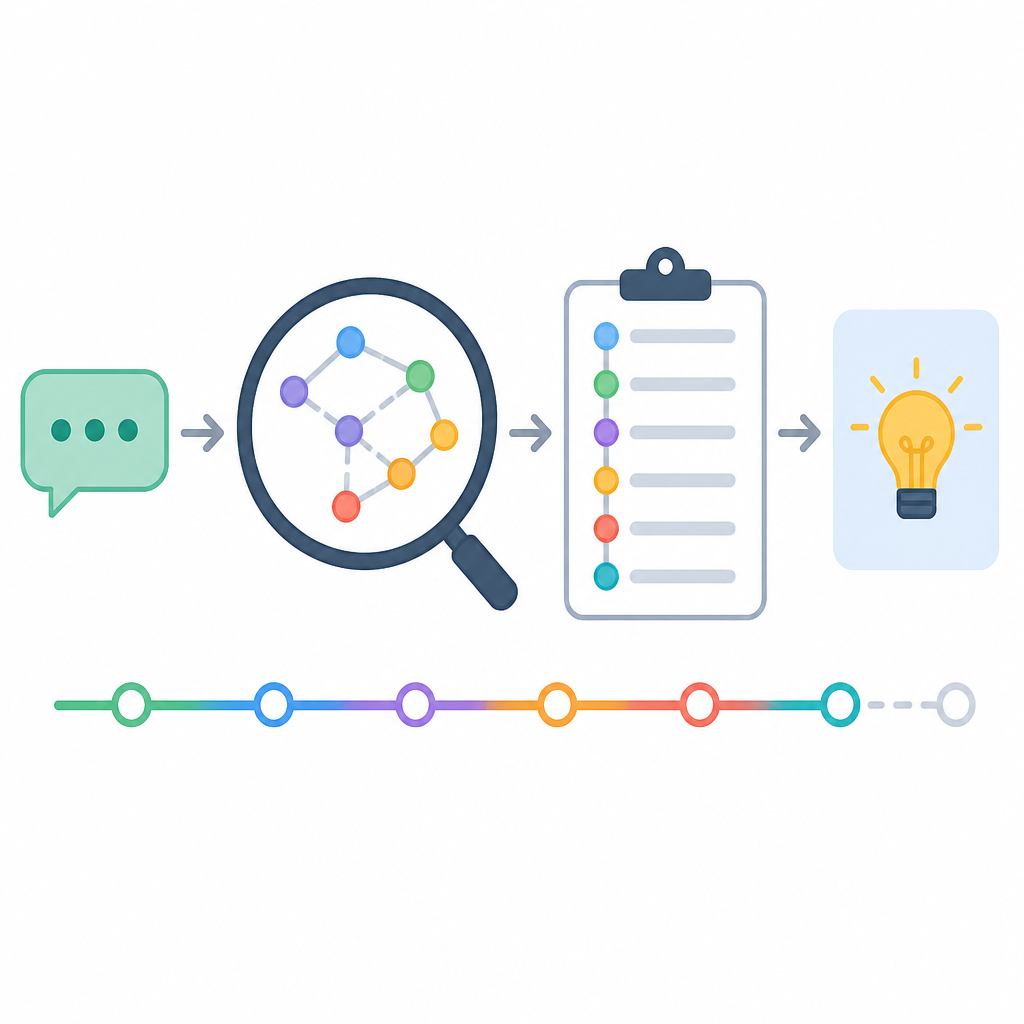
Benchmarks are a compression trick. They take a messy real-world capability and squeeze it into a number you can compare. That’s useful. It’s also dangerous when people forget the compression happened. I’ve watched teams pick a model because it looked great on one benchmark, then spend two sprints discovering that the model rambled too much, called tools in the wrong order, or broke down when the prompt got longer than the demo.
ZDNET’s tracker does something I like: it keeps the benchmark in context by pairing it with “why it matters.” That second layer is what most release posts omit. A score by itself is trivia. A score tied to a use case is decision material.
How to apply it: when you see a benchmark claim, write down the benchmark name, the task type, and the failure mode it probably doesn’t show. For coding models, I always ask about tool reliability, refusal behavior, and how the model handles partial context. For reasoning models, I want to know whether the model is actually better at multi-step work or just better at sounding like it is.
- Benchmark names are not self-explanatory.
- One score does not cover all workflow pain.
- Look for the gap between lab performance and production behavior.
Safety and copyright are now part of model quality
“The company also noted that enterprise users can trust this model for any use because it was trained only on clean, commercially safe data.”
What this actually means is Microsoft is selling legal comfort as a product feature. And frankly, that’s not a side note anymore. If I’m advising a company that wants to ship AI into customer-facing or regulated workflows, training data provenance matters as much as raw capability.
This is where the tracker gets practical. It doesn’t just say “here’s a new model.” It surfaces the release’s risk posture. That matters because the model market is no longer just a race for better outputs. It’s also a race to reduce legal ambiguity, compliance friction, and procurement headaches.
I’ve sat in enough internal reviews to know how this goes. Engineering wants the best model. Legal wants the least risky model. Procurement wants a vendor that won’t explode the budget. The only way to keep those conversations sane is to treat “commercially safe data” as a real selection criterion, not a marketing flourish.
How to apply it: ask vendors where training data came from, what rights they claim, and what indemnity or policy support they provide. If they dodge, that tells you something. If they answer clearly, that’s worth more than a flashy demo. And if your use case touches customer data, finance, health, or code that ships to production, make the legal review part of the model evaluation, not the end of it.
ZDNET also mentions how model safety concerns are increasingly central across the field, which tracks with what I’m seeing. The quality bar is no longer just “does it work?” It’s “does it work without creating a mess I’ll be cleaning up for months?”
Agentic coding is moving fast, and that changes the baseline
“The quick turnaround from 5.4 to 5.4 — less than two months — indicates how rapidly agentic coding is accelerating OpenAI’s model release cycle.”
What this actually means is the cadence itself is part of the story. The article’s summary points to a fast turnaround in OpenAI’s release cycle, and whether the exact naming in the source is a typo or shorthand, the underlying point is clear: agentic coding is compressing iteration time across the market.
That matters because once one major lab starts shipping on a tighter loop, everybody else has to respond. I’ve seen this in developer tooling before. The product that wins early doesn’t always have the best architecture. Sometimes it just ships improvements often enough that the rest of the market looks stale.
This is where a tracker beats a one-off article. It lets you see cadence, not just capability. And cadence affects adoption. If a model family improves every few weeks, I’m less likely to overinvest in a brittle integration that depends on one exact behavior. I want abstractions, fallbacks, and a clear upgrade path.
How to apply it: design your model layer like a moving target, because it is one. Keep prompts versioned, keep evals automated, and keep a rollback path for when the new release is not actually better for your workflow. If you’re building agentic systems, assume the model you use today won’t be the model you use in two months.
That sounds annoying because it is. But it’s better than pretending the model layer is stable when the vendors clearly don’t think it is.
Use a tracker, not a memory test
“Our Model Release Tracker helps you make sense of where models stand relative to each other, and whether they’re worth a deeper look.”
What this actually means is I should externalize model memory instead of trying to keep the whole market in my head. That’s impossible anyway. New releases come too fast, names are too similar, and vendors love renaming adjacent improvements like they’re new species.
The tracker format is useful because it turns chaotic release noise into a repeatable reading habit. I can scan what changed, compare it to peers, and decide whether I need to test it. That’s the real win. Not the article itself. The workflow.
When I build internal model-selection notes, I use the same structure ZDNET uses: what it does, why it matters, and where it sits relative to peers. That keeps me from getting seduced by a single benchmark or a polished launch post. It also makes it easier to explain a recommendation to someone who doesn’t care about model lore and just wants the right tool.
How to apply it: create a lightweight tracker for your team. It can be a doc, a Notion page, or a markdown file in the repo. The point is consistency. Every model gets the same fields, so you can compare them without re-reading every announcement from scratch.
- Name and vendor
- Release date
- Primary use case
- Benchmark notes
- Safety or licensing notes
- Your team’s verdict
The template you can copy
# AI Model Release Tracker Template

## Model
- Name:
- Vendor:
- Release date:
- Source URL:
- Version / family:

## What it does
Write one sentence describing the model’s main job.

## Why it matters
Write one sentence explaining why this release matters relative to peers.

## Benchmarks
- Benchmark 1:
- Result:
- What that benchmark does *not* tell me:

## Safety / legal / procurement notes
- Training data notes:
- Commercial use notes:
- Indemnity / policy notes:
- Any red flags:

## Practical fit
- Best for:
- Not good for:
- Integration effort:
- Rollout risk:

## My verdict
- Test now / wait / skip:
- Why:
- Next action:

## Team decision log
- Owner:
- Date evaluated:
- Follow-up date:
- Rollback plan:
If I were using this on a team, I’d keep the template boring on purpose. The more ornate the tracker gets, the less likely anyone is to maintain it. The goal is fast comparison, not a museum of model announcements.
The source for this breakdown is ZDNET’s tracker article at https://www.zdnet.com/article/ai-model-release-tracker/. My commentary, structure, and template are mine; the release details and quoted lines come from ZDNET’s reporting. For the model itself, Microsoft’s announcement lives at Microsoft’s Build post, and the benchmark reference points back to SWE Bench.
// Related Articles
- [IND]
Anthropic's IPO rumor turns into a market watch
- [IND]
Anthropic should not become dependent on Meta for compute
- [IND]
Mistral's robotics model cuts indoor navigation costs
- [IND]
Mistral missile: France’s short-range air defense workhorse
- [IND]
Apple Reclaims No. 1 by Market Cap as AI Costs Spike
- [IND]
Kimi K3 could pressure the middle tier of AI models