TLS turns insecure links into encrypted sessions
I break down TLS into the handshake, certificate checks, and a copy-ready setup you can adapt.
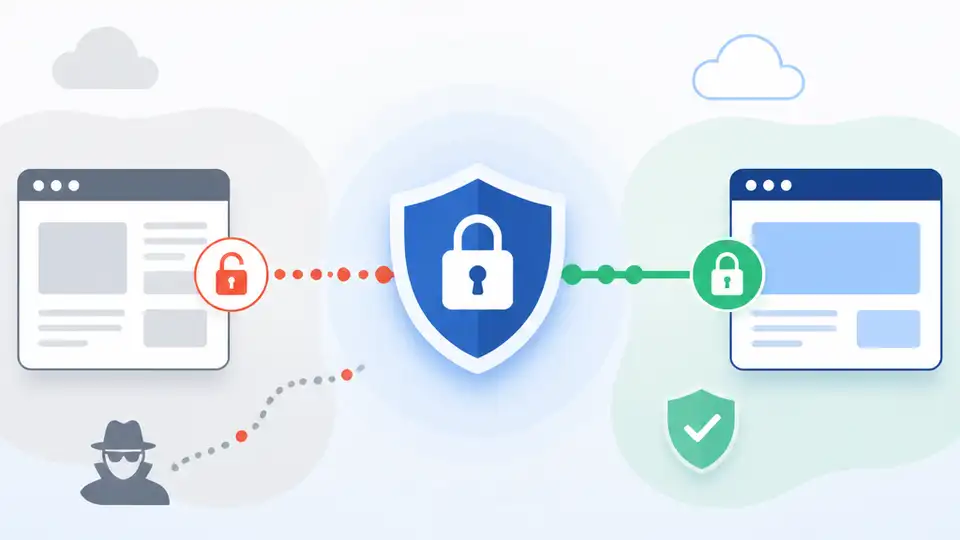
I break TLS into the handshake, certificate checks, and a copy-ready setup you can adapt.
I've been working with TLS for years, and it still annoys me how often people treat it like a checkbox. Turn it on, point a browser at HTTPS, call it done. Then something breaks in production and suddenly nobody can explain whether the problem is the certificate, the cipher suite, the client, or the server's idea of “secure.” That part has always felt off to me. TLS is one of those protocols that looks simple from the outside and turns into a pile of sharp edges the moment you actually have to operate it.
What finally made it click for me was going back to the protocol itself instead of the folklore around it. The Wikipedia page for Transport Layer Security is dense, but it lays out the real moving pieces: the handshake, certificates, symmetric keys, forward secrecy, and the fact that TLS is not just “HTTPS encryption.” It is the thing that makes a client and server agree on how they will trust each other before any useful data moves.
Once I stopped thinking of TLS as a magic wrapper and started thinking of it as a negotiation protocol, the weird failures made more sense. Bad cert chain? Handshake dies. No shared cipher? Handshake dies. Downgrade attempt? Hopefully the client catches it. That mental model is what I want to hand you here, along with a copy-ready template you can actually use.
TLS is not “just encryption,” it is a negotiation
Get the latest AI news in your inbox
Weekly picks of model releases, tools, and deep dives — no spam, unsubscribe anytime.
No spam. Unsubscribe at any time.
“Once the client and server have agreed to use TLS, they negotiate a stateful connection by using a handshaking procedure.”
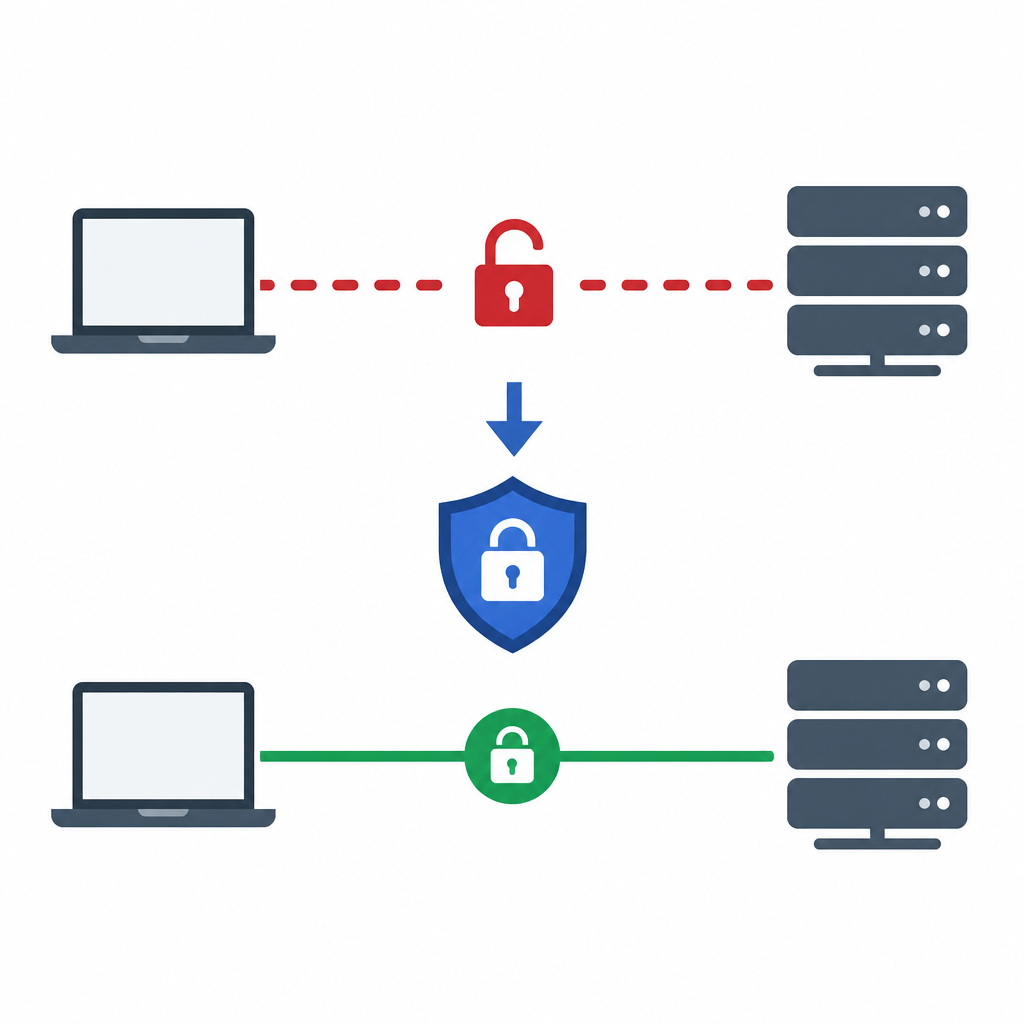
What this actually means is that TLS is a conversation before it is a tunnel. The client and server do not start by encrypting data. They first agree on how they will encrypt, which certificate they will trust, and which shared secret they will use for the session. That negotiation is the whole point. If the negotiation fails, there is no secure connection at all.
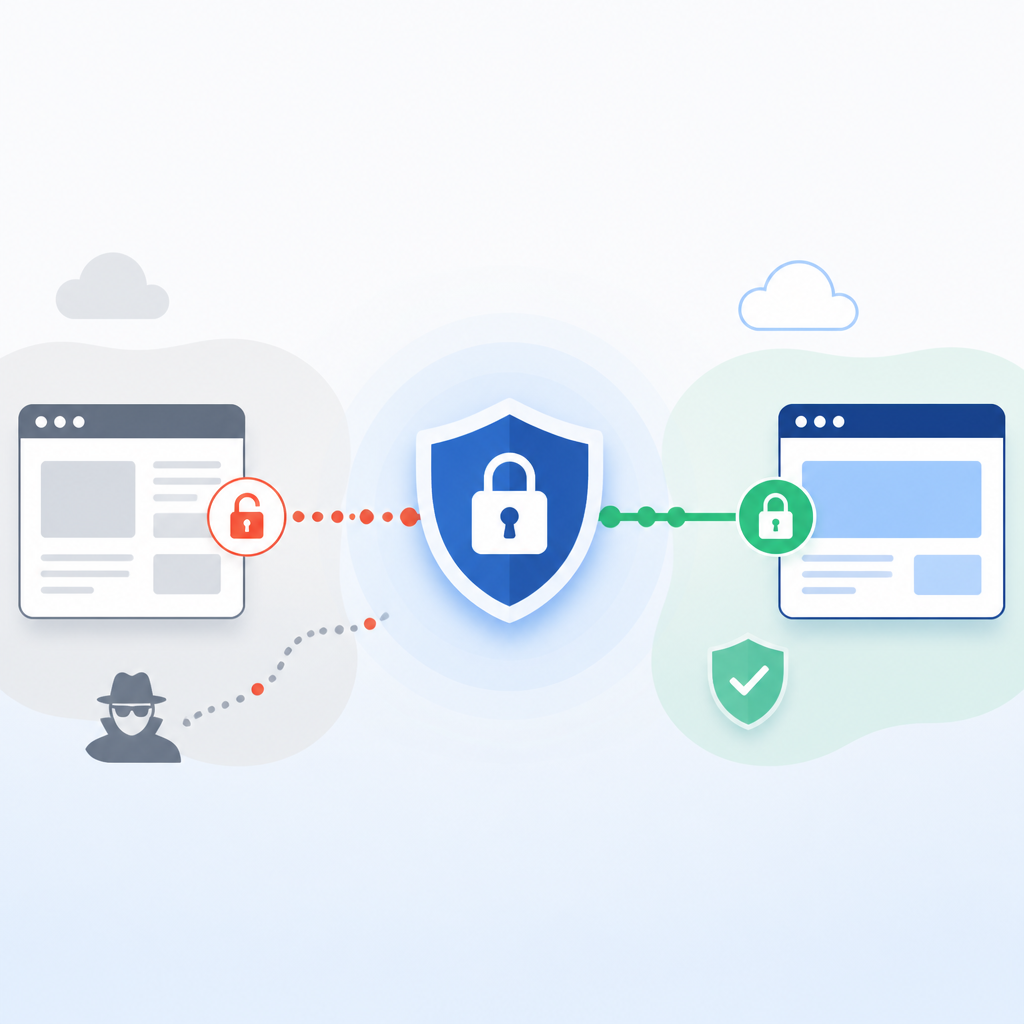
I used to see teams describe TLS as “encrypt traffic on port 443,” which is technically true and operationally useless. The useful part is the handshake. That is where the protocol decides whether the connection gets confidentiality, integrity, and authentication. If you understand that sequence, you can debug 80 percent of the problems people blame on “TLS being flaky.”
The Wikipedia article is explicit that TLS aims to provide privacy, integrity, and authenticity through cryptography and certificates. That triad matters. Encryption alone does not prove who you are talking to. Authentication alone does not hide the payload. Integrity alone does not stop eavesdropping. TLS tries to bundle all three into one connection setup.
How to apply it: when you are designing or reviewing a service, ask three separate questions. What am I encrypting? Who am I authenticating? How do I detect tampering? If your TLS setup cannot answer all three, you are not done.
- Confidentiality: outsiders should not read the data.
- Integrity: outsiders should not change the data without detection.
- Authentication: the client, server, or both should prove identity.
The handshake is where the real work happens
The article breaks the handshake into a sequence that is easy to ignore until it fails. The client sends supported cipher suites. The server picks one. The server presents a certificate. The client checks it. Then both sides generate session keys, either through public-key encryption of a pre-master secret or through Diffie-Hellman key exchange.
That is the part I wish more application developers understood. The handshake is not abstract crypto theater. It is a concrete set of choices, and every choice has failure modes. If the server certificate is expired, the client should stop. If the cipher suite list has no overlap, the connection should stop. If the key exchange cannot produce a shared secret, the connection should stop. “Fail closed” is the whole deal.
I ran into this in a service mesh setup where one side was still pinned to old assumptions about ciphers. The app owners swore “the network is fine,” which was their way of saying they had not looked at the handshake logs. Once we inspected the actual negotiation, the issue was obvious: the client and server could see each other, but they could not agree on a secure common path forward. TLS does not care that your packets can reach the other side. It only cares whether the handshake succeeds.
How to apply it: log handshake failures separately from application failures. If you merge them, you lose the most useful signal in the system. Also, keep your supported cipher list short and intentional. A giant list is not a badge of honor. It is usually a sign you have not made a decision.
Certificates are trust, not decoration
The Wikipedia page says the server usually provides identification in the form of a digital certificate, and that the certificate contains the server name, a trusted certificate authority, and the server's public key. That sounds dry until you remember what it means in practice: the certificate is the server's claim about who it is, and the CA is the third party vouching for that claim.
What this actually means is that TLS authentication is not self-authentication. The server does not just announce “trust me.” It presents a signed object that the client can verify against a trust store. If the name does not match, or the chain is broken, or the CA is untrusted, the client should reject it. That is not a nuisance. That is the protocol working.
I have seen teams get angry at browsers for refusing to connect to an internal service with a bad cert. That reaction always makes me laugh a little, because the browser is doing exactly what you asked it to do. If you want trust, you need a valid chain and a name that matches the endpoint. If you want to skip that, you are not using TLS as designed. You are improvising.
How to apply it: treat certificate management like deployment infrastructure, not a one-off ops chore. Track expiration dates, automate renewal, and test name matching in staging. If you are using internal PKI, document the trust chain the same way you document database credentials. Nobody gets to hand-wave the trust model.
- Verify hostname matching, not just certificate presence.
- Automate renewal before expiration windows become outages.
- Keep CA trust boundaries explicit in config and docs.
Forward secrecy is the part worth fighting for
The article explains that Diffie-Hellman and elliptic-curve Diffie-Hellman can provide forward secrecy, which means a future leak of the server's private key does not expose past sessions. That is the feature I care about most when I am reviewing modern TLS setups.
What this actually means is that a stolen key should not become a time machine. If an attacker records traffic today and steals the private key next month, forward secrecy keeps that old traffic protected. Without it, one key leak can turn into a bulk decryption problem. That is a terrible trade.
TLS 1.3 only allows key exchange algorithms that provide forward secrecy. That is a good thing, and honestly, about time. Older configurations that rely on the server's public key to encrypt a pre-master secret are easier to reason about on paper, but they are weaker from an incident-response point of view. If your long-term key can unlock old traffic, your blast radius is too big.
I remember reviewing an external-facing API where the team thought “TLS is TLS.” It was not. Their config still allowed older key exchange modes because nobody had bothered to prune them. The fix was not glamorous. We removed the legacy options, tested the clients, and moved on. But the security posture got a lot better with one boring change.
How to apply it: prefer TLS 1.3 where possible, and on TLS 1.2, make sure forward-secret key exchanges are enabled and prioritized. If you are maintaining a public service, assume old recordings may exist. Then configure as if you do not want those recordings to become readable later.
DTLS exists because not everything is a clean stream
The page also covers Datagram Transport Layer Security, or DTLS, which is the datagram-oriented cousin of TLS. It is built to provide similar security guarantees for protocols like UDP, SCTP, and SRTP. That matters because not every application wants the stream semantics of TCP.
What this actually means is that TLS is not the whole story for secure transport. If your app uses packets that can arrive out of order, get lost, or be duplicated, you need a protocol that understands that reality. DTLS keeps the security properties while adapting to the messier transport underneath.
I have mostly seen DTLS show up in real-time systems, VPN tunnels, and specialized infrastructure where latency matters more than pretending the network is reliable. The important lesson is not “use DTLS everywhere.” The lesson is that protocol choice should match transport behavior. If you bolt the wrong security layer onto the wrong transport, you create pain for yourself and the people who have to debug it later.
How to apply it: if you are designing a new networked system, start from the transport you actually need, not the one you are most familiar with. TCP and UDP are not interchangeable, and TLS and DTLS are not interchangeable either. Pick the protocol that matches the failure mode you can live with.
Most TLS bugs are really configuration bugs
The article has a long list of attacks against TLS and SSL, from downgrade attacks to Heartbleed and POODLE. That list looks scary, but the practical takeaway is simpler than people want it to be: a lot of TLS pain comes from old versions, bad defaults, and sloppy implementation choices.
What this actually means is that “using TLS” is not enough. You need to know which version, which ciphers, which certificate chain, which libraries, and which client behavior you are depending on. Security problems often show up when one of those layers is weaker than the rest.
I have had to explain this to teams that assumed a library upgrade was optional because “the protocol is standard.” Standard does not mean immune. It means the rules are written down. The implementation still matters. The configuration still matters. The way your load balancer or reverse proxy handles renegotiation still matters.
How to apply it: maintain a TLS policy just like you maintain an API compatibility policy. Define supported protocol versions, disallowed ciphers, certificate renewal rules, and a deprecation path for old clients. Then test against that policy in CI or staging instead of discovering it during an outage.
Use the protocol like an adult, not like a checkbox
If I had to compress the whole Wikipedia article into one practical lesson, it would be this: TLS is a negotiated trust system, not a decorative encryption toggle. Once you see that, the rest starts to line up. Certificates are about identity. Cipher suites are about capability. Key exchange is about generating a shared secret. Forward secrecy is about limiting damage later.
That framing also makes it easier to talk to non-crypto people on your team. You do not need to explain every math detail. You just need to explain what the protocol is trying to guarantee and where it can fail. That is enough to make better decisions about deployment, upgrades, and incident response.
How to apply it: when you document a service, include the TLS version, certificate source, renewal process, and client compatibility notes. If you cannot write those four things down quickly, you probably do not understand your own setup well enough yet.
The template you can copy
# TLS setup checklist for a service

## What this service must guarantee
- Confidentiality: yes/no
- Integrity: yes/no
- Server authentication: yes/no
- Client authentication: yes/no

## Protocol choices
- TLS version(s): TLS 1.3, TLS 1.2 only if required by legacy clients
- DTLS needed: yes/no
- Forward secrecy required: yes

## Certificate policy
- Certificate source: internal CA / public CA
- Hostname(s) covered:
- Renewal method:
- Expiration alert window:
- Trust store location:

## Cipher and key exchange policy
- Allowed cipher suites:
- Disallowed legacy suites:
- Key exchange preference:
- Compression disabled: yes
- Renegotiation policy:

## Operational checks
- Handshake failure logging enabled: yes
- Certificate expiry monitoring enabled: yes
- Staging test for hostname mismatch: yes
- Staging test for expired cert: yes
- Staging test for protocol downgrade: yes

## Client compatibility notes
- Browsers:
- Mobile apps:
- API clients:
- Old clients explicitly unsupported:

## Incident response notes
- What to rotate if a private key leaks:
- Whether old sessions remain protected by forward secrecy:
- Where to revoke or replace trust anchors:

## Copy-ready deployment note
This service uses TLS to negotiate identity, key exchange, and encryption before application data flows.
We require forward-secret key exchange where supported and reject expired, mismatched, or untrusted certificates.
TLS failures are treated as security failures, not transport noise.
That template is intentionally plain. It is not trying to impress anyone. It is trying to keep you honest about what your service actually does. Fill it out once, then make it part of your release checklist. If you do that, TLS stops being a vague “secure connection” story and becomes something your team can operate without guessing.
Source attribution: I broke this down from the Wikipedia article on Transport Layer Security, which itself summarizes the protocol and its history. The template and commentary here are mine, but the protocol details and terminology come from that source and the linked standards it references.
// Related Articles