Why Microsoft’s new AI models are the right way to break OpenAI depen…
Microsoft is right to build its own AI models to cut OpenAI dependence and lower inference costs.

Microsoft is building its own AI models to cut OpenAI dependence and lower inference costs.
Microsoft is right to stop acting like a reseller of other companies’ models and start behaving like a full-stack AI vendor. The company’s new MAI-Code-1-Flash and MAI-Thinking-1 models are not a side project; they are a strategic correction. Microsoft has already invested $13 billion in OpenAI and $5 billion in Anthropic, but investment is not control. If Microsoft wants durable margins in AI, it needs models it can tune, price, and run on Azure without paying a toll to a rival.
Microsoft cannot build a serious AI business on rented intelligence
Get the latest AI news in your inbox
Weekly picks of model releases, tools, and deep dives — no spam, unsubscribe anytime.
No spam. Unsubscribe at any time.
The first reason this move matters is simple economics. Every time a developer uses a model through a third party, Microsoft gives up margin and leverage. By building MAI-Code-1-Flash for GitHub Copilot and Visual Studio Code, Microsoft can route more usage onto its own infrastructure, avoid third-party model fees, and keep more of the revenue created by AI coding. That is the difference between being a platform owner and being a distribution channel.

This is not theoretical. Microsoft’s own pitch is that its models are “inference ultra-efficient” and can deliver better cost performance after being refined for specific enterprise needs. That matters because token costs are the bill that never stops arriving. If Microsoft can make a coding model cheaper to run than a frontier model from OpenAI or Anthropic, it can defend Copilot against price pressure and make AI features harder to commoditize.
Owning models gives Microsoft strategic control over the AI stack
Microsoft is also making a power play. For years, the company’s primary role in the AI boom was cloud provider, investor, and distribution partner. That role is profitable, but it leaves Microsoft exposed to the roadmap, pricing, and product priorities of OpenAI. Building proprietary models lets Microsoft decide how fast to ship, which workloads to optimize, and how tightly to integrate with Azure, Windows, GitHub, and Foundry.
The release of MAI-Thinking-1 shows the broader strategy. Microsoft is not just chasing coding; it is building a family of models for reasoning, speech, voice, image generation, and small on-device systems for Windows PCs. That breadth matters because it reduces dependency across the stack. A company that owns its own models can bundle features, shape developer workflows, and compete on system design rather than simply reselling someone else’s breakthrough.
The market is rewarding efficiency, not just raw model power
Microsoft’s timing is smart because the AI market is shifting from novelty to economics. Developers and enterprises are no longer impressed by demos alone. They care about throughput, latency, and cost per task. Microsoft said its refined model work for McKinsey produced performance that beat OpenAI’s GPT 5-5 with 10 times better cost efficiency. Even if that claim is specific to a narrow workload, the message is clear: domain-tuned models can beat bigger models on the metrics buyers actually pay for.
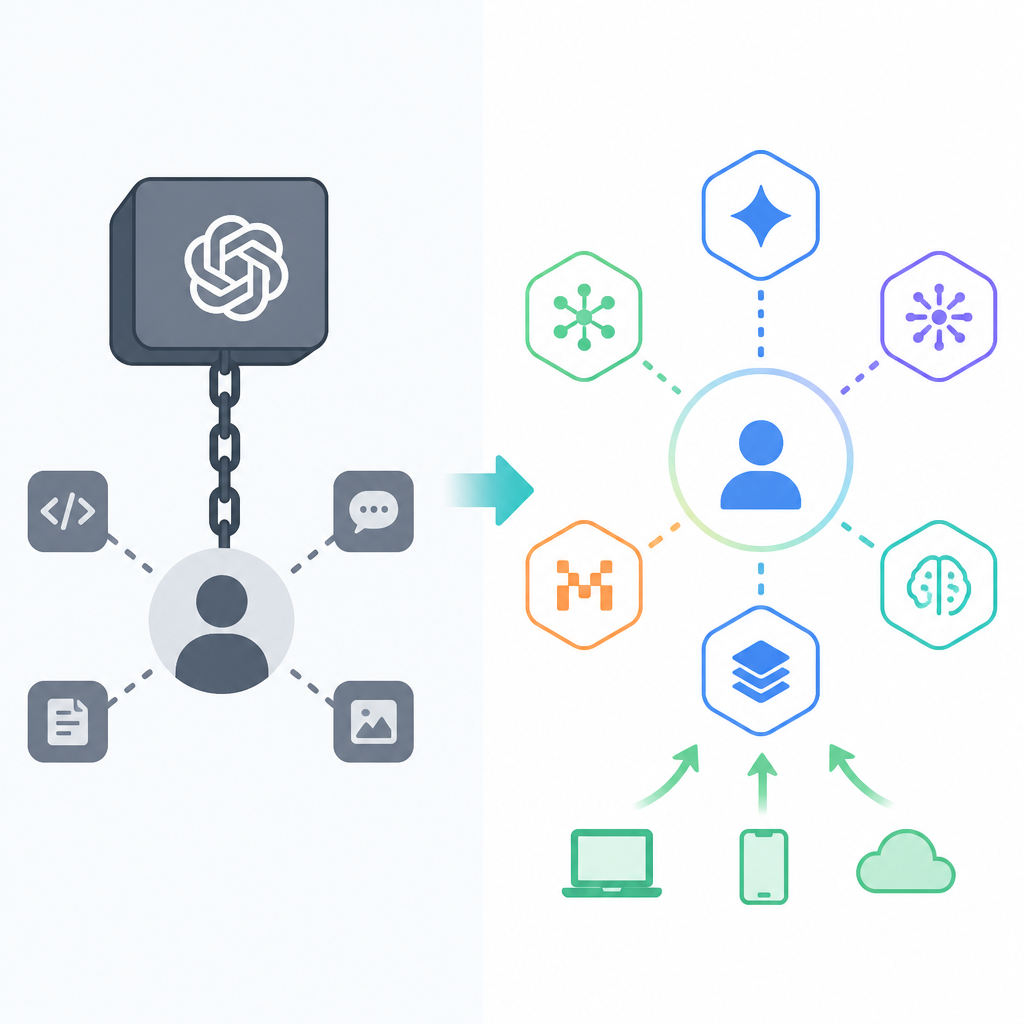
There is also a competitive reason to move now. Google has already shown with Gemini 3.5 Flash that a company can build a fast, lower-cost model and run it inside its own data centers. That sets the benchmark. If Microsoft waited too long, it would remain dependent on OpenAI while Google, Anthropic, and others sold cheaper, more specialized alternatives. The market is not just asking who has the smartest model. It is asking who can deliver the best unit economics at scale.
The counter-argument
The strongest case against Microsoft’s strategy is that it risks diluting the company’s advantage. OpenAI still owns the most recognizable frontier brand in consumer and enterprise AI, and Microsoft has benefited enormously from being the preferred distribution layer for that technology. A proprietary-model push could fragment Microsoft’s focus, create internal duplication, and produce models that are good enough but not best in class. If the gap in quality is large, developers will keep choosing the strongest model, not the cheapest Microsoft-branded one.
There is also a partnership risk. Microsoft and OpenAI have been tightly linked, and that relationship has helped Microsoft move fast without bearing all the research burden itself. Building more in-house models could complicate that relationship and force Microsoft to spend more on training, talent, and infrastructure. Critics will say the company is trying to do too much at once.
That critique has a limit. Microsoft does not need to replace OpenAI to justify this move. It needs optionality, pricing power, and better economics in the workloads it already owns. Copilot, Foundry, Visual Studio Code, Azure, and Windows are not abstract AI bets; they are distribution surfaces with real demand. Even if OpenAI remains the best general-purpose frontier model, Microsoft still wins by owning specialized models for coding, reasoning, and device-level tasks where cost and integration matter most.
What to do with this
If you are an engineer, PM, or founder, treat Microsoft’s move as a signal that model choice is becoming an operating decision, not a branding decision. Build for portability, track token spend per workflow, and assume that the cheapest model that meets quality thresholds will win more often than the most famous one. If you are shipping AI products, design your stack so you can swap frontier models for in-house or fine-tuned alternatives as soon as economics justify it. Microsoft is showing that the next advantage in AI is not just access to intelligence, but control over its cost, placement, and distribution.
// Related Articles
- [IND]
Anthropic's IPO rumor turns into a market watch
- [IND]
Anthropic should not become dependent on Meta for compute
- [IND]
Mistral's robotics model cuts indoor navigation costs
- [IND]
Mistral missile: France’s short-range air defense workhorse
- [IND]
Apple Reclaims No. 1 by Market Cap as AI Costs Spike
- [IND]
Kimi K3 could pressure the middle tier of AI models