Claurst proves terminal coding agents should be open and local
Claurst argues that coding agents are better as open, local tools than locked SaaS.

Claurst is an open-source Rust terminal coding agent built for local, multi-provider use.
Claurst is the right model for agentic coding because it treats the agent as software you own, inspect, and run, not a rented black box. The project is already in beta, ships as a Rust binary, supports multiple providers, and explicitly avoids tracking and telemetry. That combination matters because the market keeps rewarding tools that promise speed while quietly centralizing control over code, prompts, and workflow.
Open source is the feature that matters most
Get the latest AI news in your inbox
Weekly picks of model releases, tools, and deep dives — no spam, unsubscribe anytime.
No spam. Unsubscribe at any time.
Claurst’s strongest claim is not that it can autocomplete code, but that it can be audited and extended by the people who depend on it. The repository makes the clean-room story explicit: a spec-driven rewrite, separate implementation, and no proprietary Claude Code source carried over. That is not a marketing flourish. It is a governance choice that tells builders they can trust the code path from prompt to patch.

The open model also lowers the blast radius of mistakes. Claurst exposes its behavior through a terminal UI, a plugin system, and an Agent Client Protocol interface, which means teams can inspect how it routes permissions and handles tool calls. When an agent asks for approval through a visible session flow, the operator stays in the loop. That is the right default for code that can edit files, run commands, and shape production work.
Rust and local execution are not cosmetic choices
Claurst being built in Rust is a product decision, not an implementation detail. The project describes itself as fast and memory-efficient, and the install paths reinforce that it is designed to live on the developer’s machine as a native binary. In a category where many tools are wrappers around remote services, local execution gives builders lower latency, fewer moving parts, and a clearer failure mode when something breaks.
The repository’s support for headless use, cross-platform binaries, and even builds without ALSA on constrained systems shows the intended audience: people shipping code on real machines, not demoing a concept. The agent can run from a terminal, integrate with editors through ACP, and operate without forcing a web app into the middle of the workflow. That makes it easier to adopt in environments where security, offline work, or reproducibility matter more than polished onboarding.
Multi-provider support is the real hedge against lock-in
Claurst does not ask builders to bet their workflow on one model vendor. It supports multiple providers and even offers a free mode experiment through /connect, which signals a broader point: the agent layer should be separated from the model layer. Once the interface to the agent is stable, teams can switch providers based on cost, capability, or policy without rewriting their workflow around a single API.
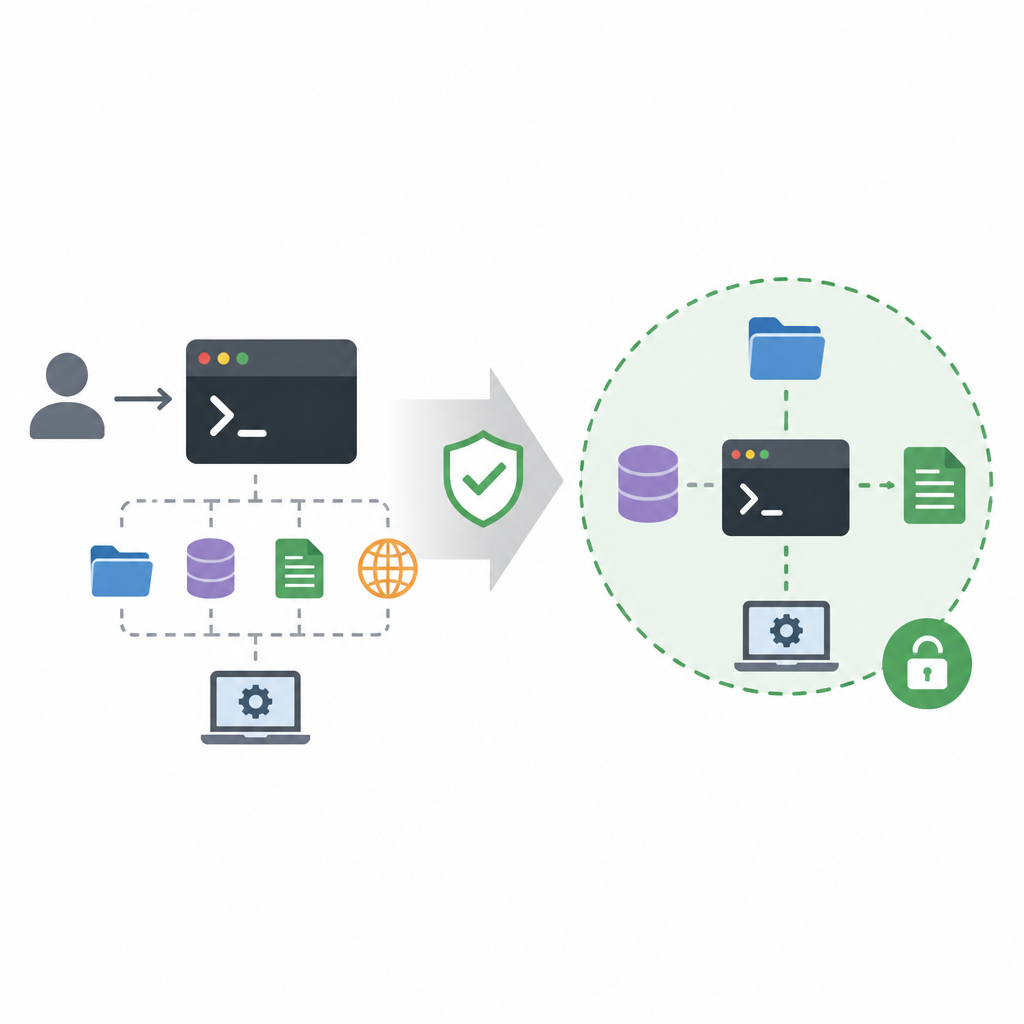
That matters because coding agents are becoming infrastructure, not novelty. The repository already includes chat forking, memory consolidation, and a goal-oriented mode that keeps working across turns. Those features are useful only if the surrounding system can survive provider churn. Claurst’s architecture makes that churn manageable by keeping the terminal agent and the model backend loosely coupled.
The counter-argument
The opposing view is straightforward: most developers do not want to manage binaries, keys, providers, or local setup when a hosted product can hide that complexity. A vendor-run coding agent can ship faster, update continuously, and offer a smoother path for teams that want one bill and one support channel. For many organizations, that convenience is real value.
There is also a legitimate argument that open, local agents fragment the experience. If every team routes through different providers and editor integrations, the ecosystem becomes harder to support and standardize. A polished proprietary agent can also invest more heavily in UX, onboarding, and safety rails than a community project can at the same pace.
That critique is valid, but it does not beat the central case. Convenience is not the same as control, and coding agents sit too close to source code, secrets, and deployment steps to be treated like disposable SaaS. Claurst accepts the tradeoff by being explicit about rough edges in beta, but it wins where it counts: transparency, portability, and the ability to keep working even when the vendor relationship changes.
What to do with this
If you are an engineer, use Claurst as a test case for how much of your agent workflow should live on your machine, in your editor, and under your control. If you are a PM or founder, treat it as evidence that the winning agent stack will separate orchestration from model choice and make permissioning visible. Build for local-first operation, provider portability, and auditable behavior now, because that is the shape of the category that will last.
// Related Articles
- [AGENT]
Kimi K3 Benchmark Evaluation Guide for Coding Agents
- [AGENT]
Meta’s first paid model proves AI coding is now a price war
- [AGENT]
Claude Code turns chat into terminal work
- [AGENT]
Decentralized AI compliance should be built into agent rails, not bol…
- [AGENT]
Open-Source AI Agent Frameworks Compared
- [AGENT]
Codex Micro turns a macropad into an AI control deck