LiteLLM launches a minimal Rust gateway for agents
LiteLLM-Rust is a minimal Rust AI gateway that keeps LiteLLM configs intact while targeting sub-1ms overhead for coding agents.

LiteLLM-Rust is a minimal Rust AI gateway for coding agents with drop-in LiteLLM compatibility.
LiteLLM has launched LiteLLM-Rust, a separate open-source gateway written in Rust that keeps the same config.yaml and database schema as the company’s Python gateway. The pitch is simple: keep the existing control plane, swap the runtime, and aim for less than 1ms of overhead on coding-agent calls.
The project is early and experimental, but the design is specific. LiteLLM says the Rust gateway already supports sandboxing through E2B and Daytona, while durable sessions, memory, artifacts, and vault features are still on the roadmap.
| Item | Detail |
|---|---|
| Runtime | Rust |
| Compatibility | Same config.yaml and Postgres schema as Python LiteLLM |
| Performance target | <1ms overhead on Claude Code calls |
| Current sandboxing | E2B and Daytona |
| License | MIT |
What LiteLLM-Rust actually changes
Get the latest AI news in your inbox
Weekly picks of model releases, tools, and deep dives — no spam, unsubscribe anytime.
No spam. Unsubscribe at any time.
The biggest selling point is compatibility. LiteLLM says the Rust gateway reads the same configuration format, uses the same database schema, and preserves the same client and admin workflows as the Python gateway. In practice, that means teams can keep keys, virtual keys, teams, budgets, routing rules, and fallbacks without rewriting their setup.

That matters because gateway migrations are usually annoying in exactly the wrong way. If a proxy layer touches auth, routing, budgets, or observability, teams do not want a fresh migration project just to test a new runtime. LiteLLM-Rust is trying to make the runtime swap feel boring.
- Same
config.yamlformat - Same Postgres database schema
- Same client SDKs and admin workflows
- Same routing and budget primitives
LiteLLM even shows the new binary using the same config path and port style as the Python version: litellm-rust --config /etc/litellm/config.yaml --port 4000. That is the kind of detail that tells you this is meant to fit into real deployments, not just demo slides.
Why the performance target matters
The performance argument is aimed squarely at coding agents like Claude Code, which can fan out dozens of model calls during a single task. If the gateway adds milliseconds on every hop, that overhead stacks up fast across tool calls, retries, and planning loops.
LiteLLM says the Rust version targets sub-millisecond overhead on the hot path by removing Python from request forwarding. That is a narrow goal, but it is a sensible one. For agent workloads, shaving a little latency from every request can matter more than adding another feature flag or dashboard widget.
“Do one thing, and do it well” — Doug McIlroy
That quote fits this launch better than any marketing line could. LiteLLM-Rust is not trying to replace the full Python gateway today. It is trying to make the forwarding path as lean as possible for a very specific workload: agentic coding systems that make repeated calls and care about latency.
- Target overhead: under 1ms per Claude Code call
- Python gateway overhead: described by LiteLLM as millisecond-scale
- Agent runs can involve dozens of tool calls
- Each extra millisecond compounds across the run
If LiteLLM hits that target in real workloads, the difference will show up in the places developers feel first: less waiting between tool calls, shorter end-to-end runs, and fewer excuses to over-optimize prompts while ignoring infrastructure overhead.
What ships today and what is still coming
The current release already includes sandboxing through E2B and Daytona, plus scheduling for Claude Code runs through cron, webhook, or API trigger. That makes the gateway more than a proxy; it is already trying to coordinate agent execution, even if the feature set is still small.
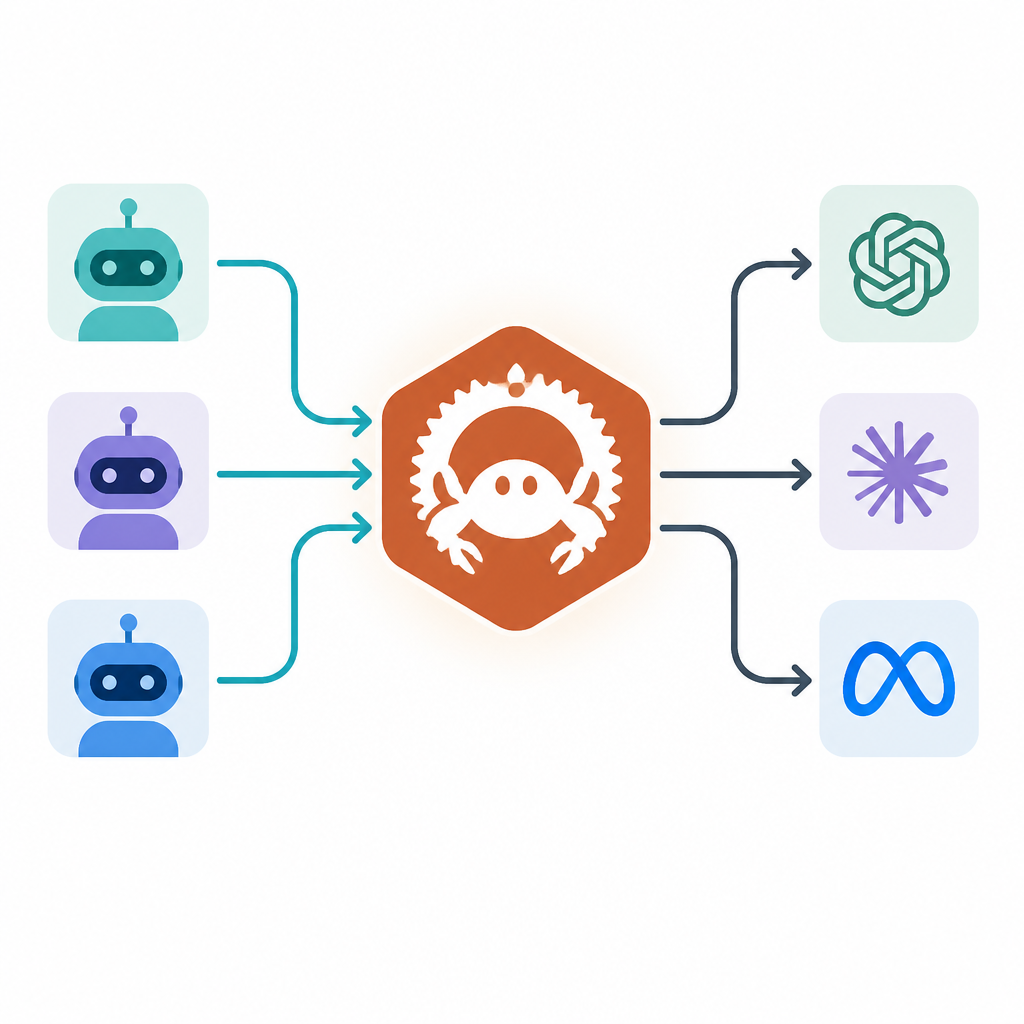
The roadmap is where the ambition gets clearer. LiteLLM lists durable sessions, memory, artifacts, and vault support as planned features. Those are the pieces that turn one-off agent runs into stateful workflows that can survive restarts, keep context, and store outputs in a way teams can reuse.
- E2B sandboxing is available now
- Daytona sandboxing is available now
- Cron, webhook, and API triggers are available now
- Durable sessions, memory, artifacts, and vault are planned
That combination matters because coding agents are no longer just chat interfaces with a tool call or two. They are starting to look like long-running jobs with state, permissions, and execution boundaries. A gateway that understands that shape has a better shot at being useful than one that only forwards HTTP requests.
Where this fits beside the Python gateway
LiteLLM is careful about positioning. The company says the Python gateway remains the production-grade, feature-complete option and the recommended choice for enterprise deployments. It also points to LiteLLM Enterprise for SSO, SCIM, air-gapped deployment, 24/7 SLA support, and advanced guardrails.
That split makes sense. The Rust project is a separate repo, and LiteLLM says it is meant to explore a design space safely before feeding lessons back into the core product. In other words, this is an experiment with a very clear boundary: test the agent-first runtime without risking the stability expectations of the main platform.
For teams comparing the two, the trade-offs are pretty clear:
- Python LiteLLM: full feature set, enterprise-ready, production focus
- LiteLLM-Rust: minimal, faster, agent-specific, early-stage
- Enterprise on Python: compliance and support for stricter deployments
- Rust repo: open-source, MIT licensed, feedback-driven
That is a smart split because it avoids the usual trap of trying to make one runtime serve every audience at once. Agent teams get a compact path to test latency-sensitive workflows, while enterprise users keep the mature stack they already trust.
What to watch next
The real test for LiteLLM-Rust is not whether it works in a demo. It is whether teams running Claude Code or similar agents can drop it into existing setups, keep the same database and config, and actually see the latency gains the project promises.
If the sub-millisecond target holds up under load, this could become the default way LiteLLM thinks about agent traffic: a slim Rust gateway for execution-heavy workloads, with the Python gateway still handling the broader enterprise feature set. If it misses that target, the compatibility story still gives the project value as a lower-risk experiment.
Either way, the launch is a good signal that AI infrastructure is splitting into more specialized layers. The next question is practical: which agent teams will be willing to swap runtimes first just to save a few milliseconds on every call?
// Related Articles
- [AGENT]
Kimi K3 Benchmark Evaluation Guide for Coding Agents
- [AGENT]
Meta’s first paid model proves AI coding is now a price war
- [AGENT]
Claude Code turns chat into terminal work
- [AGENT]
Decentralized AI compliance should be built into agent rails, not bol…
- [AGENT]
Open-Source AI Agent Frameworks Compared
- [AGENT]
Codex Micro turns a macropad into an AI control deck